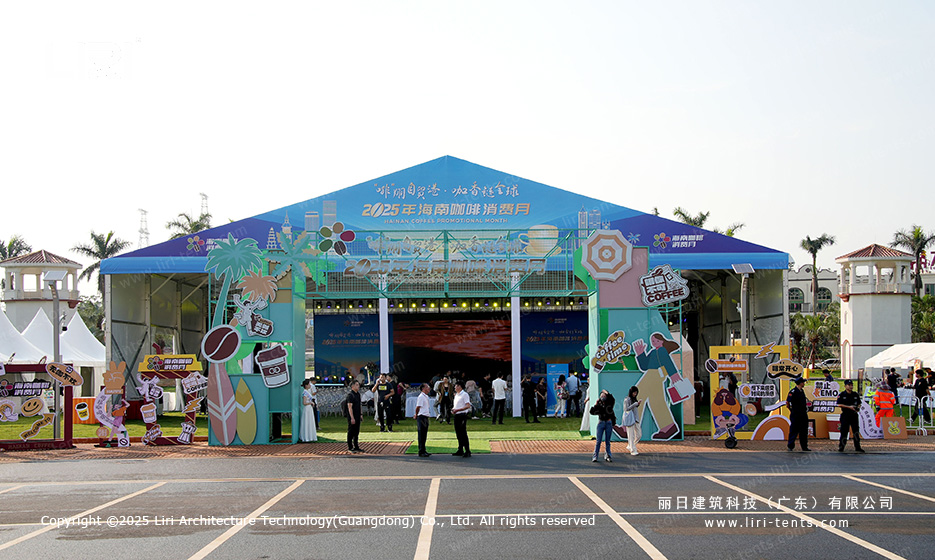
Hosting a commercial party is about more than seating guests; it is about creating an impression that keeps clients talking after the event ends. Commercial event tents fill two jobs at once: they add temporary space when a venue runs short, and they make a shop or brand more visible to passersby. With flexible modular frames and a clean exterior finish, these tents give event teams room to design layouts that a permanent hall simply cannot offer.
Modular commercial party tents are available in nearly any footprint. Standard spans include 5×5, 10×10, 15×30, and even 1000 square meters of temporary space, and the interior is 100% usable because the frame carries the roof without center poles. The cover fabric is waterproof, UV resistant, and rated for wind loads up to class 10, so the structure holds up across most weather conditions. Custom sizes can be made to fit the exact dimensions of your venue, whether that is a parking lot, a plaza, or a fairground.
Commercial Tent Size and Load Specifications
Choosing the right span starts with the event program rather than the budget. A 3m to 5m tent works for retail pop-ups, sampling booths, and small reception corners. A 6m to 10m span suits medium gatherings such as corporate parties and product demonstrations. For large-scale commercial events, 12m to 30m spans and multi-bay layouts provide the floor area for staging, dining, and exhibition zones at the same time.
The main profile of the aluminum frame is selected from a table of standard extrusions based on span and wind load. Typical sections run from 85×72×2.5mm for small spans up to 102×72×2.5mm and heavier profiles for wide roofs. Eave height sits around 2.5m, with ridge heights between 3.88m and 5.1m depending on the model. These numbers matter because they decide whether a chandelier, a stage truss, or a second-tier display shelf can be fitted inside.
For short-term campaigns, many organizers choose rental instead of purchase, and bulk booking usually brings a lower per-unit price. If you are running a series of brand promotion stops across multiple cities, a festival economy party tent on a rental contract keeps the upfront cost down while still delivering a branded shelter at every stop.
Layout Options for Commercial Party Tents
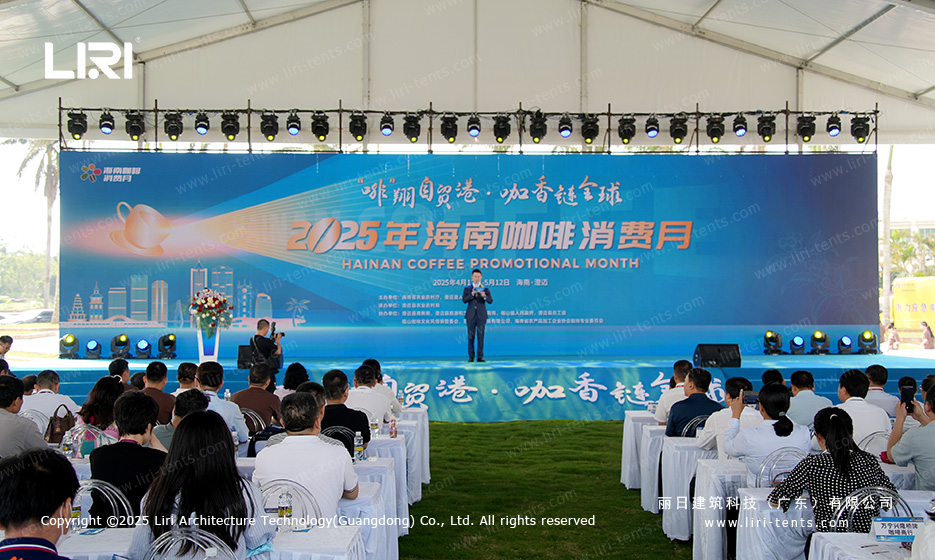
Commercial party tents can be arranged as a single large hall or as a cluster of linked bays. A single hall works when the event is one continuous program, such as a gala dinner or an exhibition aisle. A linked layout suits mixed events where you need separate zones for dining, performances, and sponsor booths, with covered walkways connecting them.
Inside, the usable floor is completely open, so table layouts, stage positions, and lighting trusses can be planned without working around support columns. The walls can be fitted with transparent PVC windows, solid fabric panels, or glass doors, depending on whether the event needs natural light, privacy, or a view. For heavy-duty outdoor operations such as vehicle displays or equipment storage, a commercial parking tent with reinforced frames handles the same modular design with a stronger structural rating.
Commercial layouts are not limited to one hall either. The same modular frame system can be arranged into a tent village for food festivals and fairs, with separate units for kitchens, serving counters, and dining areas connected by covered walkways. A beer festival tent structure follows this pattern, giving each vendor a branded bay while guests move freely between them under cover.
One thing worth planning early is the brand treatment. Because the fabric is printable, the exterior can carry event logos, sponsor names, and directional signage, which turns the tent itself into advertising space. A well-branded tent at a trade show or street festival gets noticed long before visitors reach the entrance.