Outdoor social gatherings keep growing because they offer layout flexibility that indoor halls struggle to match, from open-air dining to staged ceremonies with views of the surroundings. 30x30m big wedding party tent models are the workhorses of this trend, giving event teams a wide column-free floor that can host weddings, banquets, and large celebrations in one setup. With over two decades of experience in the event industry, we understand what large-scale events need in terms of span, loading, and installation speed.
Large party tents can accommodate anywhere from 200 to 10,000 guests, depending on the span and the seating plan. A 20x50m structure suits banquets for around 1,000 people, while multi-bay layouts extend the floor area for exhibitions and festival venues. For short-term events, we also offer economical used party tents, so you can select the structure that fits your budget without compromising the layout.
Large Party Tent Sizes and Guest Capacities
Guest capacity is driven by the floor plan, not just the footprint. A seated banquet with round tables of ten requires roughly 1.2 to 1.5 square meters per guest, while a cocktail or exhibition layout uses about 1 square meter per person. That means a 30x30m hall can seat 500 to 700 guests for dinner or hold up to 900 for a standing reception, and longer spans push those numbers higher.
Our standard range covers spans from 10m up to 40m and beyond, with eave heights around 2.5m to 3m and ridge heights that allow interior staging and lighting. If your guest list is close to a thousand, a large outdoor wedding tent in the 20x50m class keeps everything under one roof, including the dining area, dance floor, and stage.
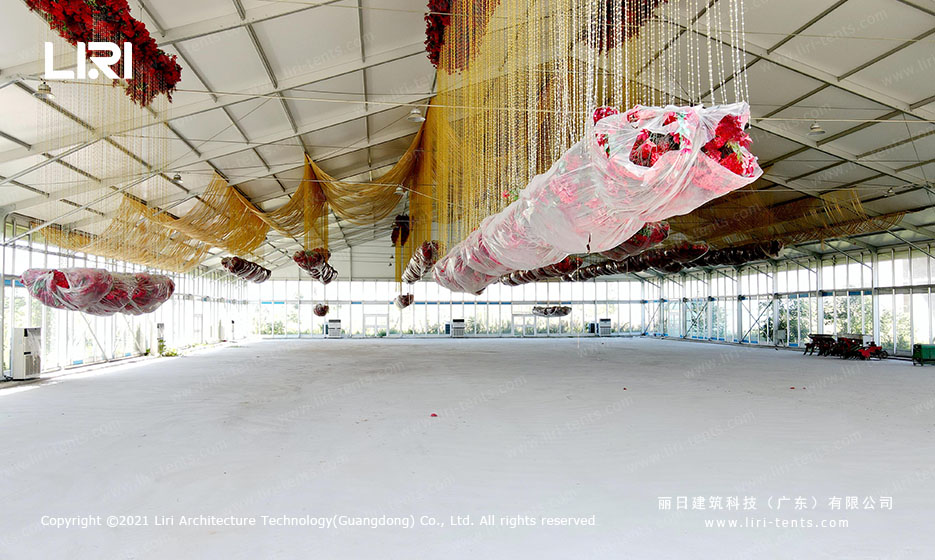
Frame Structure and Weather Performance
The frame is built from high-strength aluminum profiles that support the roof without interior poles, which is why the entire floor remains usable for tables and staging. The cover is a 100% waterproof PVC membrane with UV resistance, and the structure is designed to handle typical wind loads with proper anchoring. Assembly and disassembly are straightforward, so the tent can be installed in a day for standard spans and moved between venues with a modest crew.
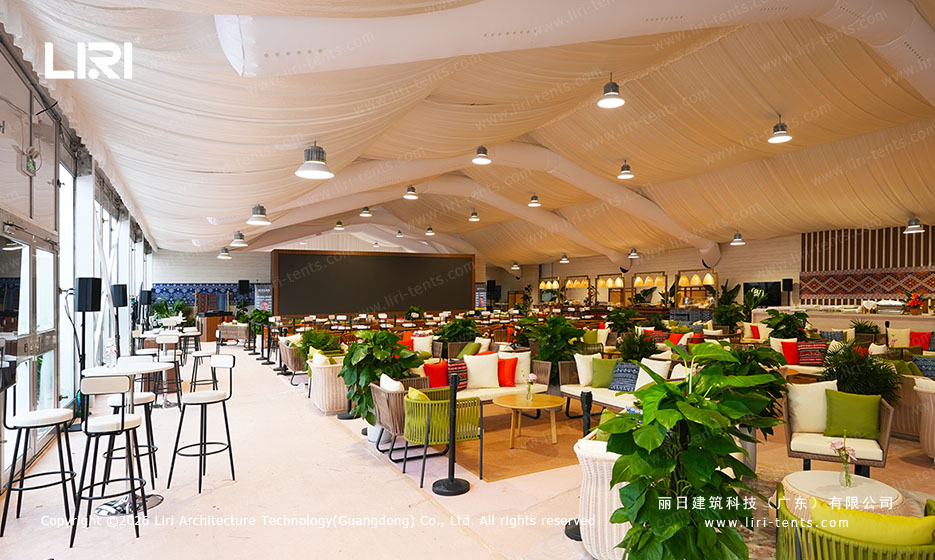
Feature sets that matter at scale include reinforced corner castings, adjustable leg bases for uneven ground, and optional guttering for heavy rain. Interior fit-outs such as the modular tent flooring system, tent lighting, banquet chairs and tables, and heating or air conditioning can be integrated during planning, turning the empty hall into a finished venue before the guests arrive.
Layout planning also matters as much as the frame itself. A banquet with a central dance floor, a stage at one end, and catering stations along the side needs wider aisles than a pure theater-style setup, so the seating plan should be drawn before the tent size is locked in. For birthday celebrations and family gatherings on a smaller scale, a large party tent for birthdays offers the same clear-span space with a lighter structure that suits a garden or backyard setting.
For a celebration with a more traditional look, many clients compare a large marquee against a clear-span hall. A royal wedding marquee tent brings higher peaks and draped interiors, which suits formal weddings, while a clear-span hall offers maximum usable floor for dense layouts. The choice usually comes down to the visual style and the seating density you need.
I would like to know the specific price range for different products. Could you recommend some cost-effective products and inform me of their prices in detail?
What are the safety matters I need to pay attention to when using the party tent? Are there any relevant safety tips?
I am looking to purchase a batch of high-quality aluminum alloy party tents. What is your lead time for supply? Do you offer customization services to meet our specific needs?
The annual meeting of the company will require a large frame tent, and ask about the difficulty of building and the overall budget.