A party tent is usually sold as a set of parts, not as one finished room. That surprises many first-time buyers, because the price often covers only the metal frame and the roof, while walls, flooring and furniture appear on separate lines. This guide explains what belongs to the basic set, which items are normally added on, and how to read a supplier’s list before you order. You will know what to ask for, what to add later, and why two quotes can look very different.
The frame and the roof are the tent
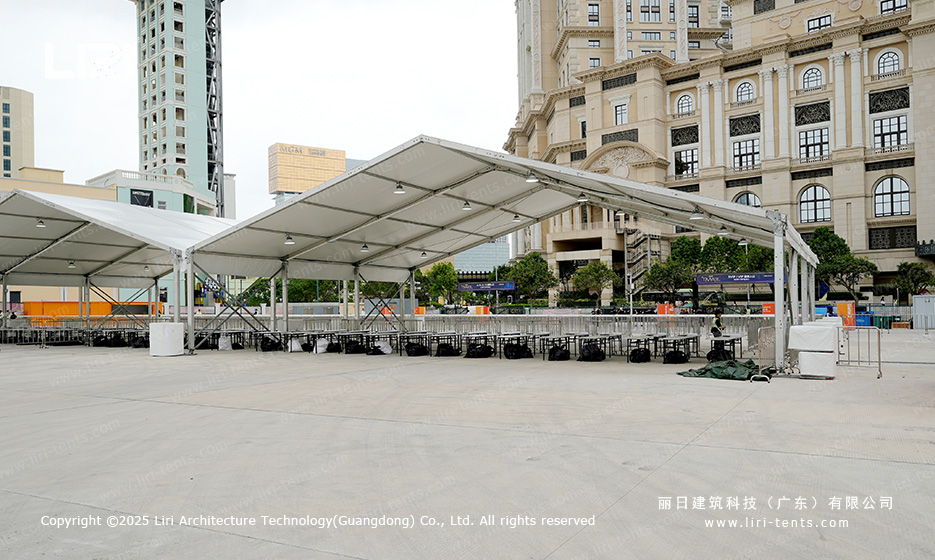
A frame party tent is a metal skeleton that holds up a fabric cover. The frame is usually made of aluminium, a light metal that does not rust, though cheaper sets may use steel. Because the frame carries the weight, no pole stands in the middle of the room, which people call a clear span. That is why an outdoor party tent suits long tables or a small stage so well.
The roof cover is a strong coated fabric stretched over the frame. White is the most common choice because it keeps the inside bright and reasonably cool. Clear or translucent covers let in more daylight and are often picked for evening events.
The cover clips or slides into the frame, so it can be replaced on its own if it wears out. That is worth knowing when you compare prices, because the roof fabric and the metal frame do not age at the same rate. Our party tent range shows how the common sizes and shapes are grouped.
The basic set also includes the small hardware that joins the pieces, plus something to hold the tent to the ground. On grass this is usually long stakes driven into the soil. On concrete or paving, where you cannot drive stakes, heavy weights are used instead.
Ask which of the two comes with your tent, because the answer depends on your ground. A tent that is not held down properly is not safe in wind, even on a calm-looking day.
Walls, windows and doors are usually a separate choice
Many people assume a tent arrives closed on all four sides. In fact, the open version is often the starting point. Sidewalls are fabric panels that hang from the frame, and they are usually priced as an extra.
Plain white panels keep wind and rain out. Panels with clear windows give you light without losing the shelter. Glass panels cost more, but they give a smarter look for a formal dinner or a company reception.
Doors work the same way. A simple opening in a fabric wall may come with the wall set, while a framed glass door with a proper handle is an upgrade. A birthday lunch on a warm lawn may need nothing more than a roof overhead and open sides. An autumn company event, with guests arriving in coats, is a different case entirely.

It helps to decide this early rather than a week before the event. Walls and doors have to fit the same frame as the roof, so mixing parts from different suppliers can cause trouble. If you think you may add walls later, ask whether they will fit the tent you are buying now.
The inside is almost always a separate order
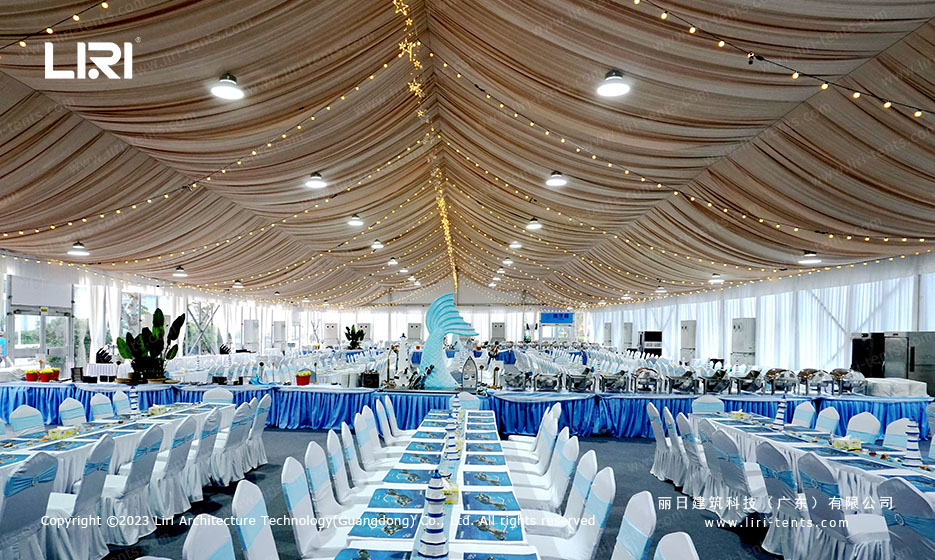
A tent gives you covered space, not a furnished room. Flooring is the first thing people forget, and grass can turn soft after rain, so many events use a simple floor laid over the ground. Tables and chairs, lining and lights are separate again. Lining is a soft fabric hung under the roof to hide the metal frame and make the space feel warmer.
Compare a birthday party at home with a small ticketed food festival. For the birthday, a few tables, some chairs and a string of lights may be everything you need. For the festival, you may want a level floor, service counters, power for the stalls and decent lighting after dark. The tent itself can be the same in both cases; what you put inside changes the order completely.
This is also why floor area alone cannot tell you how many guests will fit. A dance floor, a buffet line and a wide walk to the exit all take room that seating cannot use. Sketch the inside first, then check that the tent gives you enough usable space. That is much safer than starting from a guest number and hoping the furniture will work out.
Why two quotes can look nothing alike
One supplier may quote a frame, a roof and the fixing parts. Another may include sidewalls, a floor and delivery in the same number. Neither is wrong, but comparing the totals without the lists tells you very little. Ask for a written list of every item, with the size of each part and the quantity.
Check a few quiet details while the list is in front of you. Are spare clips and pins included? Is there a bag or box for the fabric panels? A commercial party tent order can run to many separate pieces, and the small ones are easy to overlook.
If you run a party tent rental business, buying one tent family across several sizes means parts can be shared between jobs. That saves storage space and avoids confusion when two bookings go out on the same morning. Be wary of vague phrases such as “full set” or “standard package”, because different companies mean quite different things by them.
What to ask before you order
You do not need a long checklist, just a few clear questions. What exactly is in the basic set, and which parts are extras you can add later? What holds the tent down on my ground, and is the floor included? Do the walls, doors and roof come from the same frame system, and who supplies a spare part if a clip breaks?
If you are comparing a party tent for sale from two suppliers, put both answers side by side. Ask for the answers in writing, along with a simple drawing or photo of the parts. That way you can see where the entrance sits and whether the walls reach the ground.
If all of this is new to you, start with one size and use it a few times before buying more. Our small party tent buying guide walks through that first decision in plain language. A supplier who is happy to explain the list is usually easier to work with than one who only sends a total.
A party tent is a frame, a roof and the fittings that hold them together. Everything else, from walls and doors to floors, furniture and light, is a choice you make for the day you have planned. Once you can read the parts list, you can compare offers fairly and buy only what you will actually use. If you send us your site details and the kind of event you are planning, we can put a clear list together for you.