Clear party tent walls can look suitable for a winter event while their handling instructions tell a different story. A panel may spend the night in an unheated vehicle, be unfolded during a cold morning setup, and operate beside a heated dining area that evening. Those are different conditions, and a single temperature number does not answer all three.
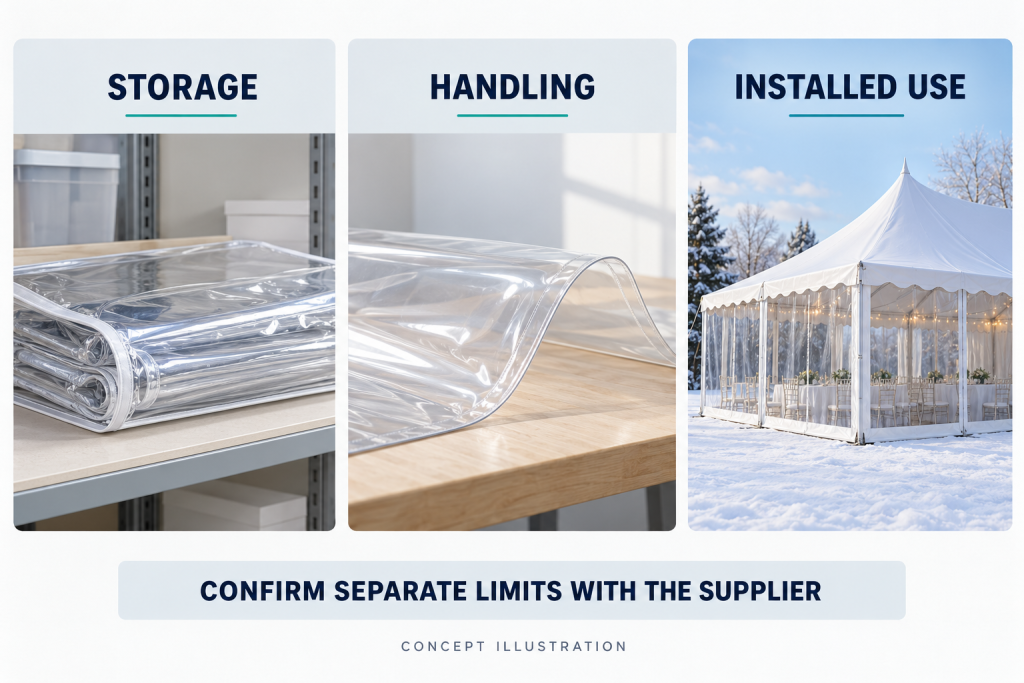
Before buying clear PVC for a rental fleet or seasonal venue, ask the supplier to separate storage, handling, and installed-use limits. Match the answer to the actual roof or wall product. This is a purchasing check, not approval to erect or operate a tent in particular weather.
Read what a cold-crack rating actually describes
A cold-crack value needs its test context. Was the specimen held still, bent, impacted, or tested by another method? What material and thickness were tested? Ask for the test reference and the supplier’s explanation of how the result relates to the finished panel.
Aztec Tents makes the distinction explicit in the unsupported-clear-fabric section of its Standard Frame product manual. It warns that its static cold-crack rating does not establish suitability when clear vinyl is moved or exposed to wind in colder conditions. Its published limits apply to its own products. They should not become a generic temperature specification for another supplier’s clear tent.
The useful procurement answer therefore includes both the material test and practical operating instructions. A brochure that gives only a low-temperature value leaves the handling question open. The PVC material checklist provides the starting fields for identifying the quoted fabric.
Identify the clear section before comparing instructions
A transparent window insert, a complete clear sidewall, and a clear roof are different components. Confirm whether the clear film is supported or unsupported, how it connects to reinforced edges, and which instructions apply to the finished assembly. A material description for an opaque roof should not be used as the care specification for a clear window.
Rainier Tent’s clear tops and sidewalls technical note discusses unsupported clear vinyl, repeated-fold cracking, and changes in fit over time. It also describes reinforced panel edges in its own manufacturing approach. This supports asking about construction and handling history; it does not establish a lifespan or shrinkage allowance for the panel you are buying.
For existing stock, retain the order reference, component label, and photographs of the panel and its attachment edges. Compare replacement options through the clear party tent material guide, then have the supplier confirm the actual construction.
Compare the whole journey with the supplied limits
Write down the expected conditions from storage through return transport. Include the warehouse, delivery vehicle, unloading area, setup period, event hours, and dismantling window. The warmest part of the day may be the occupied event; staff still need instructions for the colder work before and after it.
| Stage | Question for the supplier |
|---|---|
| Storage and transport | What conditions and packaging apply while the panel is packed and stationary? |
| Unpacking and installation | At what conditions may this panel be unfolded, moved, and fitted? |
| Installed use | Which weather, inspection, and operating restrictions apply to this configuration? |
| Dismantling and repacking | What should the crew do if conditions fall outside the approved handling limits? |
For example, an evening reception might finish after the delivery and setup conditions have changed substantially. Ask whether the planned dismantling time remains workable under the product instructions. If it does not, resolve the schedule or component choice with the supplier before accepting the booking. An interior heating plan alone does not answer the question of handling packed panels outdoors.
Keep these answers with the model-specific specification documents. Record the document revision so the warehouse and installation teams use the same instructions.
Avoid improvised heating and forced fitting
If a panel appears stiff, distorted, or difficult to fit, stop the adjustment and ask the responsible installer or supplier to assess it. Do not use a generic temperature figure to justify pulling harder, applying a heat gun, or changing the attachment arrangement.
Anchor Industries’ clear-vinyl care instructions warn about dimensional changes and damage from unsuitable cleaning or heat. They demonstrate why warming, cleaning, and tensioning must follow the exact product instructions. Their methods and intervals are not universal procedures for other tents.
Record visible creases, cracks, damaged edges, and changes in fit with the component identity. Keep an item awaiting assessment separate from ready stock. A supplier’s review should decide the next action; a clear appearance or a panel becoming easier to bend is not evidence that damage has been repaired.
Make the handling plan part of the order
The purchasing decision should include who receives the instructions, what storage and transport arrangements are available, and how a restricted panel affects the next booking. If a quoted product cannot support the planned handling schedule, discuss another approved material or configuration before ordering.
Use the commercial party tent buying brief to record those constraints alongside the layout and enclosure choice. Send the panel reference, site season, and setup and teardown schedule when requesting a product-specific recommendation.