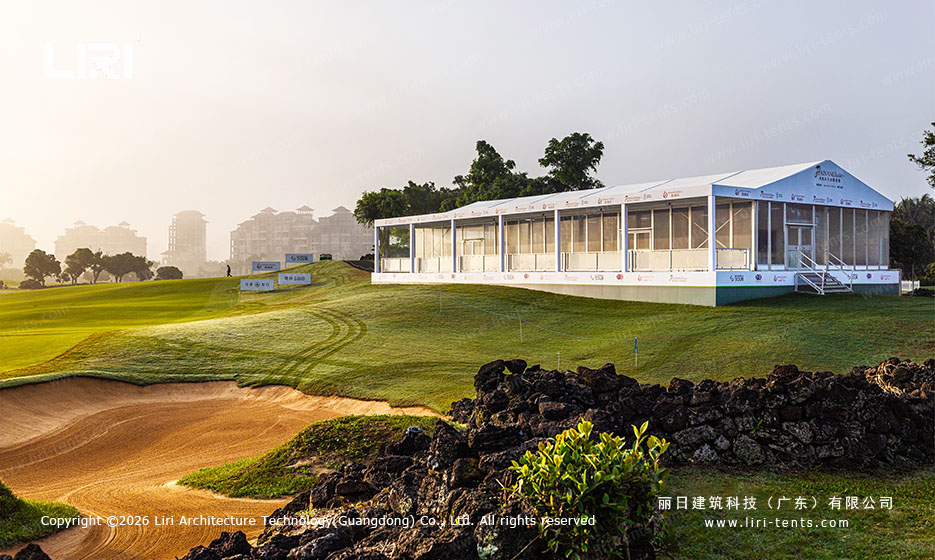
Buying a commercial party tent starts with an operating brief, not a catalogue photo. Define how the structure will be used, where it will be installed, how often it will move, and what must fit inside. Then compare written, model-specific specifications rather than relying on generic ranges.
1. Start with Size, Capacity, and Usable Floor Area
Guest count is only the first input. Dining tables, aisles, buffet lines, stages, bars, storage, service access, and emergency routes all use floor area. Work from a scaled layout and keep metric and imperial dimensions explicit. The Party Tent Size Guide is the primary planning hub; capacity pages for 50 guests, 200 people, 500 people, and 1,000 people show how operating zones affect the choice.
2. Choose the Structural System
Prioritizes open interior space and flexible furniture, stage, or service layouts.
Useful for entrances, booths, registration, food service, and linked small zones.
Curved roofs, double levels, and custom forms require a project-specific engineering review.
Ask for the exact model, frame profile, bay system, connection details, component weights, and relevant engineering documents. Do not assume that a rating or specification from one model applies to another.
3. Compare PVC Fabric and Wall Options
Request the roof and wall material data for the offered configuration: fabric construction, weight, colour or translucency, seam method, fire-performance documentation, UV treatment, cleaning guidance, and repair or replacement compatibility. The PVC Party Tent material guide explains what to ask; the Party Tent Specifications guide keeps the technical comparison in one place.
4. Plan Walls, Doors, Flooring, Climate, and Accessories
A complete quote should identify which components are included and which are optional. Confirm wall choices, door types and dimensions, flooring transitions, lighting support, lining, heating or cooling interfaces, and power requirements. Use the Accessories & Replacement Parts hub to build the package around the selected tent model.
5. Check Site, Weather, and Engineering Requirements
Share the installation address, ground surface, available footprint, access route, overhead restrictions, drainage conditions, and intended installation period. Ask the supplier to state the offered model’s project-specific wind and load information in writing, together with required anchoring or ballast. Local permits, fire rules, and occupancy requirements must be confirmed with the relevant authority for the actual site.
6. Confirm Installation Responsibilities
Clarify who supplies drawings, tools, lifting equipment, anchoring hardware, supervision, local labour, and final inspection. Ask for assembly documentation before dispatch. Review the Party Tent Installation Guide for the basic workflow.
7. Define Shipping, Packing, and Delivery Scope
Shipping cost and responsibility depend on packed volume, component protection, route, destination, and agreed trade terms. Request a packing list, package dimensions and weights, loading plan, shipping scope, destination responsibilities, and a process for reporting transit damage. Container quantities, ports, lead times, duties, and local delivery charges must be confirmed in the quotation.
8. Compare Total Cost of Ownership
| Cost area | What to compare |
|---|---|
| Purchase | Frame, roof, walls, fixings, required accessories, documentation, and options. |
| Delivery and setup | Packing, freight, local handling, lifting equipment, labour, supervision, and site preparation. |
| Operation | Cleaning, inspection, storage, transport between sites, and seasonal weather procedures. |
| Lifecycle | Replaceable fabric panels, connectors, fasteners, compatible parts, and upgrade paths. |
Rental companies should model turnaround time, storage footprint, repeat installation labour, inspection records, and configuration flexibility using their own utilisation, labour, and local rental data. A universal payback promise is not reliable.
9. Plan Maintenance and Replacement Parts
Record the tent model, frame profile, bay size, fabric panel position, connector type, hardware dimensions, and original order reference. A documented parts list reduces downtime when a panel, wall, fastener, or connector needs inspection or replacement. Availability and compatibility should be confirmed against the exact model.
10. Commercial Party Tent RFQ Checklist
- Intended use and operating schedule
- Site address and installation surface
- Required clear internal dimensions
- Guest count and scaled layout
- Metric or imperial size confirmation
- Frame model and bay configuration
- Roof and wall material data
- Door, flooring, lighting, lining, and climate options
- Anchoring or ballast proposal
- Project drawings and engineering documents
- Packing list and package dimensions
- Shipping scope and delivery destination
- Installation responsibilities
- Replacement-parts identification
- Warranty terms for the quoted order
- Quote validity and exclusions
Questions to Resolve Before Approval
Which size should I buy?
Choose from a scaled operating layout, not headcount alone. Include circulation, service, stage, storage, and weather-protection needs.
What warranty applies?
Request the written warranty for the exact quotation. Confirm covered components, exclusions, claim evidence, remedy, and who pays freight or labour.
Can the tent be customized?
Ask which dimensions, colours, printed panels, doors, walls, and accessories are available for the selected frame family, and how each option affects documentation, packing, and delivery.
Choose the Next Buyer Path
Shipping and receiving
Define packing, documents, unloading, receiving inspection, and the process for shortages or transit damage.
Rental-fleet purchase
Standardize sizes and accessories, then plan repeated installation, inspection, storage, transport, and replacement stock.
Ownership support
Identify replacement PVC and frame components against the exact model before adding spares to the order.
Request a Model-Specific Commercial Quote
Send the project brief and checklist above. A useful quotation should identify the exact structure, included components, documentation, delivery scope, and exclusions.