Buying party tents for a rental business is an inventory decision, not a one-event purchase. The fleet needs repeatable sizes, compatible components, documented inspection routines, practical transport and storage, and enough replacement support to keep equipment available between bookings.
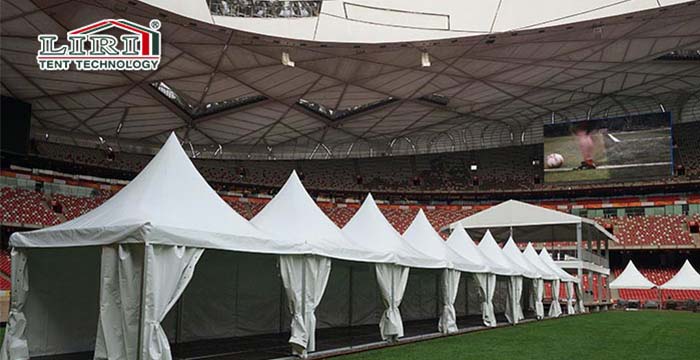
Rental Fleet Planning: Quick Facts
Standardize first
Reduce incompatible inventory by choosing a controlled set of frame families, bays, wall systems, doors, gutters, and anchoring interfaces.
Plan the turnaround
Define how every return is counted, cleaned, dried, inspected, repaired, repacked, and released for the next booking.
Buy the support package
Include records, tools, handling equipment, spare hardware, replacement-component identification, storage, and transport in the buying decision.
1. Start with Inventory Planning
Map the Party jobs the business expects to serve: small backyard gatherings, corporate parties, community programs, festivals, hospitality layouts, and larger clear-span installations. Record the common footprint, guest flow, site surface, service zones, weather plan, and accessory package for each job type.
Build the opening fleet around configurations that can be booked repeatedly. Avoid adding a size only because it fills a number sequence; add it when the booking mix, transport capacity, storage, setup crew, and revenue plan support it.
2. Standardize Tent Sizes and Components
Standardization can reduce training time, packing errors, and spare-parts complexity. Compare whether frames share bay lengths, profiles, connectors, base plates, wall tracks, doors, gutters, anchoring interfaces, and hardware. Ask the supplier to confirm compatibility in writing for the selected models.
Use the Party Tent Size Guide for layout planning, then confirm model-specific details through the Specifications checklist.
3. Plan for Repeated Installation and Teardown
A rental tent is handled more often than a structure installed for one long project. Evaluate the setup sequence, component identification, crew size, tools, lifting or handling needs, anchoring options, packaging, and how parts will be protected during transport. Training and site-specific safety responsibilities should be defined before the first booking.
4. Inspect the Frame and PVC Between Uses
| Inspection area | Record before the next booking |
|---|---|
| Frame members | Identification, visible deformation, connection areas, and whether the part remains approved for service. |
| Connectors and hardware | Count, condition, corrosion or damage observations, and matched storage location. |
| PVC roof and walls | Cleanliness, dryness, panel position, seams, edges, fasteners, windows, doors, and visible damage. |
| Base and anchoring system | Complete set, condition, surface compatibility, and project-specific anchoring plan. |
| Accessories | Quantity, model compatibility, cables or controls where applicable, and packing status. |
5. Build a Spare-Parts and Replacement-Fabric Process
Keep the original order reference, model, drawings, packing lists, and part records with the fleet file. For replacement PVC or frame components, send measurements and clear photos when an original part number is unavailable. The Accessories and Replacement Parts Support Hub lists the identification information to include in an RFQ.
6. Design Storage and Transport Around the Fleet
Storage should keep cleaned and dry components identified by model and booking package. Separate small hardware, protect PVC from avoidable abrasion or moisture, and use a check-in/check-out record so missing items are found before loading for the next site. Transport planning should account for package dimensions, weight, handling method, loading order, site access, and secure unloading.
7. Standardize the Accessory Package
Define which walls, doors, gutters, flooring interfaces, lining, climate-control interfaces, lighting supports, furniture, and anchoring options belong to each rental package. Confirm that every accessory is compatible with the exact frame and planned site use.
8. Compare Used and New Party Tents
New equipment offers a documented starting configuration and can simplify standardization. Used equipment may reduce acquisition cost, but the buyer should verify model identity, component completeness, PVC condition, frame and connection condition, repair history if available, accessory compatibility, and replacement support. Review the existing Used Party Tents owner page without treating price alone as the decision.
9. Create a Maintenance and Availability Record
Track each structure by model or fleet ID. Record bookings, installation observations, cleaning, drying, inspection, repair, component replacement, storage location, and release status. The goal is to know whether a complete, compatible package is ready before it is promised to the next customer.
Rental Company RFQ Checklist
- Target Party use cases and expected booking mix
- Preferred standardized sizes and quantity by model
- Site surfaces and anchoring options
- Wall, door, gutter, flooring, and accessory packages
- Repeated setup, tools, training, and documentation needs
- Transport, storage, packing, and component-identification requirements
- Spare hardware, replacement PVC, and compatibility support
- Destination, shipping responsibility, receiving, and inspection process
- Written warranty, exclusions, and claim requirements for the quoted order
Build a rental-fleet request
Send the expected job mix, target fleet sizes, setup resources, storage and transport limits, accessory package, replacement needs, and destination.