A commercial event tent is the backbone of any outdoor gathering because it creates a defined, weatherproof space where everything else can be planned around it. Once the structure is in place, the flow of guests, the seating plan, the catering line, and the stage all fall into order. Without it, an outdoor event is at the mercy of wind and rain; with it, the organizer controls the environment from ground to ridge.
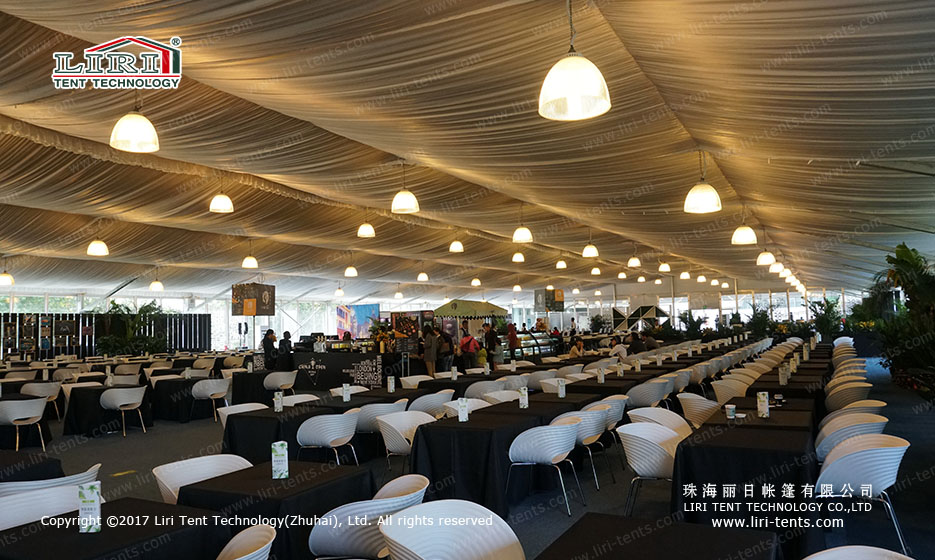
Why a Clear-Span Event Tent Works
The strongest feature of a modern event tent is the clear span. With no interior pole, the full floor is usable, so a small stage, long banquet tables, a bar, and a dance floor all fit in one bay. Ridge heights of 4m to 8m leave room to hang drapes, diamond lamps, fans, and fabric ceilings that would be impossible under a low roof. The PVC roof and wall system swaps panels quickly, so the same frame serves a product launch one week and a wedding the next. That adaptability is why planners return to the party tent format for almost every brief. Organizers also reuse one frame across a whole season, rebranding between jobs, which spreads the cost of the structure across many events instead of one.
Span Options and Dimensions
Event tents are built from repeatable bays, so size scales in clean steps. Common clearspan widths run from 8m up to 18m, with eave heights around 3.3m to 4m and bay distances of 5m. An 8m span suits a boutique reception; a 12m to 15m span handles a seated dinner with a stage; an 18m span covers a trade show aisle or a concert pit. Because bays repeat, a tent grows by adding another 5m module rather than rebuilding from scratch. Eave height matters as much as width for tall props and suspended decor, so the 4m eave is worth specifying when a band or a stage is part of the plan.
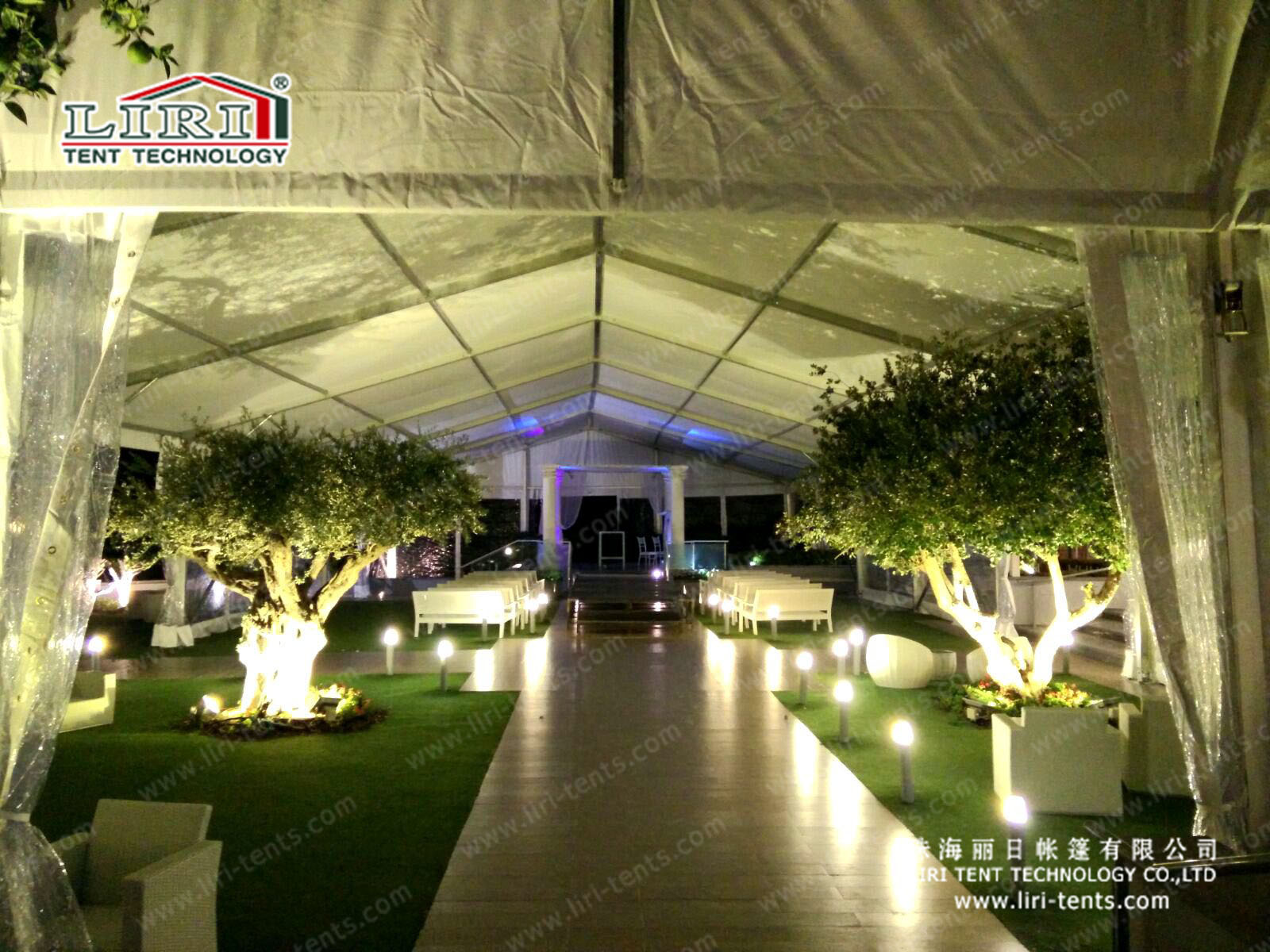
Setup on Grass, Backyard, or Concrete
An event tent is not tied to one surface. On grass it uses ground stakes or augers; on hard ground it uses weighted ballast that leaves no mark. A 6x10m, 8x12m, 10x20m, or 20x30m footprint fits most backyards and car parks, so the venue size drives the tent rather than the other way around. After the event the frame dismantles in a day and the ground returns to normal, which removes the anxiety of permanent construction. The backyard party tents guide covers surface checks and ballast choices for home sites. Crews map services and ballast during the site survey, so the install day is a routine build rather than a series of on-site decisions.
Matching the Tent to the Event Type
Different events ask for different structures. A large exhibition needs a wide, tall clearspan with solid walls, while a motorsport weekend needs open-sided hospitality that still shades the crowd. A sports court wants a canopy that clears the sideline, and a gala wants a transparent roof for the night sky. Reading the outdoor party tent for large exhibitions helps match width and wall style to the programme before the order is placed. Reviewing a past layout from a similar event also shortens the design meeting, because the planner starts from a proven footprint instead of a blank sheet.
Comfort, Power, and Finishing
A tent becomes a real venue once climate and power are planned. Heating or cooling units clip to the frame, flooring levels the ground, and a circuit-free power plan runs lights, sound, and screens safely. The same shell that hosts a daytime market can host an evening dinner with chandeliers and a printed floor. For hospitality briefs, the VIP hospitality tents for motorsport events explain how to balance open sightlines with shaded comfort. A documented power plan also keeps the permit process simple, since inspectors can see load, routing, and isolation before the first guest arrives.
Interior design is really a big course.
Can you offer event tents for sale, you need to provide enough catalogues and price tables.
Can I use a party tent for a luxury wedding?
So beautiful and gorgeous party tent really do not want to dismantle.
I need a 20x60m event tent, please quote.
Is there a detailed user manual or instruction book provided? What are the key points in the content?
We are looking for a tent to accommodate 500 people for a business exhibition in February. The venue is the exhibition center in the city center. In addition to basic tent facilities, we also need to provide exhibition stands, lighting, and audio equipment. Please provide a detailed quote that includes all these requirements.
We need a large tent for our winter carnival event in November. The venue is an open field on the outskirts of the city. We require a very large tent to accommodate various activity areas, including gaming, dining, and rest areas. Please provide a detailed quote that includes tent, internal facilities, safety measures, and setup/teardown costs.
We care about the air quality inside the tent, and we don’t want guests to feel stuffy or unventilated. Could you explain the advantages of party tents in terms of ventilation design and air circulation?