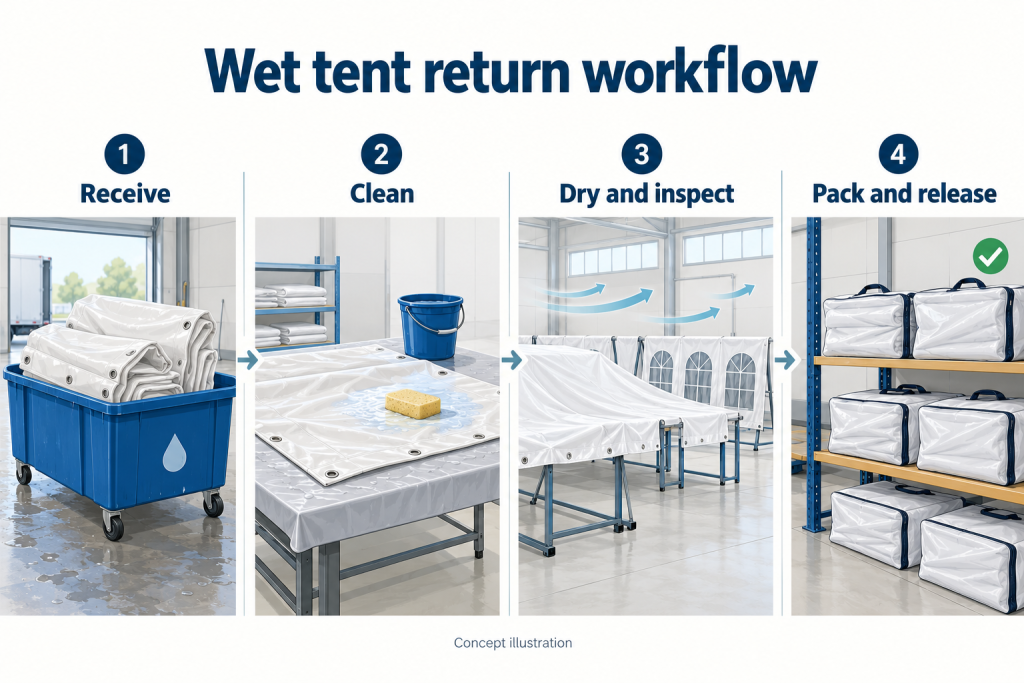
A wet party tent returning from an event needs a place in the work queue before it needs a place on the shelf. Keep the roof and sidewall panels out of ready-to-hire stock until they have been cleaned as required, dried completely, inspected, and recorded. A closed bag can conceal damp folds even when the exposed surface looks dry.
For a rental company, the practical question is who handles that return and how the booking team knows when it is available again. The broader rental fleet buying guide covers purchasing and standardization. This workflow addresses the narrower job between a rainy teardown and the next load-out.
Give wet returns a separate receiving status
Before unloading, assign a receiving location and a person responsible for the fabric. Use a visible label such as “Wet return: drying required” and carry that status into the inventory record. A bag sitting beside clean stock should not become available merely because someone moved it onto a rack.
Record the fleet ID, event return date, panel identity, and observed condition. Keep the labels with the panels through cleaning and drying. If several structures return together, preserve the link between each roof, sidewall, and its original tent model.
For example, a proposed check-in record might show a roof awaiting drying while its matching sidewalls are already dry. Keep those component statuses separate, then release the complete booking package only after its required components have cleared inspection. This prevents a partly ready kit being mistaken for a complete one.
Clean to the fabric instructions before planning the drying space
Use the care instructions for the actual fabric, coating, printing, and clear window material. A cleaning method suitable for one panel may be unsuitable for another. Ask the supplier for written guidance if the material cannot be identified.
CELINA’s tent care guidance warns that damp storage encourages mildew and that abrasive tools or unsuitable cleaners can damage tent fabric. It also calls for thorough rinsing and drying before storage. Those general principles support the workflow here; they do not establish a cleaning-product approval for a different manufacturer’s tent.
Work on a clean protective surface and follow the approved cleaning and rinsing procedure. Keep loose metal hardware away from the fabric. Avoid experimenting with bleach, solvents, high-pressure washing, or direct heat when the manufacturer has not approved that method.
Printed panels and clear sections deserve their own instructions. When reviewing PVC party tent options, include material identification and care documentation in the order file so warehouse staff can retrieve it later.

Check hidden folds before closing the bag
Provide enough protected space to open the panels and expose both faces. Follow the manufacturer’s handling instructions, using suitable clean supports and keeping fabric away from sharp edges or dirty floors. Leave access for inspection rather than crowding every available surface.
CELINA’s storage advice specifically calls attention to seams and corners when checking dryness. Its guidance also recommends fully drying fabric after a rainy teardown before long-term storage and keeping stored fabric off the floor.
Give overlapping folds, reinforced edges, window joins, and any areas identified in the product instructions particular attention. Reposition the material as needed to inspect concealed surfaces. If moisture remains, retain the drying status and check it again before packing.
Set the work plan around the condition of the panels and the available drying space. There is no universal drying time that can safely be promised for every panel, warehouse, or weather condition. The next dispatch time is a planning constraint, not evidence that the fabric is ready.
Separate drying clearance from damage clearance
A dry panel may still need attention. Record visible tears, seam concerns, worn edges, damaged fastening points, or a clear section that needs specialist review. Photograph the location with its panel identity so the next person can find the same area.
Route questionable components to the supplier or a qualified repair provider. A warehouse check should not be treated as engineering approval. Keep affected items out of ready stock until the required assessment or repair is complete and documented.
When replacement is needed, follow the accessories and replacement-parts identification process. Include the model, original order reference if available, panel position, measurements requested by the supplier, and clear photographs. A similar-looking roof or wall should not be assumed compatible.
Make the release record useful to the booking team
Use a short record that answers whether the required package can be picked. A suggested format is:
| Field | What to record |
|---|---|
| Identity | Fleet ID, tent model, roof or wall position, and bag reference |
| Return condition | Wet, soiled, missing identification, or visible damage |
| Work completed | Cleaning method reference, drying check, inspection, and any repair record |
| Release | Responsible person’s name, actual check date, storage location, and open restrictions |
After clearance, pack to the product instructions in suitable clean, dry packaging and store in a protected location. Keep a component awaiting repair visibly separate from the completed kit. The booking team should be able to see that restriction without opening every bag.
Repeated wet-return backlogs are useful procurement evidence. Record which tasks occupy space, which panels wait longest, and which replacement enquiries remain unresolved. Use your own observations when planning equipment quantities, warehouse space, and support requirements through the party tent buying checklist.
For a new fleet order, ask for model-specific fabric care and replacement support alongside the tent specification.