Water dripping inside a party tent can come from condensation, rain entering through a damaged seam, or water travelling from another part of the enclosure. Ordering a replacement roof before finding the source can leave the original problem unresolved. For rental operators and venue buyers, the useful first step is to document where the water begins and under what conditions it appears.
This check concerns moisture during use. It does not approve a tent for continued operation or replace the supplier’s inspection instructions. If water affects electrical equipment, guest circulation, or the condition of the structure, keep the affected area out of use and involve the responsible event and installation specialists.
Look for the starting point, not just the puddle
Condensation forms when moist air meets a surface cold enough for water vapour to condense. It can collect on the inside of a roof or wall even when rain has not passed through the fabric. People, wet ground, and damp items add moisture to an enclosed space. Outwell’s manufacturer explanation of condensation describes these mechanisms, although its camping-tent vent arrangements should not be applied directly to a commercial frame tent.
A puddle identifies where water ended up. Roof slopes, frame members, and linings can carry it away from the starting point. Observe from a safe, accessible position; leave roof access and any disassembly to the installer.
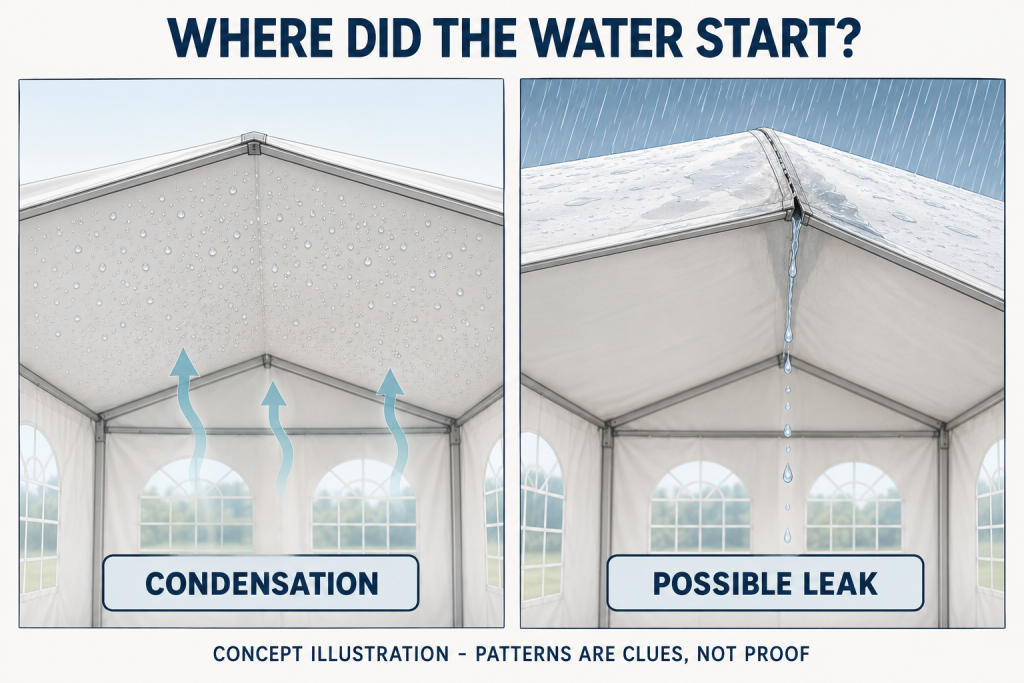
| Observed pattern | What to investigate |
|---|---|
| Fine droplets over a broad inner surface, including during dry weather | Condensation is plausible. Record interior moisture sources and temperature changes. |
| A repeated local drip near the same seam or attachment during rain | Ask the installer to inspect that location for damage, fit, and the water path. |
| Water close to a doorway, wall base, or connection between structures | Check wind-driven entry, runoff, and the relevant joint or gutter arrangement. |
| Dripping below a lining with no visible source | Arrange an inspection above it. The visible drip may be displaced from its origin. |
These patterns are clues. Condensation and rain entry can occur together, so a broad wet surface does not clear a suspect seam.
Build a short moisture report before changing the setup
Record the tent model, roof or wall panel position, and the date and time. Take one wide photograph showing the bay and a closer view of the wet area. Note whether it was raining, whether the drip began before guests arrived, and which doors, walls, and climate equipment were in use.
If suitable instruments are available, record indoor temperature and relative humidity alongside the observations. Keep the instrument location consistent when comparing readings. A single humidity reading cannot establish that a roof is defective, and indoor air temperature alone does not reveal the temperature of the roof surface.
For a supplier enquiry, include the original order reference and any earlier inspection or repair at that location. The PVC material guide helps identify the fabric information to request. Confirm the actual panel and coating before using a cleaner, sealant, or repair product.
Review moisture sources and approved airflow together
Move wet equipment to a suitable separate area where practical. Record damp ground, recent cleaning, and catering activity as possible contributors. Check whether decorations, stored items, or temporary partitions obstruct the intended airflow path.
Have the installer or climate-control provider review the approved ventilation arrangement for the actual enclosure. Opening or removing sidewalls can change the configuration on which the operating documents depend. Use the manufacturer’s permitted arrangements and current weather procedures; avoid treating a generic suggestion to open a flap as approval for every tent.
Heating equipment also needs a model-specific review. Its installation and ventilation requirements depend on the equipment and how combustion products are handled. Increasing the thermostat alone does not identify the moisture source. Cascade Designs’ condensation guidance supports the general role of moisture sources and air exchange; it does not provide a commercial tent HVAC design.
Use the accessories planning hub to define the interfaces that need confirmation, including wall openings, ducts, lining attachments, and compatible components.
Compare a lining and a thermal roof as separate purchases
A decorative lining and an engineered insulated roof perform different jobs. Ask what each proposed component is intended to do, how it fits the frame, and how the space above a lining can be inspected. A finished ceiling should not conceal an unresolved water source.
Some commercial systems use an inflated double-skin PVC roof to reduce condensation. HTS TENTIQ’s roof-system explanation describes that arrangement and its pump and pressure-maintenance requirements. This is an example of a specific system, not a promise that an extra fabric layer will deliver the same result on another tent.
Before approving an upgrade, request compatibility, installation instructions, inspection access, power needs where applicable, and maintenance responsibilities. Compare these against the model-specific specification checklist. Have the supplier state the intended condensation-control function in writing, including its limits.
Close the enquiry with a documented next action
Keep the moisture report with the supplier’s response. Identify whether the next action is a fabric inspection, a joint or drainage correction, a ventilation review, or a proposed equipment change. Assign responsibility and record what evidence will show that the action worked under comparable conditions.
For a new purchase, add the intended season, enclosure layout, moisture-sensitive equipment, and expected operating pattern to the party tent buying brief. This gives the supplier a concrete basis for discussing the roof and climate package before the order is placed.
Send your tent model, site conditions, and moisture photographs when requesting a model-specific assessment.