The fabric is the part of a party tent you see, touch, and depend on when the weather turns. Most tents for sale are covered in either PVC-coated fabric or PE, which stands for polyethylene. The choice affects how long the tent lasts, how it handles rain and sun, and what you pay. This guide explains both materials in plain language and helps you pick the right one.
What the fabric actually does
The roof and sidewalls keep rain and harsh sun away from your guests and your equipment. The frame carries the weight and the wind load; the fabric sheds the weather. A strong frame under a poor cover still leaks, sags, or fades long before it should.
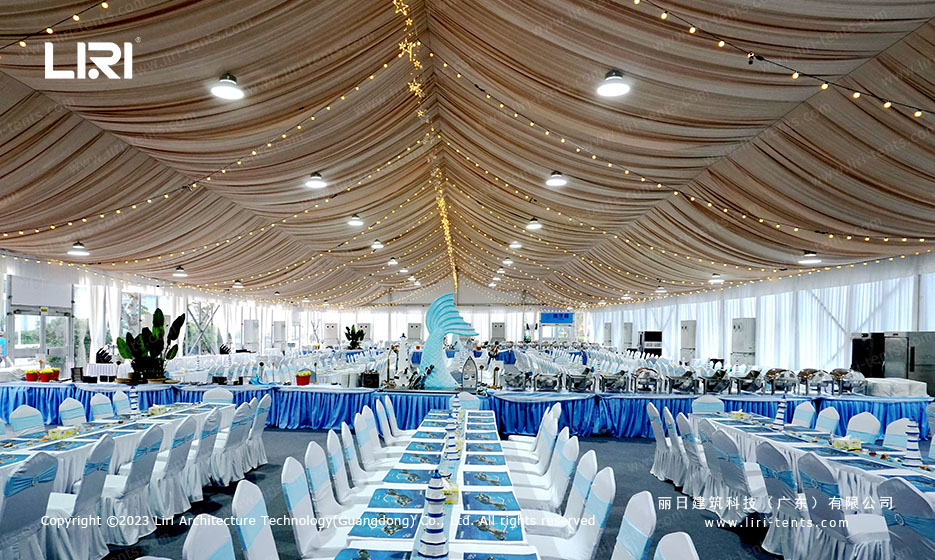
Fabric also shapes how the space feels from the inside. Solid white fabric gives a bright, clean ceiling. Clear panels bring the view in and work well beside scenic locations.
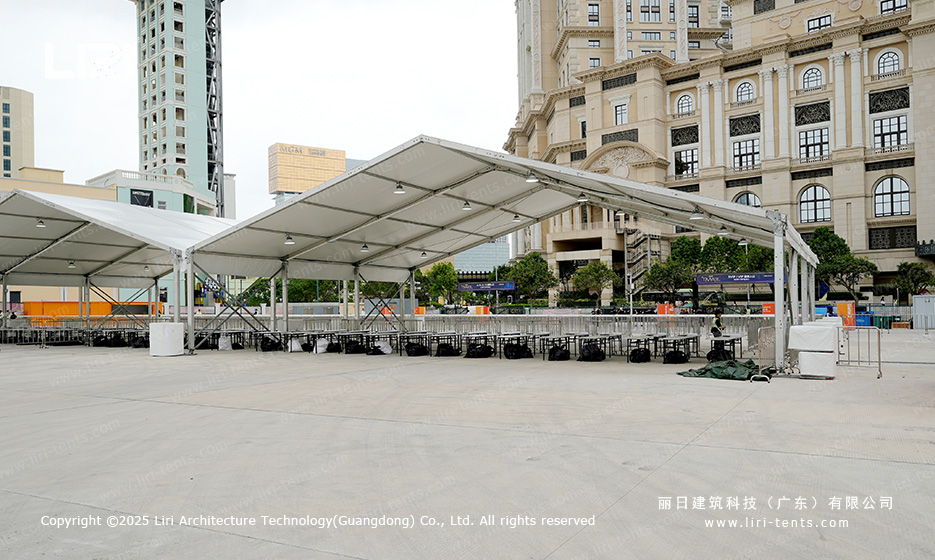
PVC-coated fabric: the commercial standard
PVC-coated fabric starts as woven polyester cloth. Both sides are coated with PVC, a tough waterproof plastic, so water cannot pass through the weave. On commercial tents the panels are welded together instead of stitched. A welded seam has no needle holes, so it stays watertight season after season.
PVC is heavier and stronger than PE. It takes repeated assembly, long installations, and real weather far better, as long as the frame is anchored the way the manufacturer asks. With basic care, a PVC cover serves for many seasons, which is why rental companies and venues keep choosing it.
It also looks good under light and takes printing well, so sponsors and brands can appear right on the sidewalls. You can order it as solid white, as a softer translucent type that lets daylight through, or with clear panels used as windows.

If your events run often and the tent needs to look sharp every time, take a closer look at our PVC party tents for sale. Most commercial frame tents, from small party sizes to large clear span models, use this kind of fabric.
PE fabric: the lighter, budget-friendly option
PE is woven polyethylene, the same family of plastic as a garden tarpaulin, but made to a far better standard. It is light, inexpensive, and easy to handle, which is why small pop-up canopies and market stalls so often use it.
The trade-off shows in the details. PE covers are usually stitched and taped rather than welded, so needle holes remain. In steady, wind-driven rain a stitched seam can slowly let moisture through. The fabric also wears faster: repeated folding, sun, and long installations make it fade or turn chalky sooner.
For a tent that goes up a few weekends a year, that trade-off is often fine. A family garden party, a school fair, or a one-time market stall can all be covered well at a lower price.
How to choose between PVC and PE
Start with one honest question: how often will this tent be used? A cover that works once or twice a year can be PE and still serve you well. A rental company, a hotel lawn, or a busy event venue will get its money back from PVC many times over.
Think about setup, too. Heavier PVC fabric asks for more hands and a little more time at each assembly. If your crew sets up every week, that extra effort is worth the longer life. If you only assemble rarely, the lighter cover may suit you better.
Finally, match the fabric to the occasion. Weddings, banquets, and corporate events favor the clean white interior of a PVC tent. Casual markets, fairs, and backup shade can be handled by lighter fabric without any loss.
Once you know the fabric, size becomes the next decision. Our small party tent sizes and buying guide walks through that step with worked examples.
Questions worth asking before you order
Fabric weight is measured in grams per square metre, and heavier usually means tougher. Ask for the number rather than a word like heavy duty. Ask how the seams are joined, because welded and stitched seams behave differently in long rain.
It is also fair to ask what the warranty covers on the fabric itself, and whether spare panels or a repair kit are included. For any claim about flame retardancy, ask the supplier for written proof instead of relying on a listing page. Good manufacturers answer these questions without hesitation.
Keeping the fabric in good shape
Both materials last longer with simple habits. Rinse the cover with mild soap and water, and skip harsh brushes or strong chemicals. Let it dry completely before you fold it, because damp fabric packed away can grow mildew and a smell that is hard to remove.
Store the folded cover off the ground in a dry space away from rodents, and check it over before each season starts. Ten minutes of care before storage prevents most of the damage we see on returned covers.
Both fabrics have a real place. PE keeps the price low for occasional use, while PVC earns its cost wherever the tent works often and has to look sharp. If you already know your dates and guest numbers, tell us about your event and we will help you match the fabric and the frame.