An aluminum frame party tent is the workhorse behind most race-day hospitality because the structure goes up fast and stays put under crowd pressure. Marathon organizers use clearspan bays for accreditation, medical, and VIP lounges that must open before the first runner arrives. The rigid frame carries signage and rigging that a soft canopy simply cannot hold through a long event day.
The same bay serves the expo on Saturday and the finish-line lounge on race morning, which spreads the cost across the whole event week. Because the profile is modular, crews add bays as the guest list grows without changing the frame type. That scalability is why event managers standardise on aluminum frame tents for recurring sports programs in many cities.
Safety is the deeper reason the format wins on a live course with moving traffic. A ballasted frame holds its shape if a vehicle clips a corner or a gust rolls through the village. Officials trust the enclosed bays to protect volunteers and equipment, which matters more than looks when the road is about to open.
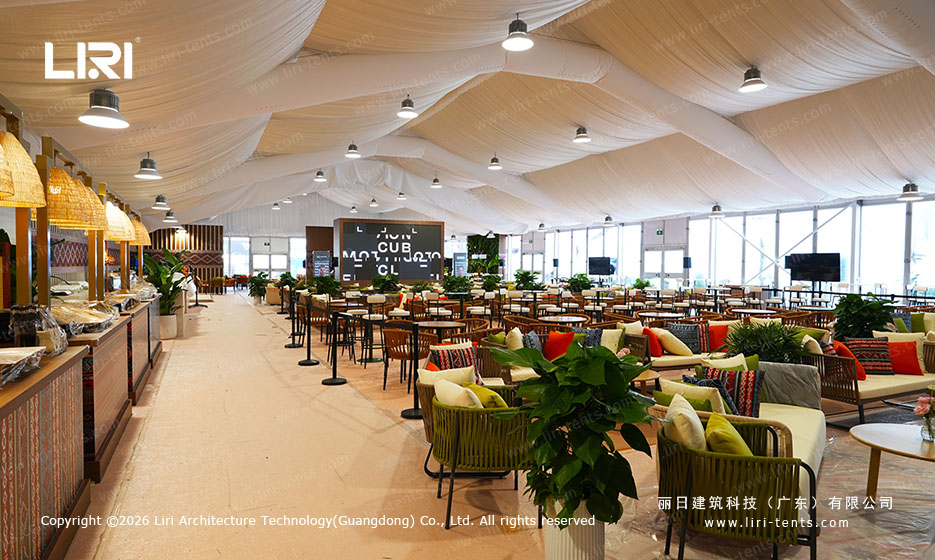
Where Frame Tents Serve a Marathon
Accreditation and bag drop sit under clearspan bays at the village, where a steady queue needs a dry, lit space. A large party brand promotion bay doubles as the sponsor stage with a printed valance and a backlit logo. The open floor keeps lines moving even when the field is full at the peak of registration.
Along the course, smaller bays act as aid stations and marshals’ posts that can be struck in minutes between waves. A pagoda tent food festival style unit marks each checkpoint with a clear roofline. Runners spot the peak from a distance, which helps with wayfinding on a long and crowded route.
The finish area is where the frame earns its keep with a packed crowd and live cameras. A wide bay holds the timing team, the media pen, and a presentation space under one roof. Crews dress the eave with the event brand so every photograph carries the sponsor without a separate banner crew.
Specifications and Frame Options to Compare
Marathon-grade frames use a 166 x 88 x 3 mm or 204 x 110 x 4 mm aluminum profile with eave heights near 3 m to 4 m. Bay widths of 10 m, 15 m, and 20 m set the clear span, and a 650 g to 850 g PVC roof handles repeated strike-and-reset cycles. Sidewalls clip in for wind breaks or come off for open spectator viewing along the fence.
Against a commercial banquet party tent, the race build trades drape for speed and ballast on a tight schedule. A VIP hospitality motorsport tent adds flooring and climate control for premium guests. Standardised connectors mean one spare kit serves every bay on the site, which simplifies the crew’s loadout.
Ballast plans deserve as much thought as the frame, because a live course leaves no room for error. Water blocks or drilled plates hold the base on hardstand, while screw stakes take grass verges clear of the lane. The team documents the plan per bay so a night shift can reset the same weights without a senior crew member on site.
Climate control is worth planning for a lounge that runs from a cool morning to a warm afternoon on the course. A packaged unit clips to the eave and feeds ducting along the frame without blocking the floor for guests. Crews size the unit to the bay so the room stays comfortable through the presentation and the photos.
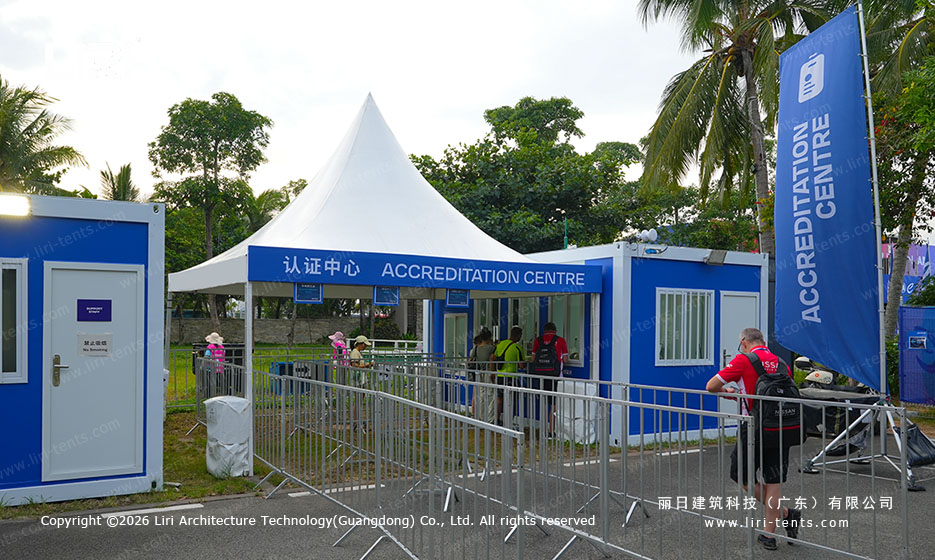
Setup, Anchoring, and Race-Day Care
Hardstand at the start line takes water ballast or drilled plates, while grass verges take staggered stakes driven clear of the course. Crews raise the frame, tension the roof, then dress the eave with branding before the road closes for the event. A pagoda tent options set shows how teams place peaks at each gate for clear sightlines.
During the event, a watch keeps an eye on guy lines and ballast as crowds build through the morning. After the last runner, the bays come down bay by bay so the road reopens on the published schedule. A quick frame wipe and a dry fabric fold keep the kit ready for the next city on the calendar.
Communications tie the structure to the rest of the operation on a complex day. Radios at each bay let the crew report a loose wall or a missing pin before it becomes a hazard. That loop between the tent team and race control is what keeps a large site calm under pressure from dawn to pack-down.
Cleanup starts while the last guests leave, because the road reopening time is fixed in the permit for the day. The crew labels each part as it comes down so the next load-in runs faster and with fewer mistakes. A tidy pack-out also protects the fabric from dragging on asphalt during the strike at the finish.
Frame tents can be installed on the grass
The frame tent is indeed very sturdy. Last May, the store needed a temporary frame and custom-made a 4x10m frame tent. The space is large, with a height of 4 meters, which is very attractive.
Your aluminium tent seems much stronger than a pole tent.