Home » Tents » VIP Hospitality Tents for Motorsport Events: A Practical Guide
Motorsport VIP Tent
When a world-class racing series comes to town, the pressure on event organizers is immense.
You need to deliver premium hospitality spaces that match the prestige of the brands involved-all within a compressed setup window, on mixed terrain, and under unpredictable weather. A standard rental tent won’t cut it. VIP guests expect climate control, unobstructed sightlines, and finishes that feel architectural, not temporary.
Miss any of these marks and you risk damaging relationships with sponsors who paid top dollar for the experience.
Porsche Hospitality Marque
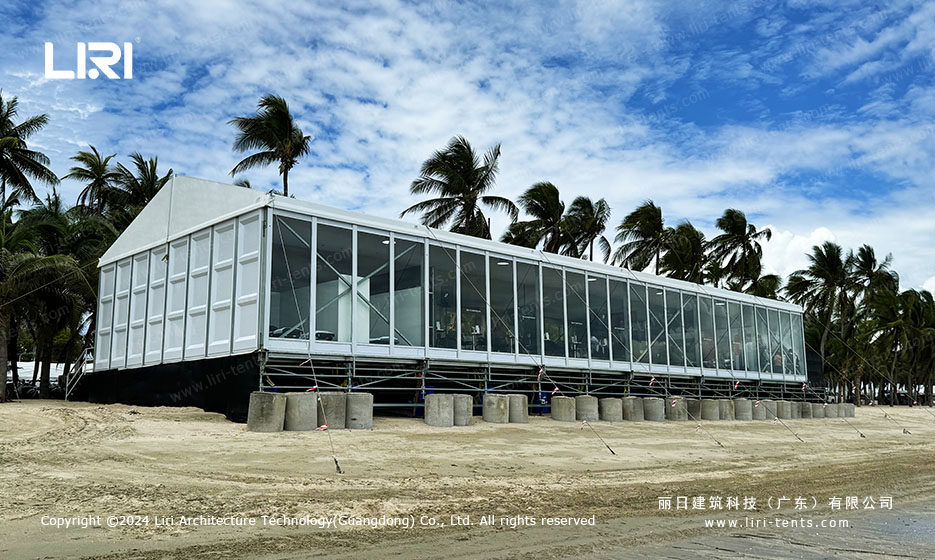
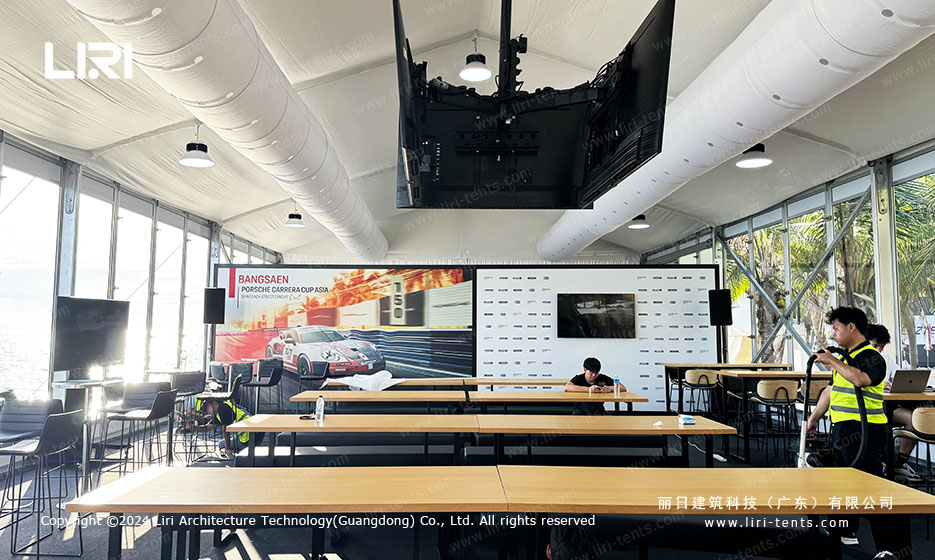
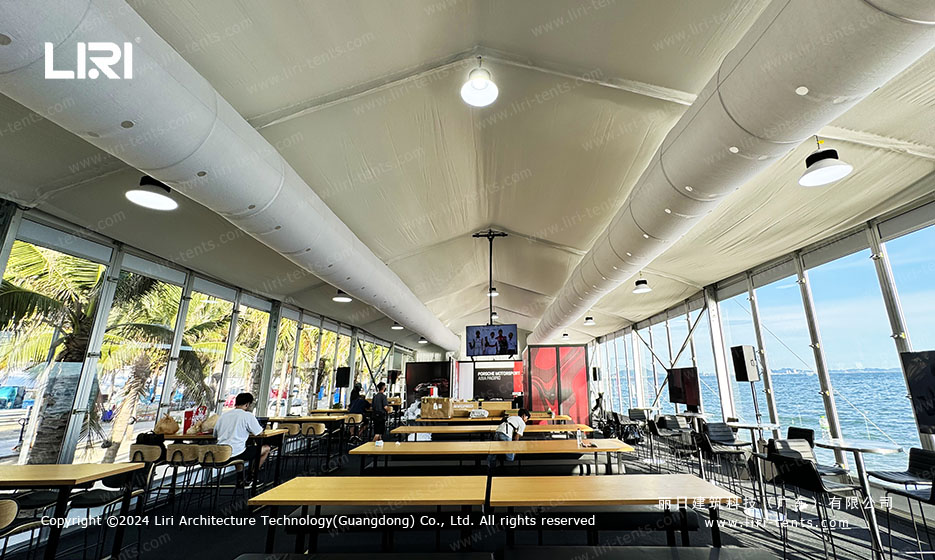
The core answer is a purpose-built clear span tent system with modular design flexibility. For a recent international grand prix event, the hospitality zone used aluminum frame structures spanning up to 25 meters wide, giving interior planners a column-free canvas.
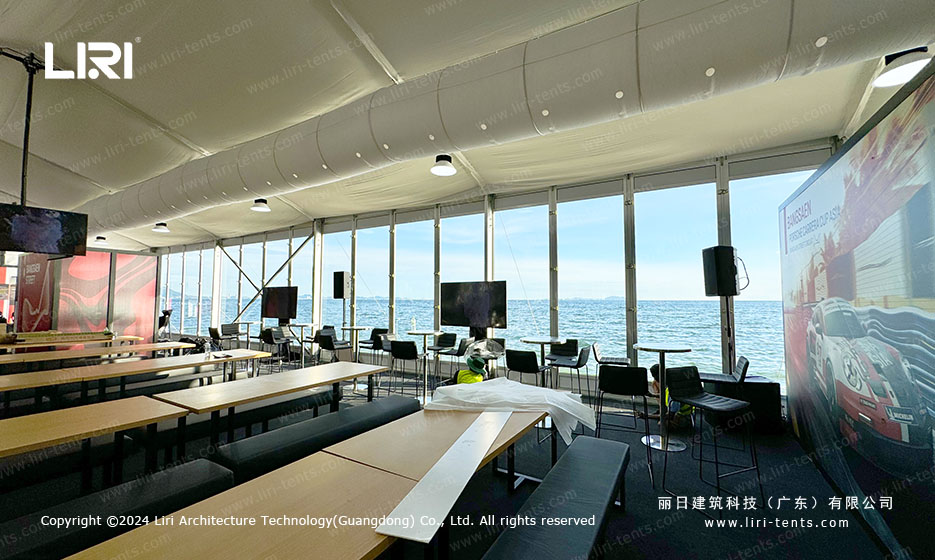
Glass wall panels along the front elevation provided panoramic views of the track while maintaining interior climate control-a non-negotiable for tropical venues where heat and humidity can spike. The flooring system sat on a leveling platform that handled the natural slope of the grounds, so table settings stayed perfectly flat and guests moved between zones without tripping hazards.
Grand Prix Event Tent
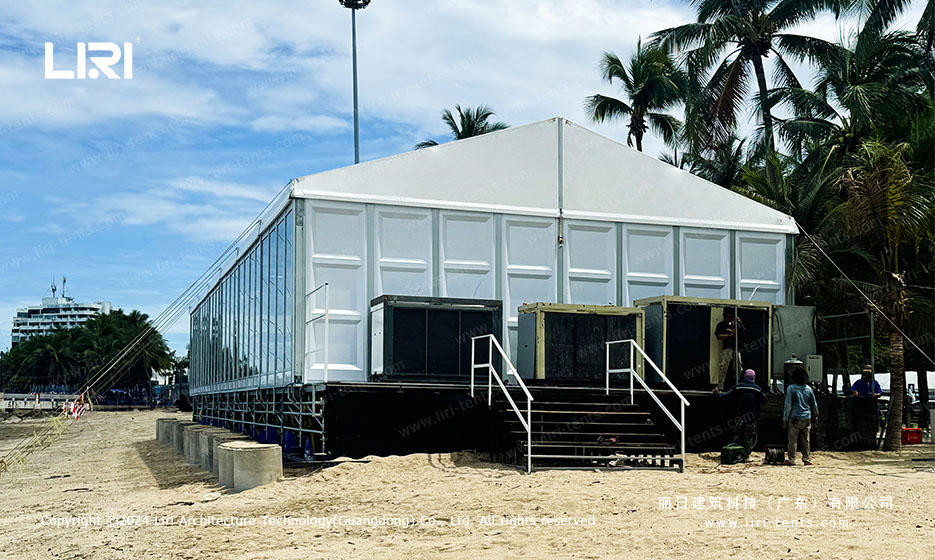
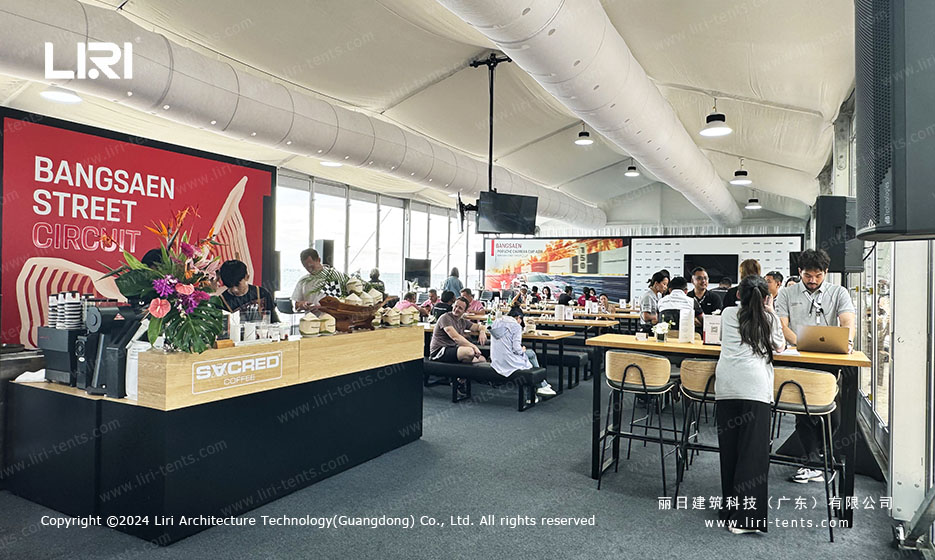
What separates a VIP tent from a standard one is the layering. Beyond the primary weatherproof shell, the team installed cassette flooring, integrated HVAC ducting, and liner systems that concealed the aluminum frame-turning what is technically a temporary structure into a space that reads like a permanent venue.
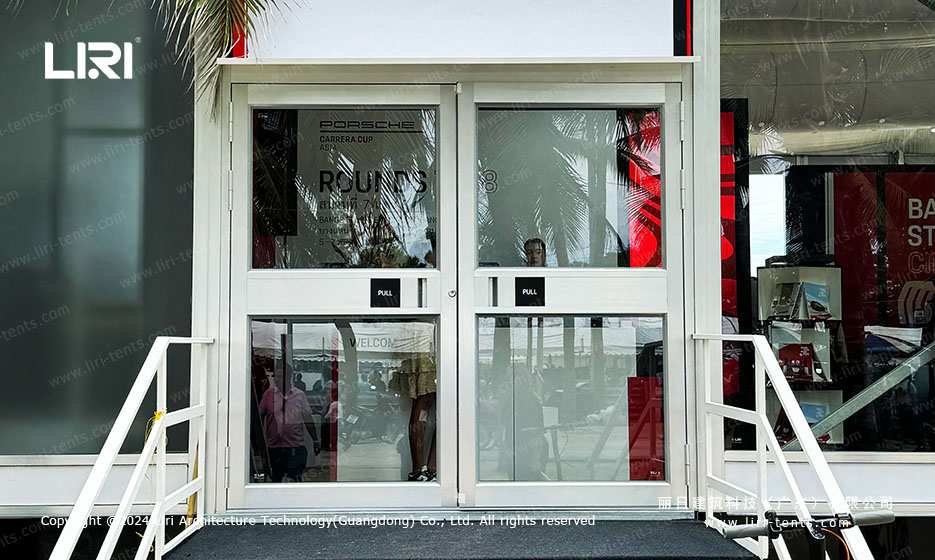
The branding integration went beyond hanging banners. Printed PVC gables and custom-colored roof fabrics turned the tent itself into a billboard for the automotive sponsor.
VIP Hospitality Marque
The result was a hospitality compound that handled several hundred VIP guests per session across three days of racing. Entry zones flowed into lounge areas with bar service, then into tiered viewing galleries.
The commercial event tent layout proved adaptable enough that the same structural shells were reconfigured overnight between practice and race day-one evening a gala dinner setup, the next morning a broadcast media center. Wind loads during storm squalls were absorbed without deflection, thanks to the anchoring system specified for the coastal location.
From the organizer’s perspective, the numbers told the story: zero weather-related service interruptions, a sponsor renewal rate driven in part by the quality of the on-site infrastructure, and setup-strike timelines that stayed within the tight window dictated by the circuit schedule.
More telling was the word-of-mouth among racing paddocks-when you build hospitality that impresses professional event operators, the phone rings for the next season before the current one ends.
Race Event Shelter
For any event company or sports federation planning a similar deployment, the lesson is straightforward: start with an engineered event structure built to the wind and occupancy codes of the actual venue, not a generic catalog number.
Specify glass walls where sightlines matter, budget for liner and flooring from day one rather than treating them as optional add-ons, and work with a supplier who can deliver turnkey logistics-fabrication, shipping, on-site crew, and post-event inspection-rather than piecemealing the job across three vendors.
Porsche VIP Tent
Frequently Asked Questions
Q: What size tent is needed for a VIP hospitality area at a motorsport event? A. Sizing depends on expected headcount and layout. A basic hospitality lounge for 80 to 120 guests works well in a 15-meter by 25-meter clear span party tent, providing enough room for seating clusters, a bar, and circulation aisles. For tiered viewing with seated dining, scale up to 20-meter by 35-meter or larger. Always add 20 percent to your calculated floor area for service corridors and emergency egress.
Q: How do you anchor a large event tent on asphalt or concrete paddock surfaces? A. Weight plates and concrete ballast blocks are the standard solution when ground penetration is not possible. A structural engineer calculates the required ballast mass based on the tent dimensions, local peak wind speeds, and exposure category. For a coastal race circuit, expect ballast requirements roughly 30 to 40 percent higher than inland venues. The anchoring plan should be stamped and submitted as part of the event permit package.
Q: Can these tents handle branding and custom printing requirements? A. PVC roof and gable panels accept full-color digital printing. Many race event organizers print sponsor logos directly onto roof peaks and sidewalls, turning the tent into a trackside billboard. Interior liners can be produced in sponsor brand colors, and glass walls accept frosted vinyl decals without compromising transparency.
Q: What is the typical lead time for a custom VIP event tent? A. For standard modular components, production and shipping run four to six weeks. Fully custom made party tents with printed fabrics, specialty glazing, or non-standard dimensions typically need eight to twelve weeks from signed drawings to delivery. Rush timelines are sometimes possible for repeat clients with pre-approved frame designs.
Looking for hospitality tents that match the prestige of your next motorsport event? From a single VIP lounge to an entire paddock compound spanning several hundred square meters, a properly engineered party tent solution starts with the right structural spec.
Send over your headcount, site photos, and timeline-we’ll come back with a layout and numbers within two working days.