A 30×60 pole tent is a tensioned canopy held up by center poles and perimeter ropes instead of a self-supporting aluminum frame. The 30×60 footprint covers about 1,800 sq ft, which makes it a common pick for backyard weddings, festivals and mid-size vendor rows on ground that can take stakes.
What a 30×60 pole tent is built from
The defining part of a 30×60 pole tent is the center pole or paired poles that push the fabric into its high peak. Guy ropes run from the peaks and eaves out to ground stakes, and the tension keeps the canopy tight without interior beams. That is the core difference from a free-standing frame tent, which uses an aluminum skeleton and stands without ropes or masts.
Because it leans on tension, a 30×60 pole tent ships lighter and uses fewer parts than a clear-span hall, but it must anchor into soil or grass. A traditional pole tent setup follows the same logic at a smaller scale.
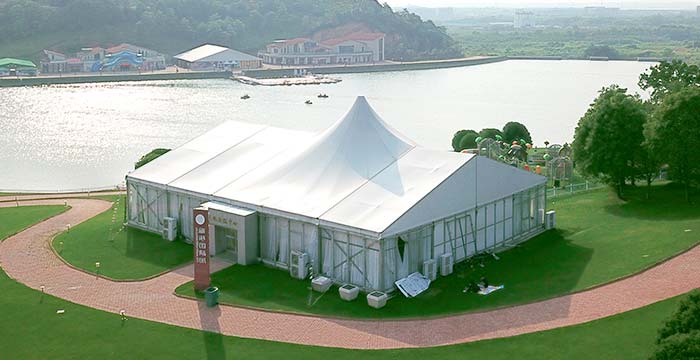
How the center poles change the floor
This size usually carries one or two center poles down the long axis, and those poles occupy a small strip of floor you cannot furnish. The rest of the 1,800 sq ft stays open, so seating and stages sit clear of the masts even though the layout is not fully column-free like a frame tent.
For roughly 150 to 220 banquet seats or a vendor aisle of 20 to 30 stalls, the center poles are easy to route around. A high peak tension tent keeps the same pole logic but adds a sharper peak that sheds rain and reads formal for weddings.
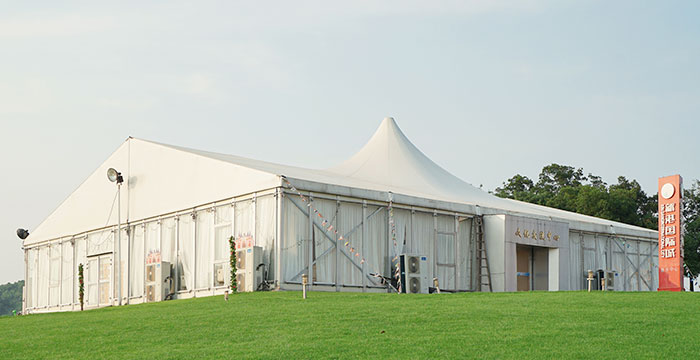
Where a 30×60 pole tent works best
The real limit is the ground. It needs grass, soil or sand for stakes and guy lines, so lawns, farms, beaches and festival fields work best. Concrete, asphalt and decks leave nothing to drive into, and a frame tent takes over there.
You also need clearance beyond the 30×60 footprint: the guy ropes swing out several feet on every side, so build that buffer into the site plan. Staking a tent on grass covers the slope and soil checks before you commit.
What to plan before you set it up
Give the site a once-over for level ground, overhead wires and a clear run for the perimeter ropes. Pole tents go up faster with a small crew once the stake points are marked, and the fabric should be dressed tight before the peak is raised so the canopy reads clean.
Wind is the main enemy of any tensioned canopy, so lock the stakes and use longer ropes on exposed sites. When scale is still open, picking the right tent size keeps the 30×60 in context against a 20×40 or 40×60 option.
Frequently Asked Questions
How much should I budget for a 30×60 pole tent?
Cost tracks size, fabric weight and pole count. A 30×60 needs more vinyl and poles than a 20×40, so budget above a small frame tent.
Does a 30×60 pole tent need a fire or wind permit?
It depends on the venue and local code. Structures this size often need review, so check with the site owner and local authority before the date.
What wind speed calls for extra staking on a 30×60 pole tent?
Once gusts climb, add longer stakes and wider rope angles. Exact limits follow the fabric and ground, so confirm the rated setup with the supplier.