A 20×40 frame tent measures 20 feet wide and 40 feet long, giving roughly 800 sq ft of open floor. The frame is the difference: an aluminum structure carries the cover, so the tent stands without a center pole or guy ropes. That free-standing design is why a clear span party tent system fits where stakes are a problem.
What a 20×40 frame tent actually is
The frame uses extruded aluminum beams at the corners and ridge. Because the load runs through the frame, the interior stays open from wall to wall. A 20×40 frame tent setup therefore reads as one continuous room instead of a canopy on a mast.
This matters when you place tables, a stage, or a service line: nothing blocks the middle. The same footprint in a pole tent needs a center pole and angled supports.
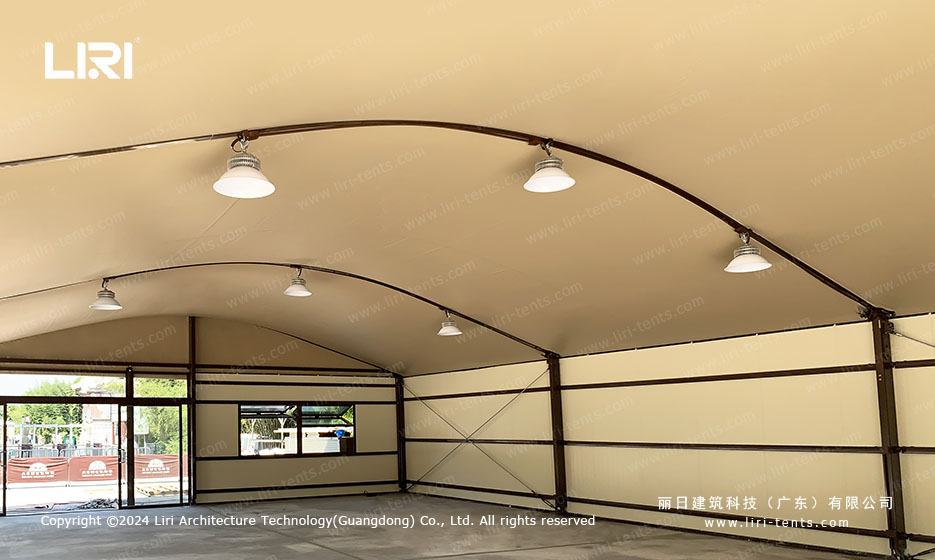
Frame tent versus pole tent
A pole tent leans on tension. Stakes driven into the ground pull the cover tight, and the peak sits on a central pole. That works on soft lawn but locks the shape around a post in the middle. The frame version skips both, so it can sit where staking is impossible.
The trade-off is weight and cost. The frame carries more hardware, which makes a 20×40 frame tent heavier to move than a pole tent. For a hard surface or a clear sightline layout, the frame version pays for itself.
How much floor a 20×40 frame tent covers
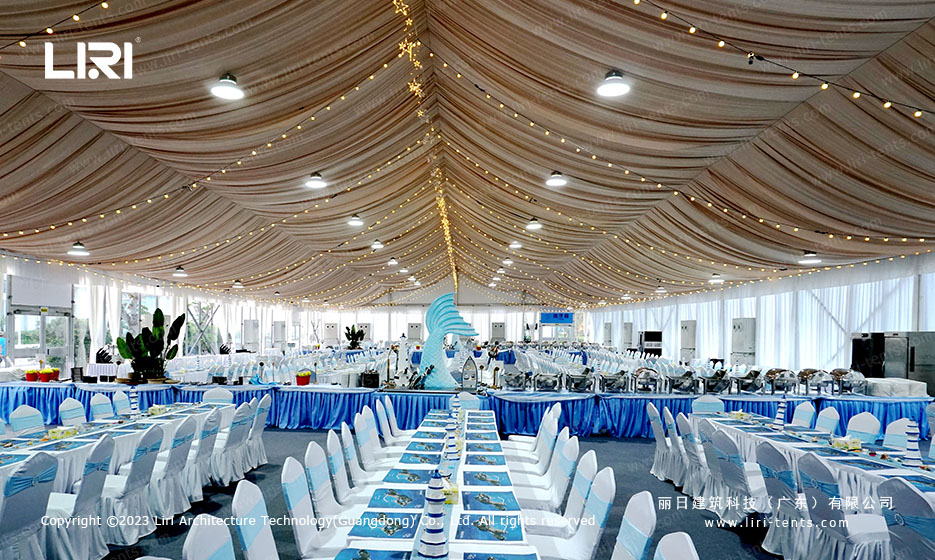
Eight hundred square feet of column-free floor fits a banquet of about 65 to 100 seated guests with round tables. Add a dance floor or a stage and the seated count drops, but the open span lets you plan zones around the room.
For vendor rows or a festival market, the same 800 sq ft lines up roughly 10 to 14 booth spaces back to back. With no center pole, aisles stay straight to the back wall.
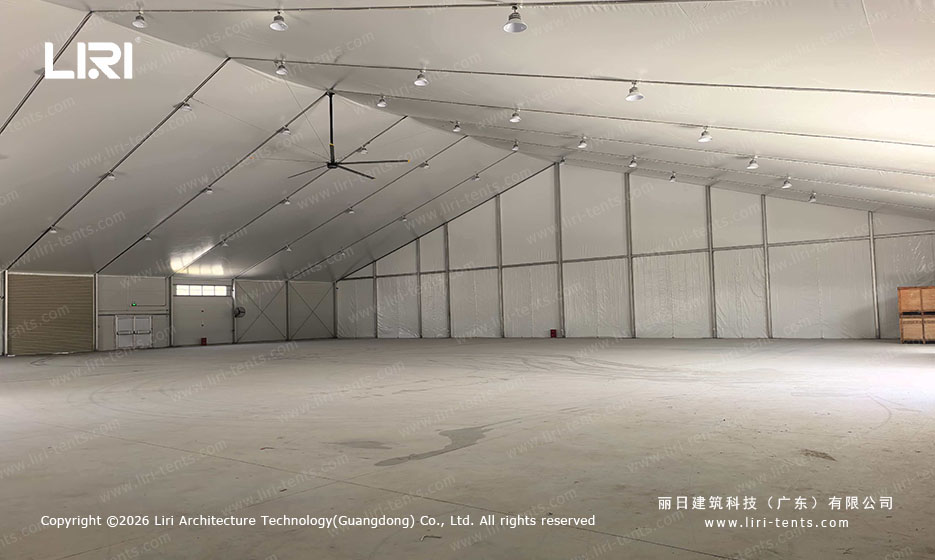
Setting a frame tent on hard ground
On concrete, decking, or packed asphalt you anchor with weight plates or water ballast instead of stakes. The frame holds its shape under that load, which is why planners pick it for plazas and rooftops, and sidewalls for a frame tent clip to the uprights.
On grass you can still use stakes for extra hold, but the frame does not require them the way a pole tent does. Level the site, seat the feet, and the cover goes on with a small crew, and how to size your party tent covers the guest math if you compare a 20×40 with a smaller bay.
Frequently Asked Questions
What does a 20×40 frame tent cost to own?
Price tracks frame grade, fabric weight, and wall options rather than footprint alone. A standard heavy duty frame tent option in this size sits above a lightweight pole tent because of the aluminum hardware, but the open floor and reuse across sites spread the cost over many events.
Do I need a permit for a 20×40 frame tent?
Permit rules depend on the city and the surface, not the tent type. Many places treat any structure over a set square footage as a temporary building, so check with the local authority before you install on a public lot or a shared plaza.
How much wind can a 20×40 frame tent handle?
Wind rating follows the frame series and how it is anchored. A ballasted frame on hard ground holds more than a staked one on soft soil, and sidewalls change the load. Confirm the rated wind speed for the exact configuration you plan to run.