A party tent with sides is the standard answer for outdoor events that need more than shade. The walls turn an open canopy into a controlled venue that keeps out wind, rain, dust, and prying eyes, which is why rental fleets and event companies stock them in every size from 3x3m up to 30m clear span. Before you choose a configuration, it helps to understand how the sidewall system, the frame, and the anchoring work together — that combination decides whether your event stays comfortable when the weather turns.
Compared with an open-sided canopy, a fully enclosed tent changes how guests experience the space. With sides in place, sound carries differently, lighting reads as warmer, and the floor plan can be laid out exactly as drawn because nothing depends on wind direction. That makes sidewall-equipped tents the default for seated dinners, product launches, and multi-day commercial setups where consistency matters more than the open-air feel.
What Makes a Party Tent With Sides Different
The defining feature is the wall system itself. Most commercial models use 850g/m2 PVC fabric walls that attach to the frame with zipper-and-toggle connections, and they come in four practical forms. The wall fabric is the same waterproof party tent cover material used on the roof, so the whole enclosure sheds rain equally and needs no separate weather treatment.
Most commercial models use 850g/m2 PVC fabric walls that attach to the frame with zipper-and-toggle connections, and they come in four practical forms: solid panels for full weather protection and privacy, clear PVC window panels around 0.5mm thick for natural light, mesh screens for insect control in warm weather, and half-wall combinations that pair a solid lower section with a clear upper band. Each type mounts on the same rail system, so a crew can swap panels without touching the frame.
Frame design matters just as much as the fabric. A typical sidewall tent is built on an interlocking aluminum structure that supports the roof without any center pole, leaving the interior completely free for staging, seating, or product displays. That clear-span layout is the reason all-rounder 9x3m event tent units have become so common in food festivals and street events — the lack of internal obstructions lets vendors arrange counters and queues exactly as they need.
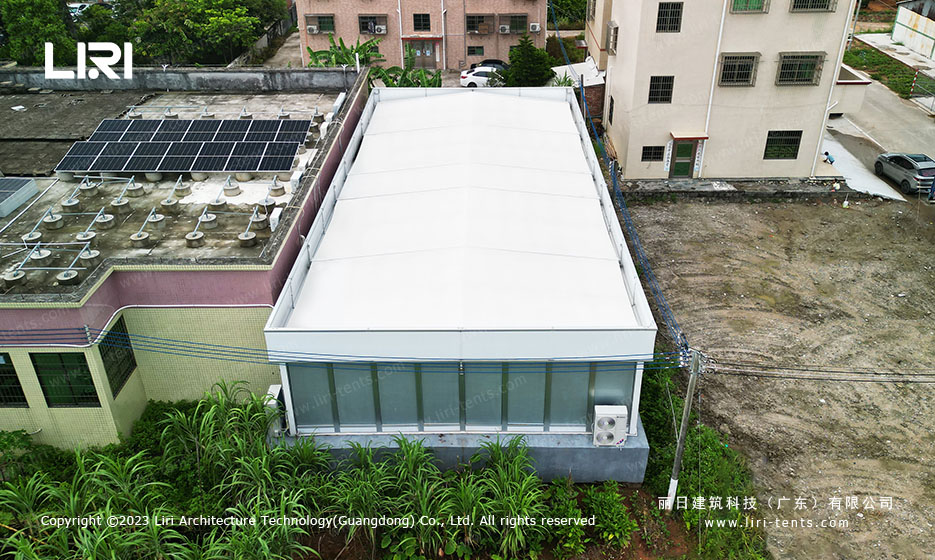
Because the frame carries the roof independently, sidewall tents can be secured with ballast weights on hard surfaces or steel stakes on soft ground. This flexibility means the same tent works on asphalt parking lots, sports fields, and beachfront decks. For crews that move between sites weekly, that ease of installation is often the deciding factor between two otherwise identical quotes.
Sidewall Options for Commercial Party Tents
Choosing the right wall type starts with the event schedule. An afternoon reception on a summer day benefits from mesh walls that keep insects out while letting breezes through, while an evening gala or a product launch needs solid panels for light control and privacy. Clear window panels sit between the two — they block wind but flood the interior with daylight, which makes them popular for daytime exhibitions and trade shows.
Operators who run mixed event programs rarely pick a single wall type. Most order a base set of solid panels plus a set of clear or mesh inserts, so the same 10x30m white party tent with sidewalls can serve a private dinner one weekend and an open daytime market the next. Wall panels are typically rated for 1,000 or more connection cycles, and backup grommet points every 0.6m give crews a mechanical fallback if a zipper ever fails on site.
For cold-season work, insulated and double-skin wall options cut heat loss noticeably when paired with heaters. A fully closed tent with insulated sidewalls holds a comfortable temperature far longer than a canvas-only structure, which is why winter-rated party tent enclosures are specified for anything scheduled after the outdoor season ends.
Installation, Wind Ratings, and Configuration
Sidewalls change the structural behavior of a tent, and anchoring has to account for it. A fully walled configuration increases wind load by roughly 40% compared with an open-sided setup, so ground anchors move to 1.2m intervals instead of 1.8m, using 30cm steel stakes on soil or 25kg concrete ballast blocks on hard surfaces. A 6061-T6 aluminum frame with all walls attached is engineered for 80km/h sustained winds when anchored to specification, with higher ratings available through engineering upgrades.
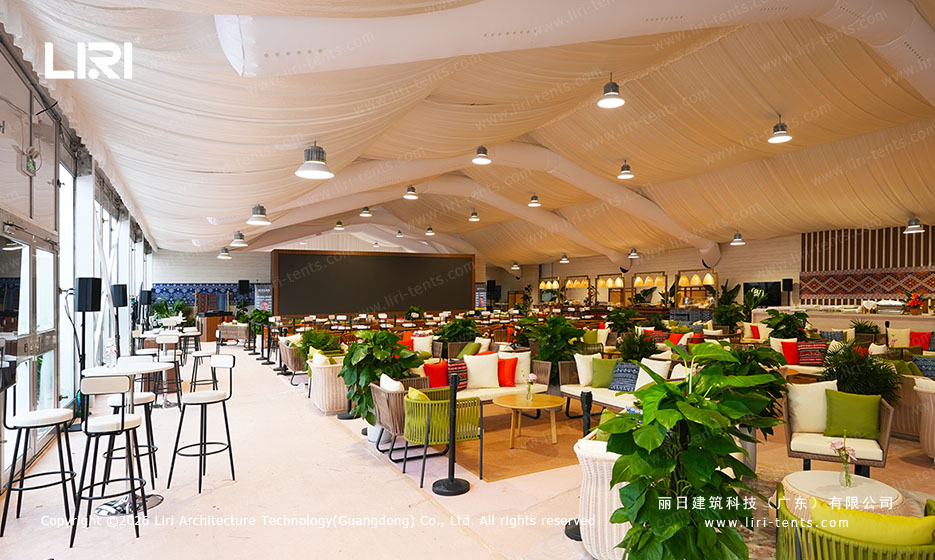
Configuration changes are a normal part of running an event, not a one-time decision. Sidewalls on commercial tents are designed to be added or removed after the frame is up — a full wall swap on a 9x3m tent takes about 30 minutes with two people, and rolling walls up to the eaves with tie-back straps converts an enclosed space to an open one in under 20 minutes. That range of motion is what lets one tent cover a daytime ceremony and an evening reception without a second structure.
The same wall system also supports practical add-ons. Door panels with zippered openings handle loading and crowd flow, clear gable ends can carry printed event branding, and floor-to-wall transition skirts close the gap that insects and drafts would otherwise exploit. If your layout includes a dedicated service zone or a kitchen area, ordering one wall set with extra door panels is cheaper than buying a second tent.