A party tent usually arrives as a frame and a roof, with the four sides left open. The panels that close those sides are called sidewalls, and they are normally a separate choice rather than part of the tent itself. That one decision changes how sheltered, bright, warm and private the space feels on the day. This guide explains the four common options, from open sides and solid panels to windowed and glass walls, and the questions worth asking a supplier before you order.
What sidewalls do for your tent
The frame and the roof give a tent its shape and keep the rain off from above. Sidewalls do a different job. They stop wind blowing straight through, keep light rain out at the edges, and hide whatever you have stored inside. A sidewall is simply a panel that fixes between two frame legs, and most panels can be taken off again when you want the open feel back.
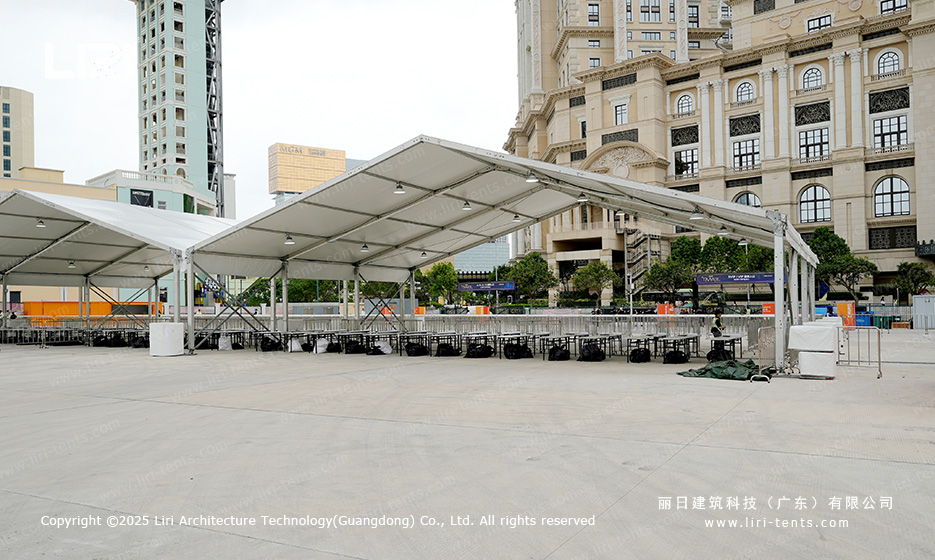
Picture a tent with no walls at all on a mild afternoon. Guests can walk in from any direction, and the space feels like a covered patio rather than a room. That is exactly what many hosts want for a garden birthday, a school fair, or a summer open day. Add walls and the very same tent starts to behave like a room, with a clear inside and outside.
Walls also change how the tent behaves in wind. A closed side catches more air than an open one, so the frame still needs to be fixed down properly on the day. This matters even when the morning looks calm, because an afternoon breeze can arrive quickly. Ask whoever sets up the tent how it will be held down, and give that answer the same attention you give the walls.
Choosing walls is easier once you know what you are protecting. Food, sound equipment and paper decorations all suffer in a sudden shower. Guests sitting down for a long meal notice a cold wind more than guests who are standing and moving about. Start with the thing that would spoil your event, then work back to the walls that stop it.
Solid white walls: the everyday default
Solid white panels are the most common choice, and they are the simplest to picture. They are made from the same coated fabric as the roof, a cloth with a waterproof layer, so they keep rain out. Because they block the view from outside, they also give guests some privacy. A closed white tent reads as a proper venue from the street, which helps at ticketed events and company functions.
The trade-off is light. A fully closed white tent is dimmer inside than an open one, even at midday, so you will probably plan some lighting for an evening event. It can also feel still and warm on a sunny afternoon if every side is closed. Many hosts roll up a panel or leave one short end open once the weather settles, which brings the air back without taking the whole wall down.

Solid panels suit events where the focus is inside the tent. A sit-down dinner, a presentation, a registration desk, or a stock room for a market all work well behind plain walls. They are also the easiest panels to clean and the cheapest to replace, which is why rental companies tend to keep plenty of them. If you are buying your first set of walls, solid white is a sensible place to start.
Printed panels are a variation of the same idea. A company logo, a sponsor name, or a simple colour band can turn a plain wall into signage without adding a separate banner stand. This is popular at festivals and sponsored hospitality areas. Ask whether printing changes how the panel folds and stores, because heavy ink needs a little more care when the wall is packed away.
Windowed walls: daylight without losing shelter
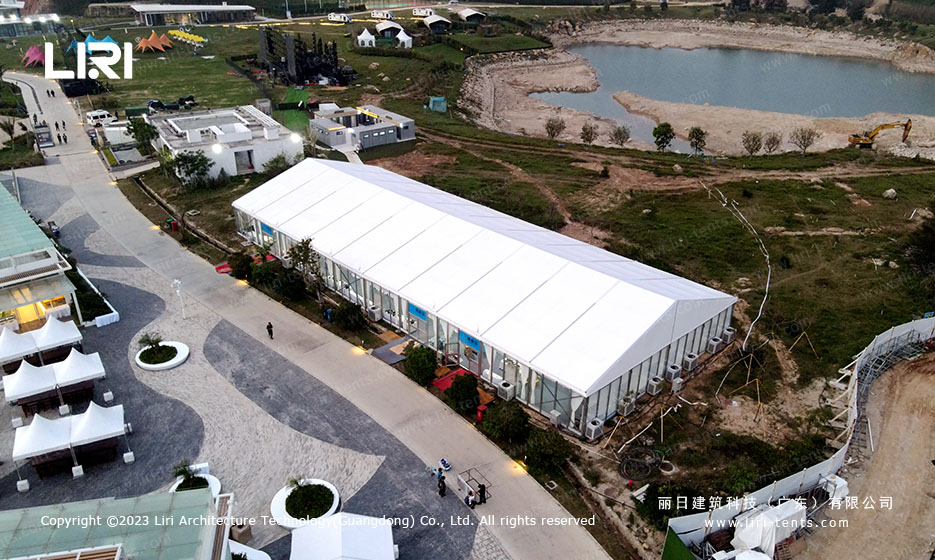
A windowed wall is a solid fabric panel with clear sections set into it. You get the wind and rain protection of a closed wall, plus daylight and a view of the garden or street outside. The clear part is usually a flexible transparent sheet fixed into the fabric, so the panel still rolls up and stores like an ordinary wall. In plain terms, it is a wall with windows, not a glass building.
These panels are a good middle choice when you cannot decide between closed and open. Guests stay sheltered, but the space does not feel boxed in, and you rely less on electric lighting during the day. They are popular for wedding receptions, family celebrations, and long afternoon events where people sit for hours. The clear sections also let a host see who is arriving without opening a door.
There are two small things to check. The clear sheet can show smudges and fingerprints more than white fabric, so it needs a gentle wipe before a formal event. It also gives less insulation than a fully solid panel, which is worth remembering on a cold evening. Neither point is a reason to avoid windowed walls; they are simply the honest limits of the option.
Clear and glass walls: keeping the view
Some walls are almost entirely transparent. These come as flexible sheets of clear PVC, a soft see-through plastic, or as rigid glass panels set into a frame. Both give a bright, open feeling while still closing the tent against wind and rain. They are chosen when the view is part of the event, for example a lawn, a lake, or a city square that you want guests to see.
Glass walls look smarter and feel more solid, and they suit formal dinners and longer installations. They cost more, take more care to transport, and need a level base, so they are a considered choice rather than a default. Clear PVC is lighter and easier to handle, which suits a rental company that sets up and takes down often. A useful middle step is a solid wall with a clear upper section, which keeps the view at eye level while protecting the lower part.
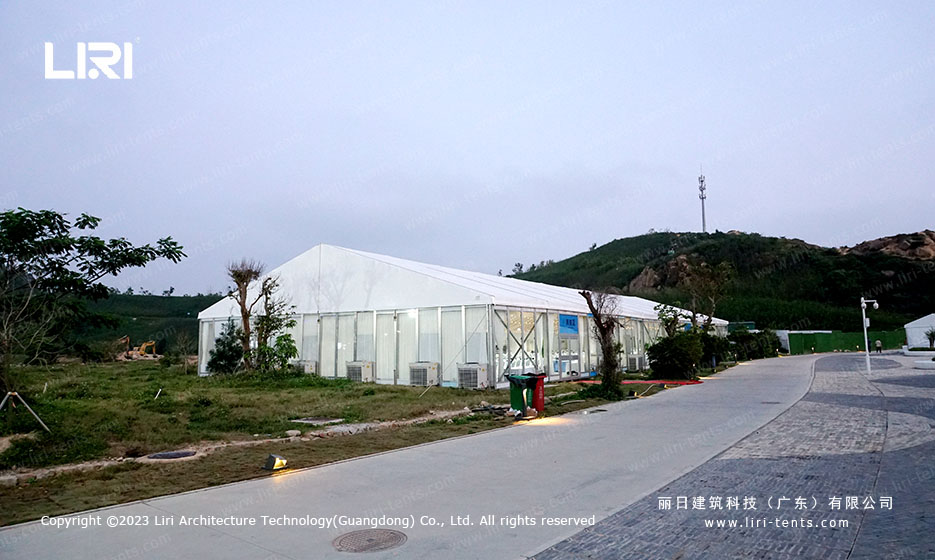
Transparent walls bring in sun as well as light. On a warm afternoon a fully glazed side can make the tent warmer than expected, so think about shade and airflow before you close all four sides. Small water droplets can also form on the inside when a warm, busy room meets a cool evening, and an open end usually clears them. These are comfort points rather than structural problems, so a supplier should be happy to talk them through.
Mixing walls, doors and open sides
You do not have to choose one wall type for the whole tent. Most frames take panels section by section, so one side can be solid while another stays open or carries windows. A common layout puts solid walls behind a buffet or a stage, windowed walls along the seating side, and an open end facing the garden. It is a practical way to match each side of the tent to what actually happens there.
Doors are part of the same decision. A plain opening is fine for a garden party, while a zipped fabric door or a framed glass door helps at a ticketed or evening event. Think about where people will queue, where staff will carry food, and where the tables and chairs will sit. A door placed across a busy serving route causes more trouble than a slightly darker corner.
Airflow is the thing first-time buyers most often forget. A tent closed on all four sides can feel still by late afternoon, even in mild weather, because people, cooking and lighting all add warmth. Mesh panels, which are fine net-like fabric, let air move while keeping insects out, and they work well for summer markets and food stalls. Leaving one panel rolled up does much the same job at no extra cost.
If you run a rental business, mixed walls are worth the extra stock. One frame can then serve a school fair in June and a company dinner in October, simply by changing the panels. Keep a note of which panels belong to which frame, because fixing systems differ between manufacturers. A wall bought from a different supplier rarely fits the frame you already own, which is one of the most common and most avoidable buying mistakes.
What to ask before you order
The clearest question is also the most useful: which walls are included in this price? Two quotes for a similar party tent can look very different once you find that one includes a full set of panels and the other includes none. Ask for the wall count and the panel type in writing, then compare the totals again. A cheap frame with no walls may end up costing more than a dearer package.
Next, ask how the panels attach. Zips, hooks, press studs and tracked edges each need matching parts on the frame, so buy the walls and the frame together from the same supplier. Check whether a single damaged panel can be replaced on its own, and whether spare panels are kept in stock. A size and buying guide is helpful for the frame, but the wall list is what you will live with at every event.
Finally, ask about care. Fabric walls should be dry before they are folded away, because a damp panel packed for weeks can pick up mildew and smells. Clear sheets and glass need a soft cloth rather than a rough brush. Ten quiet minutes at the end of a job usually prevents the damage that shows up at the start of the next season.
None of these choices is permanent, because panels clip or zip on and you can add walls later. The best set of sidewalls keeps your guests comfortable and lets the day feel like the occasion you planned. If you are comparing quotes right now, send us your dates and a short description. We will list the wall options that fit and spell out the differences in cost.