Winter parties don’t cancel for cold weather — they just need the right shelter. A winter tent party tent is an engineered temporary structure designed to maintain usable interior conditions through sub-zero temperatures, wind, and snow loads. Unlike standard canopies, these tents use insulated fabric systems, reinforced aluminum or steel frames, and sealed perimeter walls to create functional event spaces in conditions where ordinary tents fail.
Event planners and rental operators who stock winter tent-rated tents can book dates that competitors pass on. The economics are straightforward: fewer venues compete for winter dates, demand for heated outdoor spaces has grown steadily since 2020, and winter events — from holiday markets to ice-bar receptions — command premium pricing.
What makes a tent “winter-rated” isn’t one feature — it’s a combination of frame engineering, fabric properties, anchoring, and climate-control integration. Here’s what to look for.
Frame Engineering: Why T6 Aluminum Matters in Cold Weather
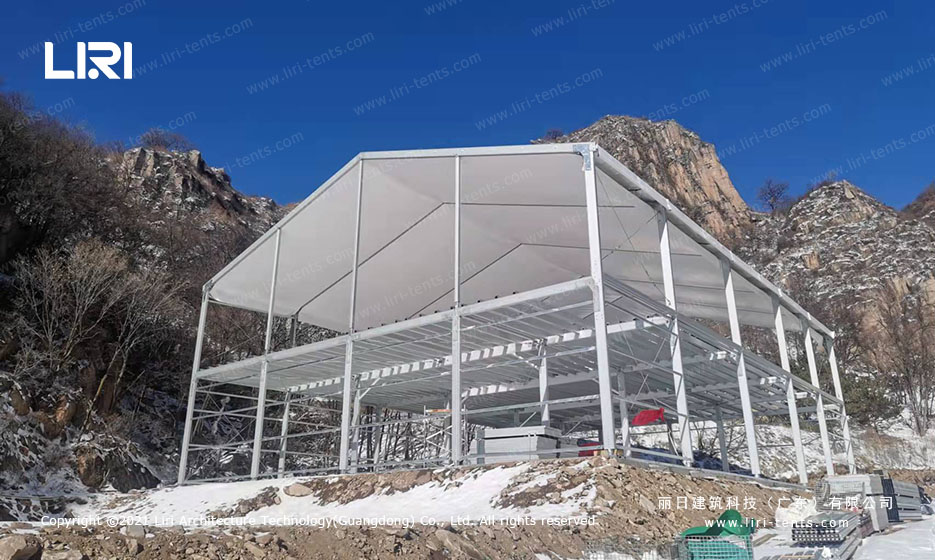
The aluminum alloy 6061-T6 frame is the industry standard for winter tents — and for good reason. At sub-zero temperatures, standard steel frames become brittle and harder to assemble. T6 aluminum maintains its structural properties from -40°C to +50°C, weighs roughly 1/3 of equivalent steel sections, and resists the corrosion that road salt and winter moisture accelerate.
For spans up to 15 meters, a 4-channel aluminum beam (122×68mm profile) handles waterproof party tent loads up to 50 kg/m². For spans 15-25 meters, upgrade to 6-channel beams (166×89mm profile) with cross-bracing every 5 meters. The cross-bracing isn’t optional — uneven snow accumulation on one side of the roof creates twisting loads that will rack an unbraced frame within hours.
Fabric and Insulation: What Keeps Heat Inside
Standard party tent fabric (650g/m² PVC-coated polyester) provides basic wind and rain protection but minimal insulation. Winter-rated tents use double-layer roof systems: an outer waterproof PVC layer and an inner insulated liner, typically 850g/m² PVC with a thermal-reflective coating. The trapped air between layers adds R-3 to R-5 insulation — comparable to single-pane glass.
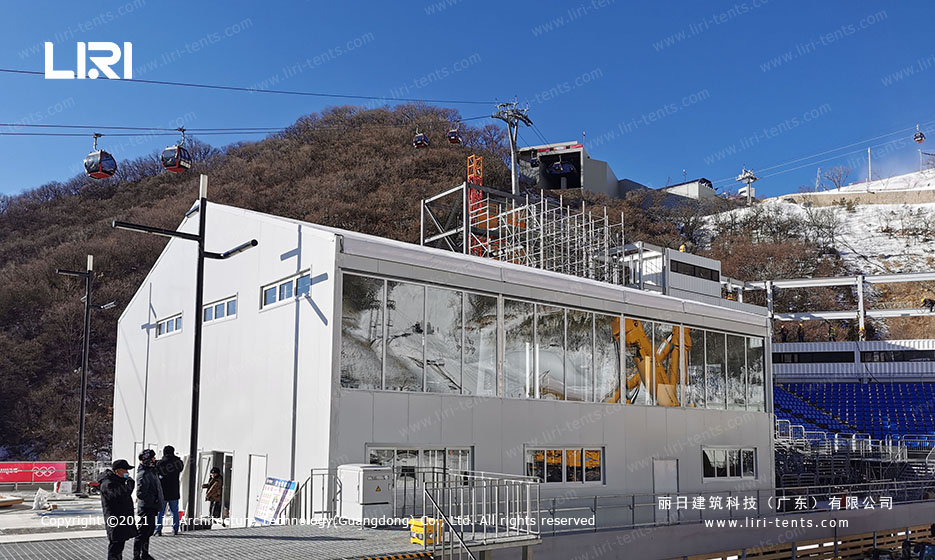
For sidewalls, specify PVC panels with integrated clear windows. The windows provide natural light during short winter days while the solid panels block wind. Add ground-level sealing skirts (the bottom 30cm of sidewall that folds inward and secures to the floor) to eliminate drafts at the most vulnerable point — the wall-to-ground junction.
Anchoring for Winter Conditions
Wind loads increase roughly with the square of wind speed — an 80 km/h gust exerts 4x the force of a 40 km/h breeze. Winter tents need upgraded anchoring: replace standard ground stakes with 1.2-1.5m earth anchors (helical or expanding type) capable of 800-1,200 kg pull-out resistance per anchor point. For paved surfaces, use concrete ballast blocks (minimum 800 kg per corner, interlocked).
Check the manufacturer’s wind certification — EN 13782 specifies 80 km/h for standard temporary structures, but winter applications should request 100-120 km/h certification with corresponding anchoring specifications. The certification document should include frame stress analysis, not just a pass/fail statement.
Key Features at a Glance
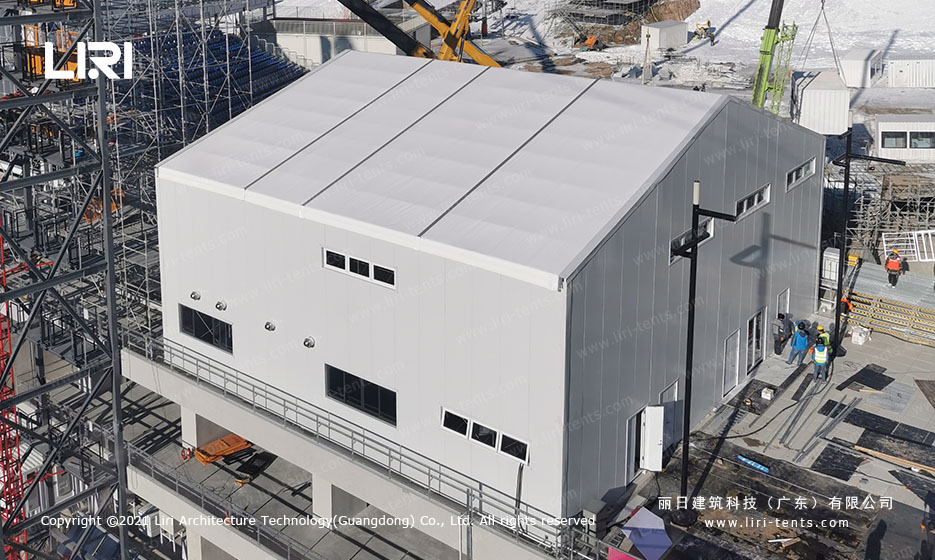
- Installation completed within one week with a 4-person crew
- 10-year effective service life with proper maintenance
- Replaceable banner and branding panels
- Ready for electric heaters, heated flooring, and climate control integration
- Modular interior: curtains, lighting rigs, staging, and decor mount to frame channels
Hi, winter is getting ready to arrive again. Can you tell me how much you need to add to the cost of your tent with thick cotton fabric?
Hi, can low strength tents be used for up to 20 years?
Do you have a corporate representative office in the western United States?
Is it possible to cover the round shade with insulation?