Why Sports Events Rely on Temporary Tents
A sports party tent structure has become standard equipment for athletics meetings, from local fun runs to continental championships. The reason is practical: a stadium or park needs extra covered space for a few days, then must return to normal use without a trace.
When a host city staged a recent world athletics championship, the temporary structures supplied everything from athlete warming areas to broadcast compounds. That single event showed how a well-planned tent program supports a competition far beyond the track itself, and why organizers now treat it as core infrastructure rather than an afterthought.
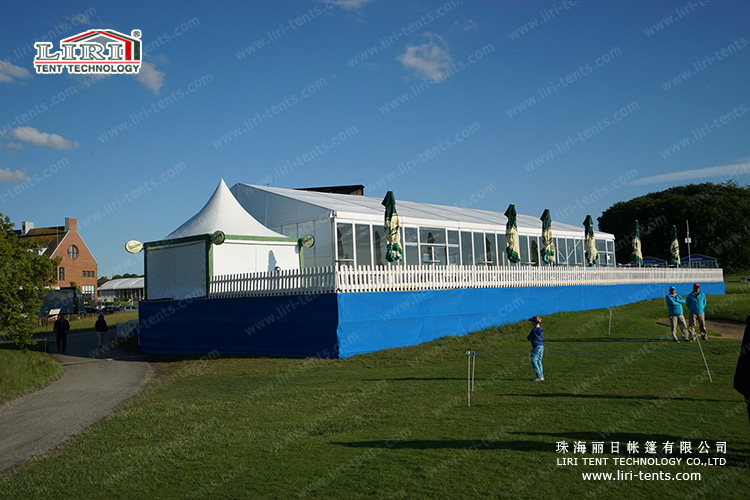
Advantage 1: Fast Setup and Teardown
Sporting event tents use lightweight aluminium frames and PVC covers, so a crew raises them in hours rather than weeks. That speed lets organizers build a full event village and strike it within the same window the venue is booked.
Because the parts pack onto pallets, the same inventory travels from one city to the next. A marathon race tent used in spring can become a track-side hospitality unit by summer without new tooling.
Advantage 2: Adaptable to Any Sport
The same frame fits a start-line village, an open-air basketball court, or a tennis practice hall. A tennis court shelter tent is simply the right span applied to a different surface, which keeps procurement simple for multi-sport organizers.
Clear-span engineering means no interior columns interrupt play or sightlines. Officials, athletes, and cameras all move freely, and the floor stays clear for timing equipment and medical bays. When a sport changes its layout between sessions, the tent adapts without structural work.
sports event tent for competitions delivers a signature hospitality look at a fraction of the cost of a constructed pavilion.
For recurring events, the structure is reused season after season. The budget stays focused on the competition itself rather than on real estate that sits empty most of the year, which is a meaningful saving for any organizing committee working to a fixed grant.
Functional Zones Built at a Championship
At a major athletics meeting, the tents formed distinct zones: a rest area for competitors, a secure bag check, a media pen, and a VIP lounge. A party tent for basketball courts of similar footprint shows how the same bays scale to other sports.
Logistics support mattered as much as spectator comfort. Race security, vehicle control, and the television broadcast area all operated from dedicated tented spaces, proving the value of a coordinated temporary-structure plan that maps each function to its own bay.
A event tents for sporting venues approach also lets organizers react to weather, shifting warm-up and presentation indoors without rescheduling a single heat.
Materials and Frame You Can Trust
The aluminium frame is anodized to resist corrosion, so a structure that spends its life moving between events keeps its strength. The PVC cover is welded rather than stitched at the seams, which stops leaks at the points that take the most load during a storm.
Sidewalls, gables, and roof sections are interchangeable across a model range. That interchangeability is what lets a small club and a national federation run the same spare-parts inventory and the same crew training.
Weather Contingency on Event Day
A championship cannot pause for rain, so the tent program is built around it. Anchoring is calculated against the site’s wind exposure, not a generic figure, and the ballast plan is signed off before the first bay arrives.
Ventilation panels and heater ports let the same space stay comfortable from a cool morning warm-up to a warm afternoon final. A outdoor sports shelter planned this way keeps athletes and officials on schedule regardless of the forecast.
Planning the Build Timeline
Coordinate the tent schedule with road closures and athlete arrivals so the structures rise without blocking the course. A staged plan means the warm-up and media bays are ready before officials need them, and the breakdown fits the same delivery window without overrunning into public access times.