When most people hear “tent” they picture camping. A sports event tent is something else entirely: a clear-span frame structure that turns an open field into a working arena in days. Cities already run free and paid courts, but when a tournament, a school sports day, or a community league needs covered space, a sporting event tent is often the fastest way to get it without a permanent build.
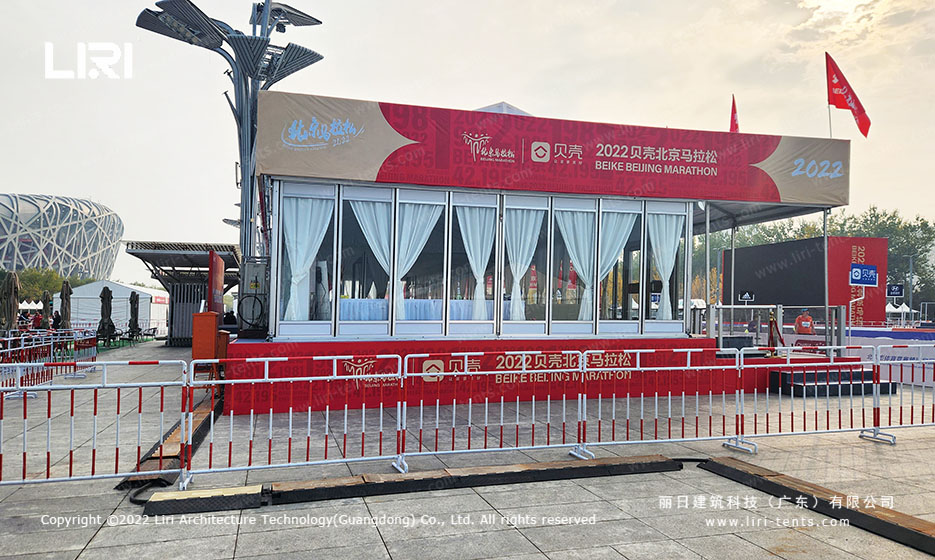
Frame Tents Beat Fixed Stadiums
A sports frame tent spans from 5 to 60 metres and holds up to 5,000 people in the larger builds. It shields players and spectators from sun, wind, rain, and snow, and it does so without the long approvals and heavy cost of a permanent stadium. There are no multiple department sign-offs, and the build cycle is typically a week from delivery to play.
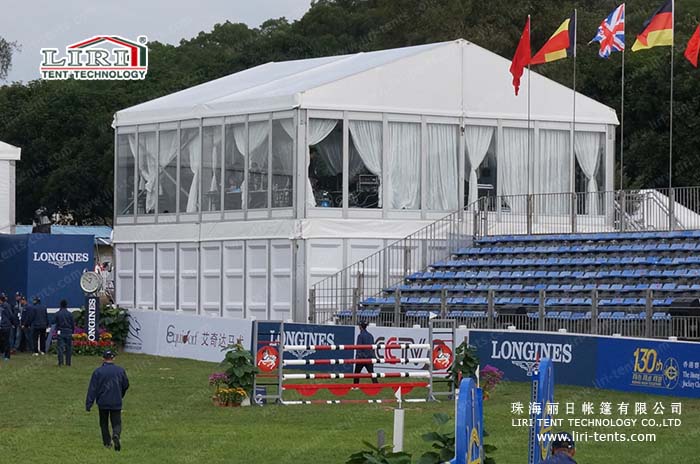
That speed is why urban events and odd-shaped regional sites use them. You can drop a covered court onto a car park, a training ground, or a festival field and pull it down when the event ends, leaving the space exactly as it was before the build started.
Basketball and Football Court Tents
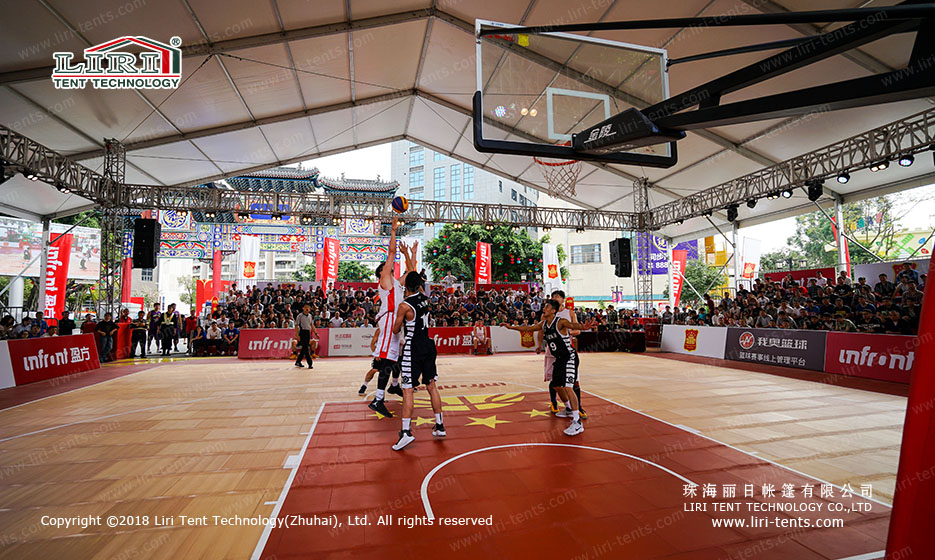
Basketball and football are the most-played sports in the world, so they generate the most demand for temporary courts. A clear-span frame sized to the line markings gives a true playing surface with side netting and spectator rows along the edges. For a large party tent repurposed as a sports hall, the open floor and high peak suit both the game and the crowd watching it.
Our basketball hall party tent shows a full-size court under one roof, and the large party tent for a sports basketball court covers both training and match days with the same frame system.
Other Sports We Have Built
Beyond basketball and football, the same frame system has hosted tennis, badminton, swimming-pool enclosures, and ice hockey. Each sport changes the floor and the side requirements, but the structure stays the same, which keeps planning simple. A party tent rental company can swap linings and flooring between events instead of building from scratch each time.
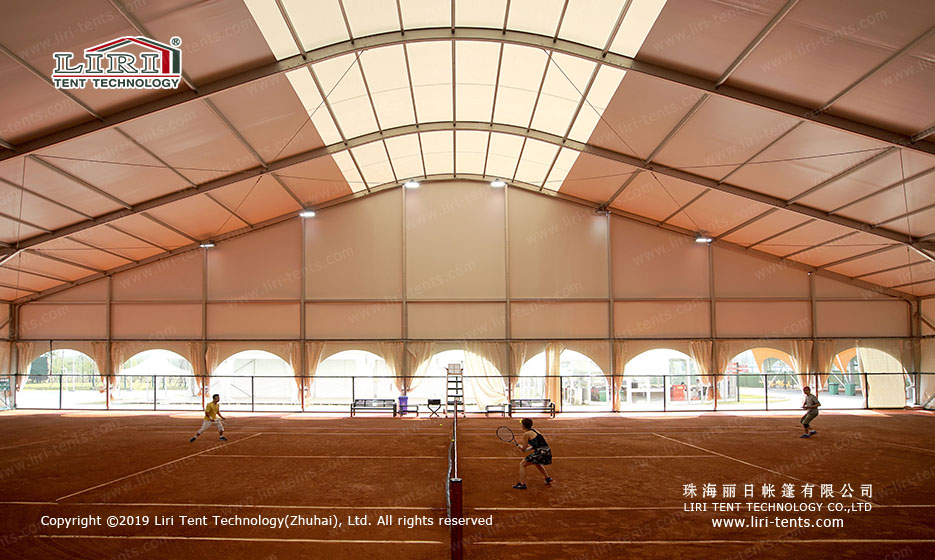
A pool enclosure needs a clear wall and a non-slip floor; an ice hockey build needs a chilled surface and insulated sides. The frame carries both because only the interior package changes, not the engineering of the shell.
Spectator Comfort and Lighting
A covered court is only half the job; the people watching need to see and stay dry. Side spectator tiers, overhead LED lighting on a simple truss, and a vented ridge keep the air moving during fast play. Because the structure is modular, you add bays for seats as the crowd grows rather than overbuilding for a single big match.
Speed and Cost Advantages
The frame tent is simpler than a traditional arena in both paperwork and build. No fixed foundation means lower cost and no long closure of the site. For a one-week tournament or a seasonal league, that difference is the whole business case. A clear span party tent for a FIFA football event is one example of the format at competitive scale, where a full pitch sat under fabric for the duration of the fixture.
How large can a sports event tent be?
Frame sports tents span 5 to 60 metres and the largest builds seat up to 5,000 people. Size follows the sport’s line markings and the spectator rows you need along the edges.
Is a frame sports tent faster than building a stadium?
Yes. A clear-span frame goes up in about a week with no fixed foundation and far fewer approvals than a permanent arena, which is why event organisers choose it for short tournaments and pop-up leagues.
Which sports can use a temporary court tent?
Basketball, football, tennis, badminton, swimming-pool enclosures, and ice hockey have all been built under the same frame system. Only the floor and side linings change between sports, so one shell serves many fixtures.
Flooring and Line Markings
The playing surface decides whether the tent feels like a real court. A flat interlocking floor with painted or taped lines gives players true footing, while a non-slip finish matters for fast indoor sports. For football and basketball the frame is sized to the regulation markings so the game plays as it would in a hall. Edge padding and short side nets keep stray balls in play and protect spectators, and a coloured floor zone helps refs and fans read the action from the stands.
Good drainage under the floor matters just as much. A raised or slatted base keeps the surface dry after rain, so the next session starts on time instead of waiting for the ground to dry. Swap the lining and the floor between sports and the same shell serves a whole season of fixtures without a rebuild, which is the part operators value most after the first event.
How much does a custom sports tent cost?
I think a sports tent with sides could really replace a traditional gym.
How much do custom sports tents cost?
Are sports tents with sides used in other applications?
We need a party tent that can provide shade and shelter from the rain for an outdoor barbecue party. Please recommend party tents suitable for this purpose, along with their prices and detailed specifications, and explain their durability and suitable usage scenarios.