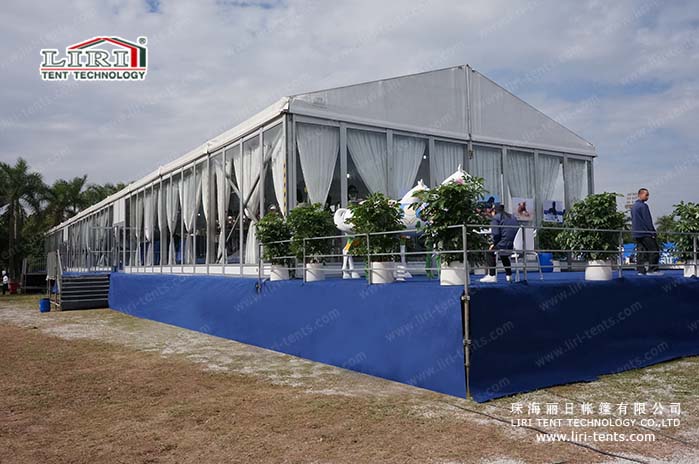
When a major equestrian tour touched down in Guangzhou, the organizers faced a logistical challenge: housing world-class riders, horses, officials, and thousands of spectators under one coherent temporary venue. The solution involved 10,000 square meters of engineered event structures, each selected for a specific role in the competition’s operation. A single manufacturer coordinating multiple tent types simplified logistics compared with assembling random rental stock from separate suppliers.
The Event: A First Major Equestrian Tour
The finals marked the debut of a national equestrian tour under the national association. The competition blended athletics, entertainment, culture, and equestrian sport in a single venue, drawing strong media attention and a solid turnout despite rainy conditions. For event planners evaluating custom event tent options, this case shows how a coordinated structure package supports a complex program from load-in to broadcast. For smaller one-off occasions, our party tent rental guide covers what to expect when sourcing temporary structures for a single weekend.
Tent Solutions Across 10,000 Square Meters
The venue deployed multiple structure types, each matched to a function:
- Classic A-frame VIP tents for hospitality and catering, providing climate-controlled dining space for officials and VIP guests.
- Polygon tents — the same structural family as our outdoor polygon tent — serving as multifunctional rest lounges with open, column-free interiors.
- Double-decker viewing tents for judges’ scoring platforms and raised spectator seating with clear sightlines across the ring.
- Stable tents functioning as temporary accommodation for horses, with ventilation, bedding areas, and feeding stations.
Why Engineered Structures Beat Generic Rentals
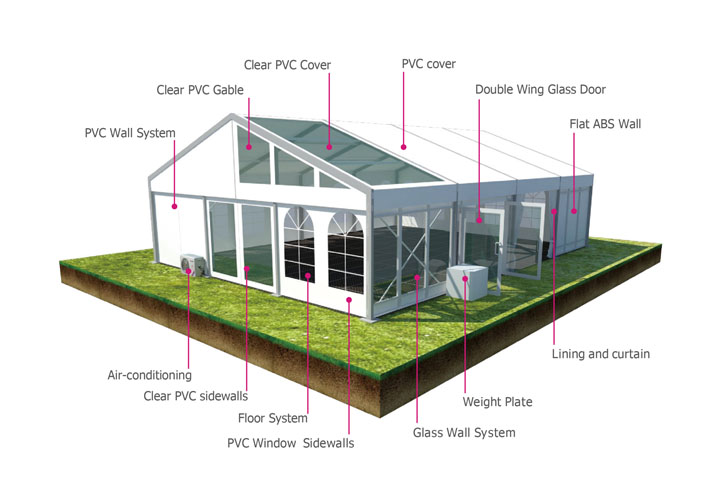
Sporting events place demands on temporary buildings that off-the-shelf party tents rarely handle. Rain on competition day tested every structure, yet the aluminum frame tents held firm with integrated gutter systems channeling water away from walkways. Engineered event tent structures rated for wind and live loads kept the venue operational through adverse weather. For organizers sourcing sporting event tent setups, this project demonstrates what a professional tent factory delivers when the brief calls for more than standard canopies: structures designed for specific use cases, with structural calculations, fire-rated PVC fabrics, and rapid deployment schedules.
Coordination at Scale
A coordinated deployment at this scale requires more than hardware. The manufacturer manages site surveys, load calculations, anchoring engineering, and installation sequencing. Rental companies and event agencies should verify that engineering documentation comes standard — not as an upsell — when the venue spans 10,000 square meters and hosts live broadcasts. A clear span frame also gives planners a clean canvas for hospitality, media, and competitor areas without interior poles blocking sightlines or service routes. Daily site walks between the tent crew and the event manager keep the build on schedule when weather or broadcast needs shift.
Broadcast and Media Setup
Live coverage adds strict requirements that generic canopies cannot meet. Camera platforms need a stable, level floor and a rated load path to the base plates, while cabling runs through dedicated channels built into the frame uprights rather than across walkways. Commentator booths and replay areas sit on the upper deck of the double-decker units, clear of the crowd but close to the action. Because the structures share one profile and one engineering package, the broadcast team plans positions once and reuses them across every stop of the tour, which trims setup time at each new city.
Anchoring and Ballast Planning
Wind is the deciding factor in any temporary venue, so anchoring follows the stamped calculation rather than a rule of thumb. Grass sites use helical or peg anchors sized to soil type, while hardstand needs ballast weights and load spreads that protect the surface. The crew confirms the plan with the site manager before the first bay goes up, because changing anchor type after assembly costs far more than planning it up front. For the equestrian tour, the same discipline kept every structure stable through the rainy days that tested the schedule.