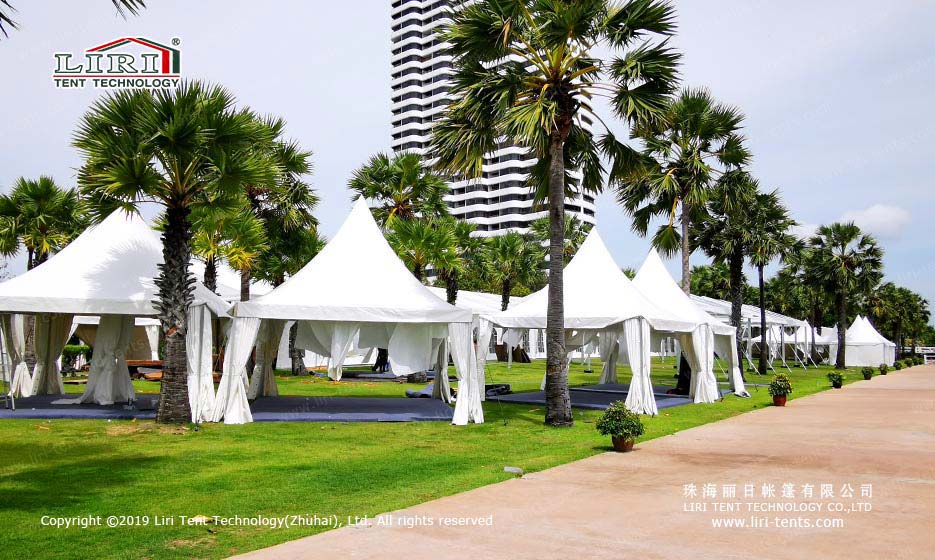
A garden party tent is a portable outdoor shelter engineered to provide weather-protected event space on lawns, gardens, and natural terrain, ranging from intimate 3×3 meter gazebos to expansive 10×20 meter marquees that host 150 seated guests. For event planners and rental businesses, selecting the right garden party tent means balancing structural durability, installation speed, and visual presentation to match the occasion. A outdoor party tent built to commercial standards keeps the celebration dry without trapping the garden view behind heavy walls.
Material Quality: The Foundation of Tent Longevity
The single most important factor in garden party tent selection is frame and fabric grade. Professional-grade tents use 6061-T6 aluminum alloy for the frame, offering a strength-to-weight ratio roughly three times higher than standard steel while resisting corrosion outdoors for 15 or more years. The roof and wall fabric should be a minimum 850g/m2 PVC with B1-rated fire-retardant certification, which meets EU safety standards for public gatherings. Commercial-grade garden tents with aluminum frames and heavy PVC membranes hold structural integrity through 80 km/h wind and 30 kg/m2 snow loads — figures that matter for companies operating year-round. Treated fabric also resists mildew, so the tent stores clean between bookings.
Size and Layout: Matching Tent Dimensions to Guest Count
Tent sizing follows a straightforward calculation: allow 1.2 to 1.5 square meters per seated guest for dining, or 0.8 square meters per person for a standing reception. A 6×9 meter garden tent accommodates 40 to 50 seated guests, while a 10×15 meter configuration handles 100 to 120 comfortably. For gardens exceeding 150 guests, multiple tents join with integrated connector gutters to create a seamless open-plan space. A clear span tent system removes interior support poles, giving unobstructed layouts for dance floors, buffet stations, and stages. Standard eave heights of 2.5 to 3.0 meters ensure headroom and airflow for summer events, and a party canopy tent option adds a peaked roof for a classic garden look.
Installation Efficiency: Ground and Setup Time
Garden venues bring uneven terrain, soft soil, and restricted access for heavy equipment. Aluminum frame garden tents address this with a staking system that secures to grass using 60 cm ground anchors, avoiding concrete ballast that scars lawns. A 6×9 meter tent assembles in about 90 minutes with a 3-person crew, and the whole structure packs into cases that fit a standard cargo van. For rental businesses running multiple weekend setups, this speed allows three to four events per weekend with one crew, directly improving per-unit profitability. The lightweight frame weighs about 40 percent less than powder-coated steel, cutting crew fatigue and setup time by roughly 35 minutes per install.
Weather Protection and Comfort
A luxury party tent for the garden still needs practical weather defense. Heat-welded PVC seams achieve full waterproofing, a 15-degree roof pitch prevents pooling, and optional gutters channel rain away from entrances. Sidewalls with clear PVC windows keep the garden view while blocking wind, and linings soften the interior for evening functions. Plan lighting along the perimeter and aisle so guests navigate rows safely after sunset, and size any climate unit to the full enclosed volume rather than the seated area alone.
Rental vs Purchase for Garden Events
A party tent for sale makes sense for venues that host regular functions, because the frame pays back across a season of weddings, birthdays, and corporate lunches. Rental suits one-off dates where storage and crew are not worth the overhead. Compare the cost of three to four hires per year against the purchase price plus a small maintenance budget; for most garden venues, ownership crosses into the cheaper column by the second season. Owned stock also lets planners keep matching linings and walls across events for a consistent brand.
Lighting and Decoration Tips
Garden tents look their finest with soft, layered light rather than a single overhead lamp. Perimeter uplights wash the fabric, pin spots highlight the aisle or cake table, and string lights under the lining add warmth after dark. For daytime events, clear gables and window walls bring the garden inside, while potted plants at the entrance blur the line between tent and lawn. Keep decor weight within the frame’s rated attachment load, and route all cables through the frame channels so nobody trips on a cable in the grass.
Storage Between Events
After the party, dry the fabric panels before packing to stop mildew, and wipe the aluminum frame with fresh water if it sat near salt air or fertilizer. Store covers on a ventilated rack rather than a damp floor, and keep small parts like base plates and stakes in labeled cases so the next setup starts complete. A short post-event check of seams, zippers, and anchor points catches wear early, which is far cheaper than replacing a panel after a full season of neglect. Rental businesses that turn several gardens a month should rebuild this check into the strike crew’s routine, and color-coded cases by frame size speed the load-out while cutting the chance of arriving with the wrong bay for the booked footprint.
Our party often takes place outdoors, facing various weather conditions. Could you explain the advantages of party tents in terms of rain, wind, and sun protection?