Party Tent Heaters: Complete Guide to Keeping Your Winter Event Warm
Winter outdoor events create a memorable atmosphere — snow-covered landscapes, crisp air, and festive lighting. But without proper heating, guests spend more time shivering than socializing. A party tent heater solves this problem by raising the interior temperature quickly and maintaining comfort throughout the event. Understanding heating options, operating costs, and sizing requirements helps organizers make informed decisions that keep guests comfortable without exceeding the budget.
Two primary heating technologies dominate the party tent market: fuel-powered forced-air heaters and electric heat pump systems. Each has distinct advantages depending on event duration, tent size, fuel availability, and noise tolerance. For an overview of party tent equipment categories, explore the available climate control options.
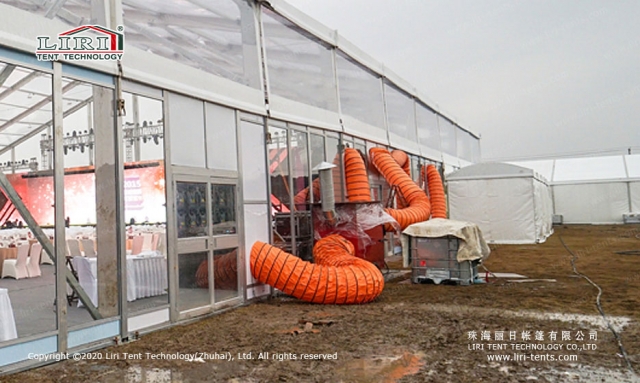
Fuel Oil Heaters: High Output for Large Tents
Fuel oil heaters, also known as indirect-fired heaters, burn diesel or kerosene to heat a heat exchanger, then a fan blows the warm air into the tent. Because combustion gases are vented outside through a flue pipe, these heaters do not introduce fumes or carbon monoxide into the occupied space. This makes them suitable for enclosed tents where air exchange is limited.
For a 25x30m party tent (750 square meters), a single 200,000 BTU indirect-fired heater maintains a comfortable temperature even when outdoor temperatures drop below freezing. Larger venues may require two or more units at opposite ends for even heat distribution. Fuel consumption averages 3 to 5 liters per hour, depending on temperature differential and tent insulation quality.
The primary advantage is independence from the electrical grid. Fuel heaters operate on generator power, making them suitable for remote locations. The heated air is dry, reducing condensation on tent walls and ceiling — a common problem in humid winter conditions.
Electric Heat Pumps and Air Conditioners
Electric heat pumps extract heat from outside air and transfer it indoors, achieving efficiencies of 300% to 400% — three to four units of heat for every unit of electricity consumed. Modern inverter-driven heat pumps operate in outdoor temperatures as low as -15°C, making them viable for winter tent applications.
The main advantage is quiet operation. Where fuel heaters produce burner and fan noise, party tent air conditioner units in heating mode run at sound levels comparable to household appliances. This makes them preferred for events where audio quality matters — corporate presentations, wedding ceremonies, and live performances.
However, electric heaters require substantial power. A 50,000 BTU heat pump draws approximately 5 kW, requiring a dedicated generator or 63-amp electrical connection for large tents with multiple units.
Heater Sizing and Placement Guidelines
Choosing the right heater capacity depends on three variables: tent volume, insulation level, and temperature differential. A general guide is 30 BTU per cubic meter for well-insulated tents, and 45 BTU per cubic meter for single-layer PVC walls.
For a 15x30m tent with 4m sidewalls (1,800 cubic meters): 1,800 x 35 BTU = 63,000 BTU minimum. Adding a 20% safety margin brings the recommendation to 75,000 BTU — one medium heater or two smaller units. For different tent sizes, check large event tent sizing guides for BTU recommendations.
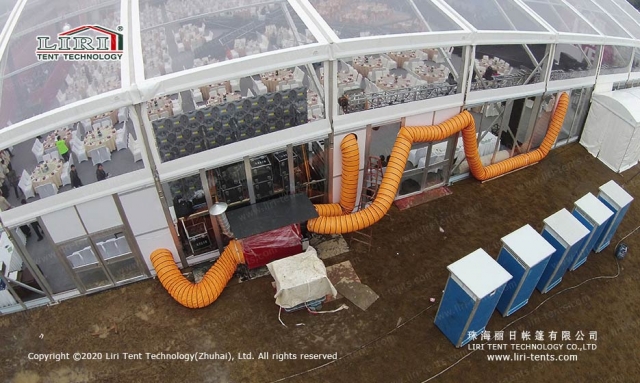
Heaters should be positioned so warm air does not blow directly onto guests. Aim the discharge at least 2 meters above the floor, or use ducting for overhead distribution. This prevents hot spots and ensures even temperature across the tent.
Cost Comparison: Fuel vs. Electric Heating
Operating costs vary by region and fuel price. In most markets, diesel-fired heating costs $0.80 to $1.20 per hour for a 200,000 BTU heater. Electric heat pumps cost approximately $0.50 to $0.90 per hour at average commercial rates. Fuel heaters have lower upfront rental but higher per-hour costs.
For events over eight hours, the electric heat pump’s lower operating cost offsets its higher rental rate. For shorter events, the fuel heater’s lower rental fee is more economical. Discuss your event duration with the supplier to determine the option for your schedule.
Safety Considerations for Tent Heating
Safety comes first when operating heating equipment inside fabric structures. Fuel heaters must sit on non-combustible surfaces with at least 1 meter clearance from tent walls. Install carbon monoxide detectors near the heater and in guest seating areas. The tent needs at least two emergency exits, and all equipment should be inspected annually.
Electric heaters require ground fault circuit interrupter protection on all connections. Extension cords must be rated for the heater’s amperage draw and kept clear of standing water. Never daisy-chain multiple heaters on one circuit. For broader winter preparation, refer to outdoor party tent winter preparation tips.
Frequently Asked Questions
How many heaters do I need for a 20x40m party tent?
For a 20x40m tent with 4m sidewalls (3,200 cubic meters), you need approximately 110,000 BTU. This typically requires two medium fuel heaters or three to four electric units evenly positioned.
Can I use residential space heaters in a party tent?
Residential space heaters are not recommended for commercial party tents. They lack the output for large spaces and may not meet commercial fire safety standards. Use equipment rated for event tent applications.
How do I prevent condensation inside a heated party tent?
Proper ventilation is essential. Even in winter, crack roof vents or sidewall flaps slightly to let moisture-laden air escape. Fuel heaters produce dry heat that naturally reduces condensation.
We require a large wedding tent for the party, which should be 120 square meters in size, and needs to be durable and water-resistant for outdoor use. Please provide the price along with additional details.