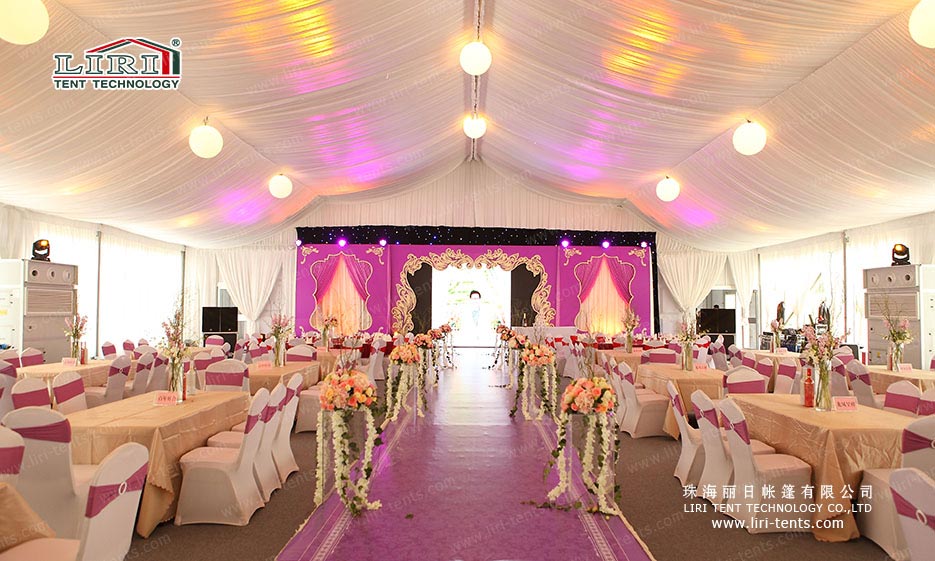
Getting the chair layout right inside a wedding tent takes more planning than it looks. Chair placement affects sightlines, aisle flow, guest comfort, and the overall ceremony atmosphere, all within a fixed footprint. Whether you work with a purchased structure or a rental, the principles stay the same: start with the tent dimensions, subtract clearance zones, then arrange chairs for maximum visibility with minimum congestion. A wedding party tent gives you a column-free floor that makes these layouts far easier than a pole tent would.
Pre-Layout Planning: Tent Dimensions and Chair Spacing
Before placing a single chair, confirm three numbers: tent width, tent depth, and available floor area after subtracting the ceremony stage, altar, and side exits. Standard wedding chair spacing allows 0.5 meters per seat width and 0.9 meters between rows for legroom and access. In a 10-meter-wide tent, that gives roughly 18 chairs per row across, with a 1.5-meter center aisle. If your wedding tent feels tight, remove side walls to extend the visual boundary while guests near the edges stay dry under the canopy. Always sketch the plan to scale before the crew arrives so the chair count matches the real interior.
Step-by-Step Chair Setup
- Establish the center aisle first. Position chairs facing the front, splitting rows evenly on both sides of a 1.5-meter aisle. This gives the bridal party clearance to walk without brushing chair backs. Deeper rows reaching farther back work better than shallow, wide rows.
- Keep all chairs under the tent roof. Match your chair count to the protected floor area. A 6x12m tent fits about 80 ceremony chairs; a 10x15m tent handles 150. For large weddings, a wedding reception tent structure gives layout flexibility without cramming, much like a banquet canopy tent offers for seated dinners. A wedding tent for 800 people shows just how much floor larger structures provide.
- Leave front clearance for the ceremony party. Place the first row 2.5 to 3 meters from where the couple will stand, creating visual breathing room.
- Reserve the front row for immediate family. Assign each chair to a specific family member. Traditional placement puts the groom’s family on the right and the bride’s on the left from the back facing forward; Jewish ceremonies reverse these sides.
- Designate rows for ceremony participants. The second row can hold extended family, ushers, or readers who need quick access to the front.
Additional Considerations for Tent Weddings
Chair setup inside a tent differs from an open-air layout. Tent sidewalls reflect sound, so leave aisle gaps wide enough that guests are not pressed against walls where audio clarity drops. Flooring matters too: chairs on grass sink during long ceremonies. A cassette flooring system gives chairs a stable, level base and stops legs digging into soft ground. For evening ceremonies, uplights along the perimeter and pin spots on the aisle provide functional visibility without competing with the ceremony lighting. Lining the sidewalls softens glare and improves the look in photos.
Floor Plans for Different Ceremonies
Not every wedding uses the same seating pattern. A Catholic ceremony often needs a central aisle wide enough for a procession, while a Hindu wedding places the mandap at the center with guests wrapped around it on three sides. A secular garden wedding may prefer a curved row layout that faces a freestanding arch rather than a stage. Match the chair plan to the ritual before locking the tent size, because a layout that ignores the ceremony flow forces guests to twist in their seats. Share the run sheet with the tent crew so the floor is set exactly as the officiant expects.
Working With Your Venue
The site shapes what is possible. A lawn needs ground protection and flooring so chairs stay level; a paved courtyard needs ballast and mats so the frame does not scar the stone. Confirm vehicle access for the chair delivery, because a long carry from the car park slows setup and risks damaged seats. Ask the venue about noise limits and power for uplighting, and book the tent for the day before the event so the chair layout can be checked in daylight. A calm rehearsal walk-through catches a blocked aisle or a tight front row before the guests arrive.
Rehearsal and Final Checks
A short rehearsal the day before the wedding catches layout problems while there is still time to fix them. Walk the aisle with the officiant and the couple, confirm the first row clearance, and check that family blocks sit on the correct sides. Test the uplighting and pin spots at the time of day the ceremony will run, because daylight changes how the space reads. Verify that chair rows leave the sidewall gap wide enough for sound to carry, and that the flooring feels level underfoot. Finally, label the front-row chairs so ushers seat the right family members without a fuss, and keep a small stack of spare chairs on site for last-minute plus-ones. A calm walk-through also lets the photographer plan sightlines and the couple relax, which is worth as much as the extra seating math. This small investment of time prevents the most common wedding-day surprises and keeps the ceremony running to plan.