A tipi party turns a back garden or a campsite into something people talk about for weeks. The shape, the wood, and the open peak give a warmth that a square canopy cannot match. The trick is planning before the trucks arrive, not after. This guide walks through venue, size, decoration, and day-of operation so your tipi tent build goes smoothly from the first site visit to the last guest leaving.
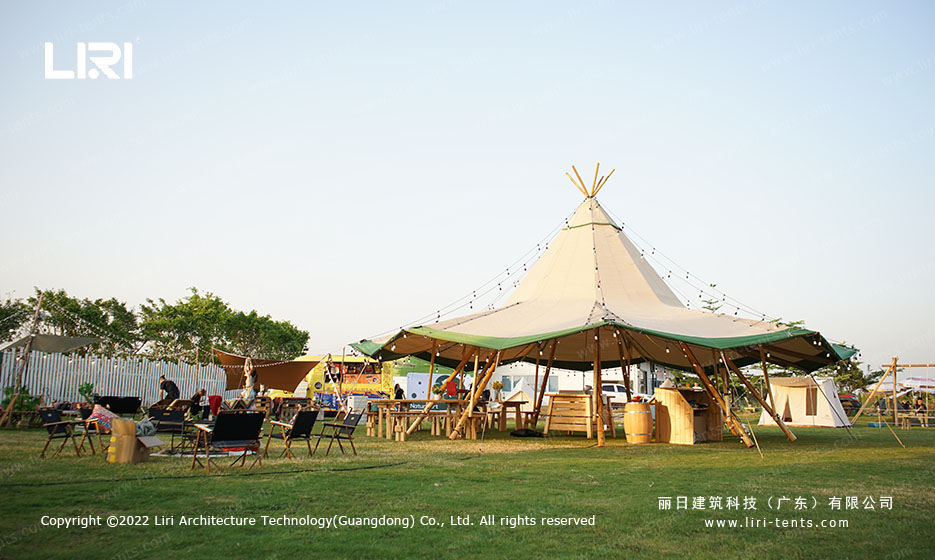
Find the Right Tipi Scene
Not every site suits a tipi. The form looks its finest on grass, in woodland, or on open sand, where the wooden frame belongs to the view. Before you commit, visit the space and check two things: can vehicles reach the pad, and is the ground stakeable? If both are yes, you are in good shape to build.
Tipis cost more to rent for a one-off event than some large frame tents do, because the wood frame and the setup time carry a premium. For a venue that runs parties across a season, owning or leasing long-term is the cheaper path. Match the structure to how often you actually use it, and the budget case gets simple.
Pick the Exact Tipi Size
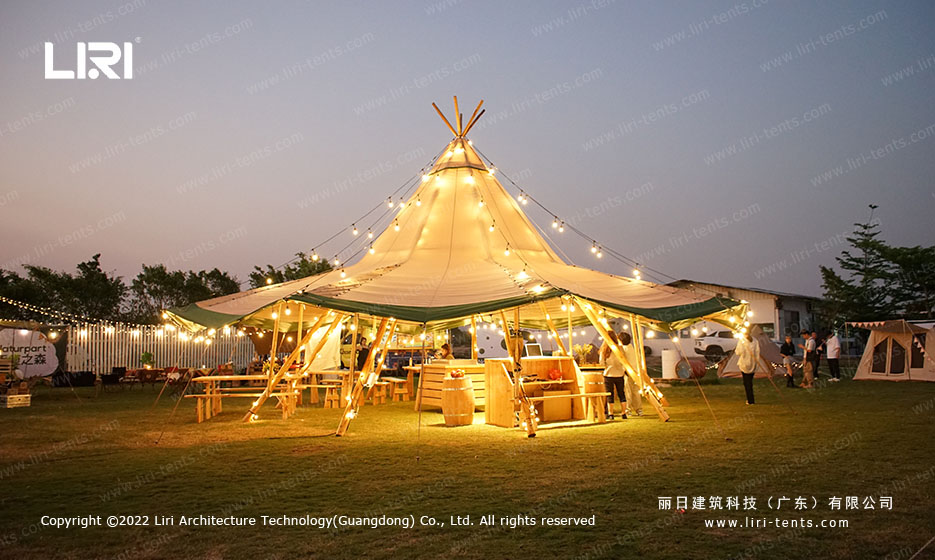
Size follows headcount and layout, not a rough guess. A 10-person tipi suits a small dinner, while a 40-person build opens room for a dance floor and a buffet line. Sketch the plan first: seats, service table, entrance, and any stage. Then choose the unit that fits that plan with walking space left over.
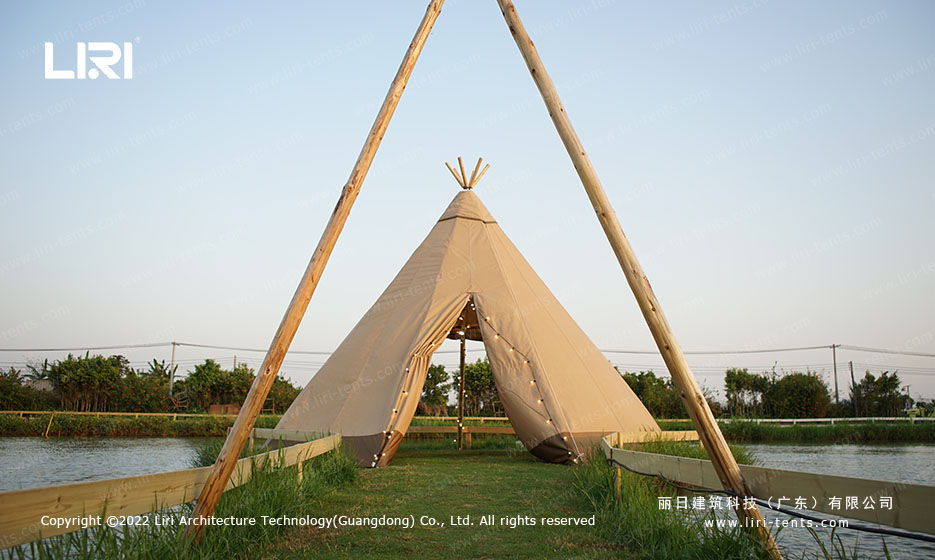
If you are unsure where your numbers land, our tipi camping tent size guide breaks down floor area per guest so you do not over- or under-book, and it shows how the peak height changes the feel of the room.
Decorate for the Setting
A tipi needs less decoration than a blank hall because the frame is already the feature. Lean into it: warm low lighting, a rug under the seating, and greenery at the peak. Keep the palette close to the wood so the room feels joined rather than dressed up. For a outdoor party tent feel, leave side panels open on calm evenings so the site itself becomes part of the decor.
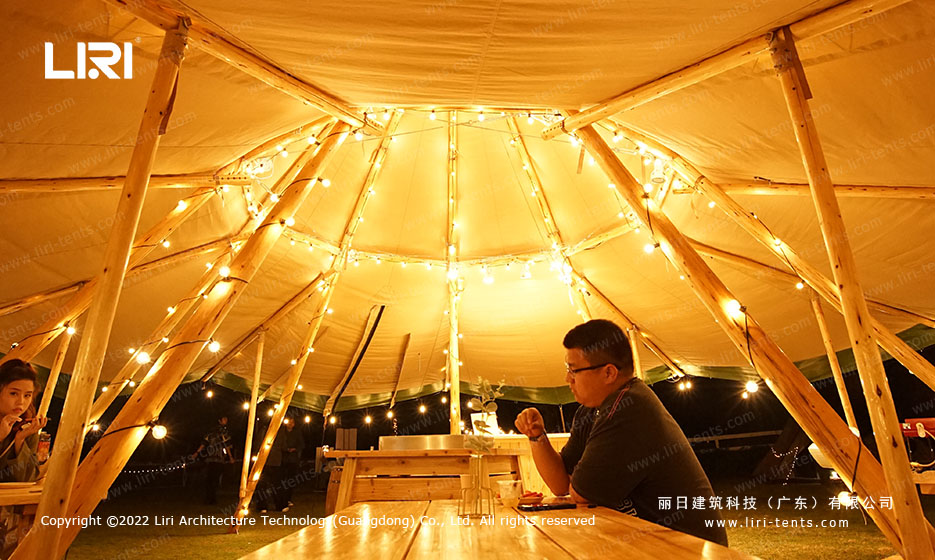
Add a few personal touches rather than many: a statement light at the peak, a long shared table, and a small entrance marker. The wood does the heavy lifting, so restraint reads as confidence instead of emptiness.
Run the Day Smoothly
On the day, the plan is what saves you. Mark the entrance, the service point, and the walkways before guests arrive. Assign one person to watch the weather and roll panels up or down as needed. A tipi handles wind and rain well, but a closed side panel in a sudden gust keeps everyone comfortable and the floor dry.
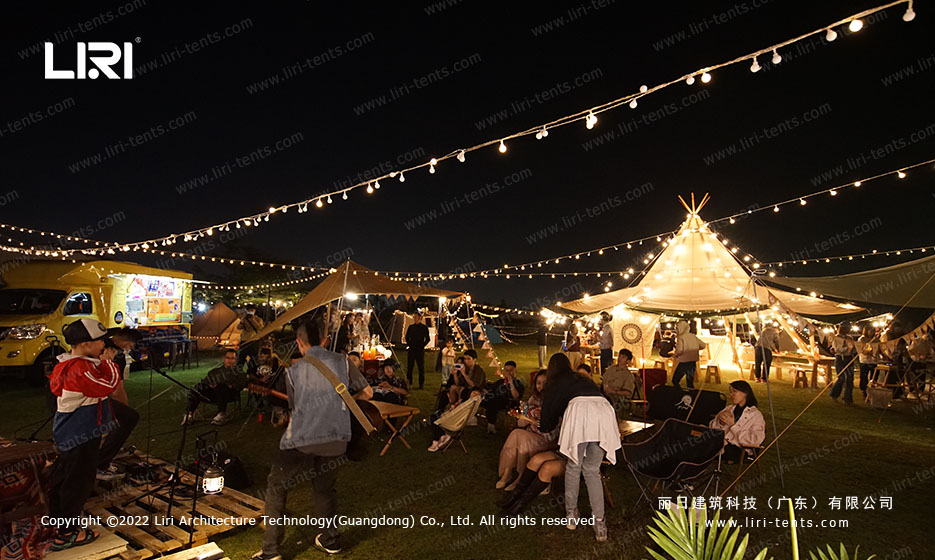
For a food-focused event, a large outdoor tipi restaurant layout shows how to place kitchen and seating inside one peak, which is a useful reference when you plan your own service flow.
Budget and Permits
Beyond the structure, budget for ground protection, lighting, and a small crew to raise and lower the frame. Most open sites need no special permit for a temporary stake-based tent, but check with the local authority if you are on public land or near a road. Booking the slot early also locks the rate before peak season.
How do I choose the right tipi size for my party?
Start from headcount and your layout. A 10-person tipi fits a dinner; a 40-person build adds a dance floor and buffet. Sketch seats, service, and entrance first, then pick the unit with walking space left over.
Are tipis more expensive than other party tents?
For a single event, yes, because the wood frame and setup time cost more. For a venue that runs parties all season, owning or leasing long-term is usually cheaper than renting a plain frame tent each time you host.
Can I decorate a tipi without hiding its shape?
Keep decoration light: low warm lighting, a rug, and greenery at the peak. Stay close to the wood tone so the frame stays the main feature, and open side panels on calm evenings let the site become part of the look.
Build a Weather Backup Plan
Even a calm forecast can turn, so write the backup into the plan instead of inventing it on the night. Keep spare side panels on site, mark a wet-floor route to the entrance, and brief the team on when to close the roof vents. A tipi shrugs off normal wind and rain, but a named plan keeps guests calm and the floor safe. Walk the pad after any heavy rain as well; soft stake points may need a second check before people arrive, and a quick look catches problems while there is still time to fix them rather than mid-party. If the site sits low, lay a thin gravel or board path from the car park so shoes stay clean, which guests notice more than they admit.