A clear-span party tent uses a modular frame, so joining two together is a normal build rather than a custom job. When a single tent will not cover the crowd, you bolt a second frame to the first and the floor opens up.
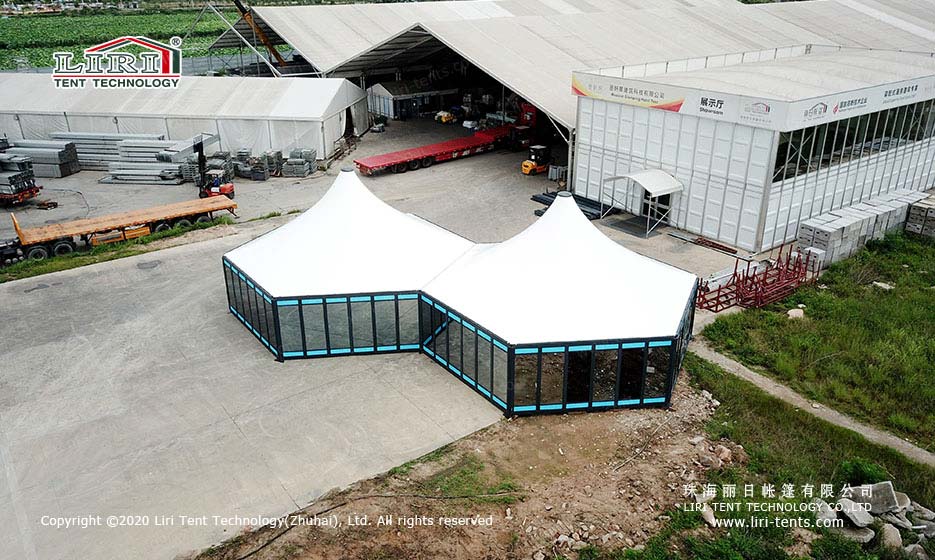
How the Frames Join
The common columns and beams meet and bolt with no gap, so the two tents read as one structure and the roofline stays clean. Because the frame is rigid aluminium, the join holds the same load as the rest of the build, and you can keep adding bays to extend the space as far as the site allows. A structure tent joined this way covers a much larger area than either unit alone.
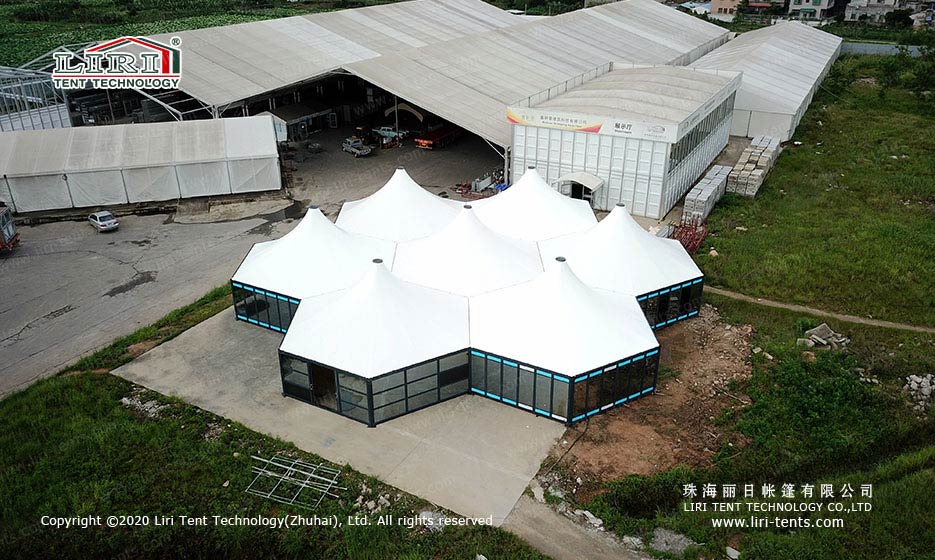
Plan the Joined Layout
Once two tents are joined, split the floor by function: an entertainment area, a meeting area, a rest area, and a service space, each behind its own glass door. A modular tent makes this split simple because the bays are already separate rooms you link as needed. Our modular party tents for company events show the format with several bays under one roof.
The join also lets you mix shapes, so a high peak next to a curve tent builds a venue with real character instead of a plain rectangle. Tell the supplier the functions up front and the bays arrive sized to each one.
Why Combine Instead of Upsize
Joining keeps the kit you already own working. Rather than buy one giant tent, you bolt two you have and seat more guests without a new frame. The clear-span tents line and the special TFS structure tents both join this way, so the same parts serve a small party and a large one.
For a growing guest list, the step-by-step build means you add a bay instead of rebooking the whole event. That flexibility is why planners combine tents for a one-off celebration as well as a touring show.
Fit and Finish at the Join
Seal the join with a matched skirt and a clean valley so rain runs off and the seam disappears from inside. A lined wall over the connection hides the bolt line, and the floor runs level across both bays so guests move between areas without a step. Done well, the combined tent feels like one venue built for the day.
Check the site before you join, because two tents need a level run between the bays and room to work at the seam. A slight slope is fine since the legs adjust, but clear the path so the crew can bolt the connection without shifting stock. Plan the join on the drawings first, and the build on the day is a straight bolt-up rather than a puzzle. A tidy site also means the finished venue reads as one structure, not two tents pushed together.
Can two party tents be joined together securely?
Yes. The common columns and beams bolt with no gap, so the join carries the same load as the rest of the rigid aluminium frame. You can keep adding bays to extend the space as far as the site allows, and the roofline stays clean across the connection.
How do you split a joined tent by function?
Place a glass door between bays to make an entertainment area, a meeting area, a rest area, and a service space. Because the bays are already separate rooms, you link them as needed and size each one to its job, which is the main benefit of a modular build.
Is combining tents cheaper than one large tent?
Often. You reuse the frames you have and bolt them together instead of buying a single giant tent, so the spend stays in the event. The same parts serve a small party and a large one, which keeps the kit working across the calendar.