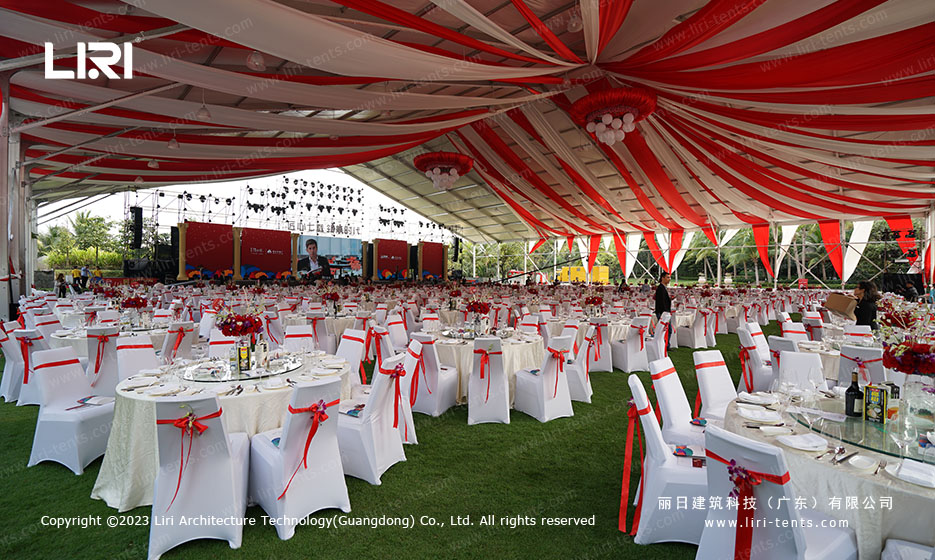
In the heat of summer, an outdoor dining tent offers guests comfort and a cool retreat from uneven terrain, creating a temporary indoor space without sacrificing the open-air feel. This does not mean that comfort, ambiance, and functional areas have to be given up when choosing a restaurant tent. Especially when the footprint reaches 20x50m and beyond, a well-planned layout can handle a full service kitchen, a bar station, and a hundred dining tables at the same time.
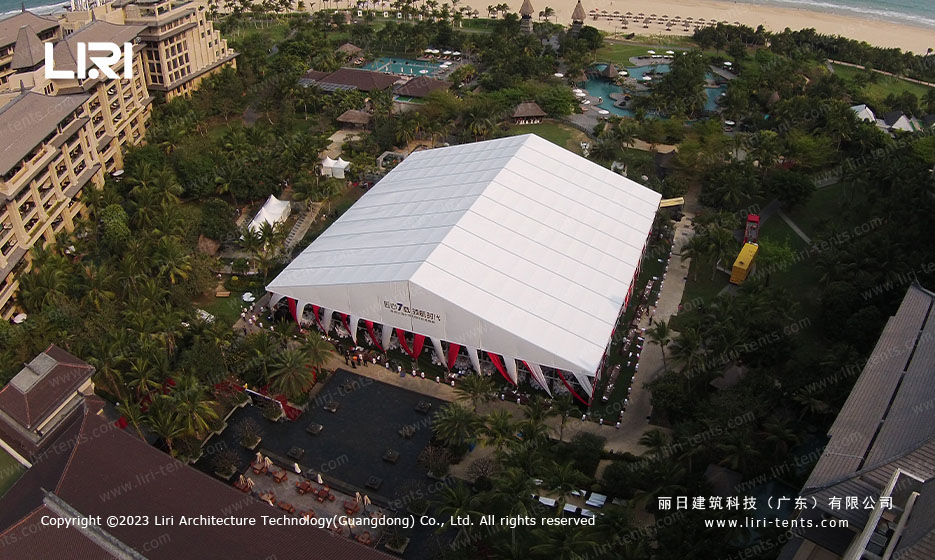
The white top and clear glass side walls give the space a more open feel, letting guests enjoy the surrounding view while they dine. Interior lighting, central air conditioning, and cloth curtains complete the setup, so the venue works equally well for a beachfront bistro, a resort restaurant, or a temporary banquet hall. Operators who want a distinctive silhouette can compare a teepee restaurant tent against a flat-roof hall before committing to a layout.
Restaurant Tent Materials and Build Quality
The frame is the backbone of any outdoor restaurant tent, and the spec sheet below reflects what commercial operators should expect from a certified structure:
- Frame struts: hard-pressed extruded aluminum 6061/T6 (15HW), corrosion-resistant for coastal sites.
- Fabric cover: high-quality double PVC-coated polyester textile, 100% waterproof, flame retardant to DIN4102 B1, M2, CFM, UV resistant, tear-resistant, with self-cleaning ability.
- Connectors: strong hot-dip galvanized steel, checked before each installation.
- Temperature range: -30 to +70 degrees Celsius.
- Wind load: max. 100 km/h, suitable for most open sites.
- Snow load: 75kg/sqm, with a steep roof pitch option that sheds snow automatically.
- Assembly: easy to assemble and disassemble, no pole inside, 100% usable interior space.
A clear-span aluminum frame rated for force 10 winds keeps the venue operational through changing seasons, which matters for operators who run the business year round. For restaurants that expect a busy tourist season followed by quiet months, the ability to dismantle and store the structure protects the investment and keeps site costs low.
Multi-Functional Accessories
Beyond the basic shell, a restaurant tent becomes fully operational when the right accessories are added. The most requested options include:
- Modular cassette flooring: creates a level, dust-free surface over grass or sand.
- Wall and lining systems: add privacy, insulation, and a finished interior look.
- Kitchen and prep tents: separate cooking areas keep heat and grease away from guests.
- Glass walls and roll-up doors: open the venue in fine weather and close it quickly when it rains.
Separating the kitchen from the dining floor is a practical move that many operators overlook. Instead of a partitioned room, a dedicated kitchen tent isolates cooking heat, smoke, and noise, which keeps the main dining area pleasant. A clear top party tent for coastal restaurants is a common choice for the dining side, because the transparent roof lets daylight in while the side walls block sea wind.
Outdoor Tent Use Scenarios
A 50m restaurant tent is not the only option in the lineup, and the right configuration depends on the event type:
Large exhibitions and banquets: A herringbone white PVC top tent with a low rental budget is the choice of most organizers, and the rental price is competitive for multi-day events. When seating must be maximized, a commercial party tent for banquet halls provides the column-free space needed for round tables and a stage.
Backyard and garden dining: For a 100-person party in a pleasant backyard, an arch tent, round tent, or polygon tent offers a variety of shapes and roof styles. Smaller units such as an outdoor tipi restaurant create a cozy, Instagram-friendly atmosphere for boutique catering.
Space expansion: When an existing venue runs out of room, an adjacent tent can serve as a warehouse, store, or church annex. A quick-expand structure provides shelter for people and goods without the cost and lead time of a permanent extension.