A party tent delivers practical temporary space for events, storage, and commercial use. Popular variants include the waterproof party tent for wet-weather reliability and the party tent with sides for enclosed private space where permanent construction is not an option. The engineering behind these systems balances rapid deployment with structural reliability: aluminum frames and tensioned fabric covers that go from flat-pack to operational in hours.
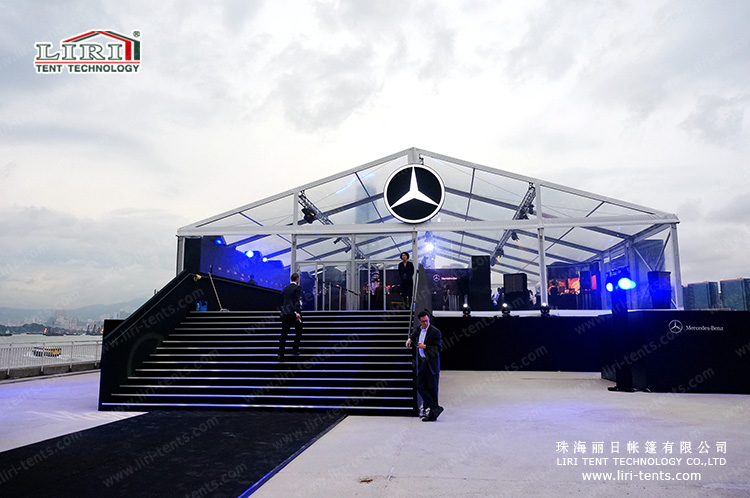
Types of Party Tents
Party tents fall into two broad families. Traditional pole or rope tents rely on one or more central poles and perimeter stakes, covering large areas but blocking the center with supports. Frame tents use interlocking aluminum bars to form a rigid, pole-free structure. For buyers comparing options, our tips on choosing party tents walks through the key selection criteria so the purchase fits the budget and the site.
Traditional Rope or Pole Tents
A traditional rope or pole tent differs from a frame tent in both installation and structure. It depends on central pillars and surrounding poles to hold the top, with the poles held upright by tensioning the fabric and securing it to the ground with ratchets and ropes. Because the poles carry the load, pole tents cover a larger area than a frame tent of the same footprint, but the center poles limit furniture layout and sightlines. These tents suit open lawns where a central support is acceptable and a classic peaked silhouette is wanted.
Frame Party Tents
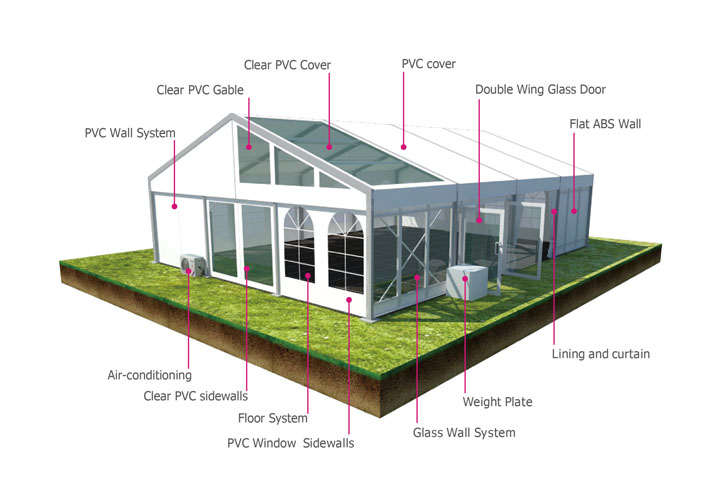
A frame party tent is formed by interlocking bars joined into a rigid metal structure that supports the top. For larger spans, a 20×40 party tent shows how extruded aluminum profiles scale to mid-size layouts without center poles. Once erected, sidewalls attach to the frame to produce an enclosed area free from center poles, and the tent secures with weights or ballast rather than deep stakes. Compared with pole tents, frame tents install on almost any terrain and pack into a smaller transport footprint. Understanding the details helps planners choose: tent pole drape covers create ambience for weddings; flooring matters for graduations and trade fairs; heaters sustain comfort in cold weather; and perimeter lighting is essential for evening events under thick fabric.
Choosing Between Pole and Frame
The right choice depends on the site and the program. Pole tents cost less and cover wide areas but need clear center space and staking room. Frame tents cost more yet deliver a column-free floor, glass-wall options, and setup on hard ground. An outdoor party tent specialist designs both systems for fast deployment, so the decision comes down to guest experience, surface type, and how often the structure moves between events.
Care and Storage of Party Tents
Proper care keeps a party tent in service for years. After each event, brush off dirt and rinse the fabric with mild soap and water, because pressure washers can strip the coating. Let the panels dry fully before packing to prevent mildew, and store them on a ventilated rack rather than a damp floor. Inspect the aluminum frame for loose bolts and check welds annually, especially at the bay junctions that carry the most load. Fold sidewalls loosely to avoid creasing the windows, and keep small parts like stakes and base plates in labeled cases so the next setup starts complete. A short post-event routine like this is what separates a tent that lasts a season from one that lasts a decade of regular use.
Common Uses for Frame Tents
Frame tents suit events where the floor must stay open and the site may be hard or uneven. Weddings use them for clear-span dining and dance floors; markets and expos use them for stalls without center poles; and emergency teams use them for covered triage and storage. Because the structure secures with ballast as well as stakes, it works on paving where a pole tent cannot anchor. The same frame also accepts glass walls and lining for a formal look, then swaps back to mesh screening for a casual summer party, which makes one kit useful across a full calendar of different events without buying a second structure.
Frequently Asked Questions
What are the standard frame and fabric specifications?
The frame uses 6061-T6 aluminum with reinforced junctions. Cover fabric is 850g/m2 PVC-coated polyester with UV treatment and fire certification to NFPA 701. Standard colors include white, clear, and blue, with custom options on request.
How should the tent be maintained and stored?
Clean fabric panels with mild soap and water after each use, as pressure washers can damage the coating. Store dry in a ventilated area to prevent mildew, and inspect frame bolts and welds annually. Properly maintained, these tents deliver 5 or more years of reliable service.
Can a frame tent link to other structures?
Yes. Connector gutters join two frame tents into one weather-sealed venue, which suits events that need a separate cloak, bar, or exhibition aisle without moving guests through the open air.