Home » Tips » Tipi Tent Decoration Cases: Camping, Parties, and Outdoor Dining
When people think of outdoor camping, they often imagine hauling heavy gear and sleeping on hard ground. Tipi tents change that narrative entirely. These spacious, canvas structures offer the comfort of a hotel room with the charm of the outdoors — no luggage required. We have compiled real-world decoration cases to show how versatile tipi camping tents can be across different event formats and business applications.
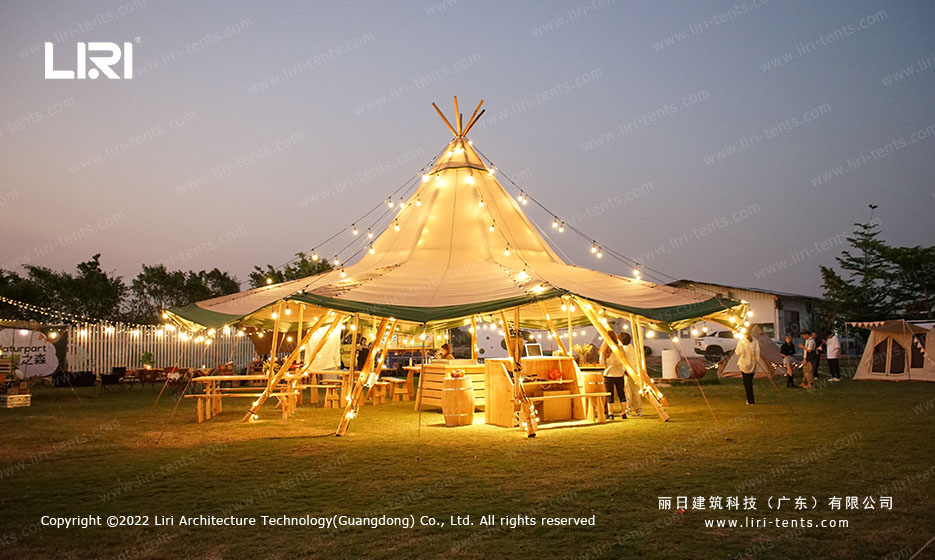
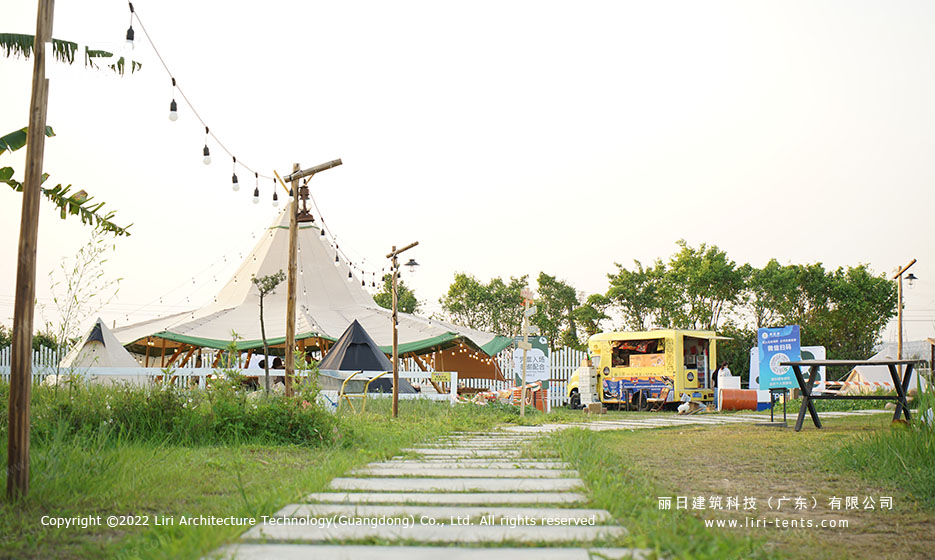
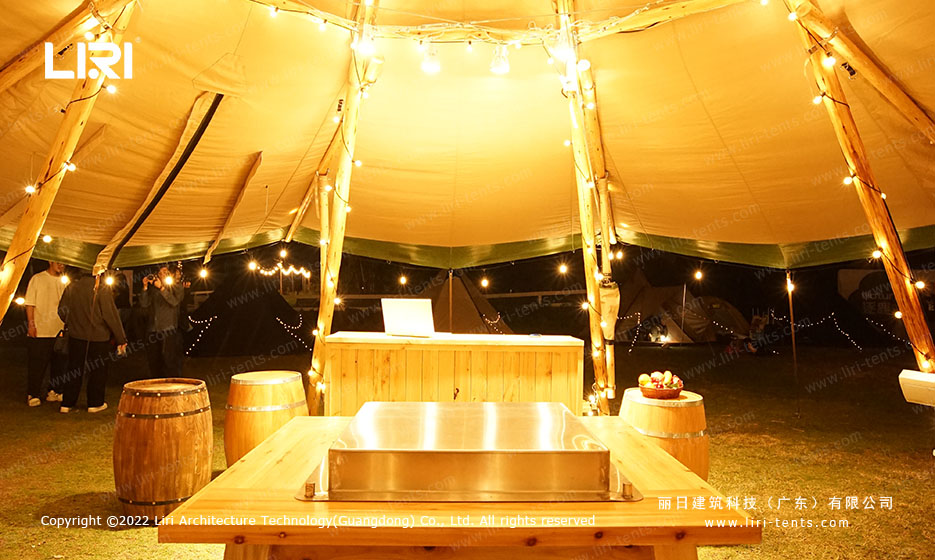
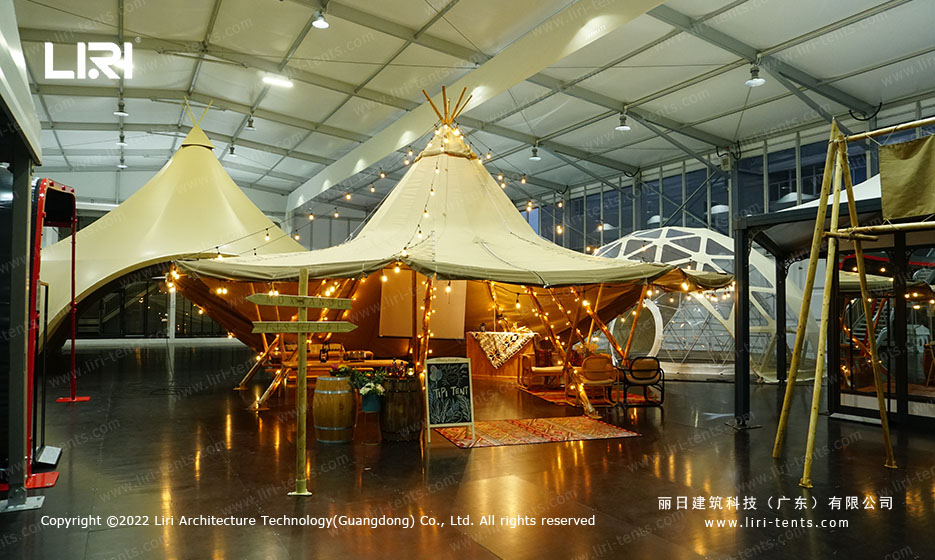
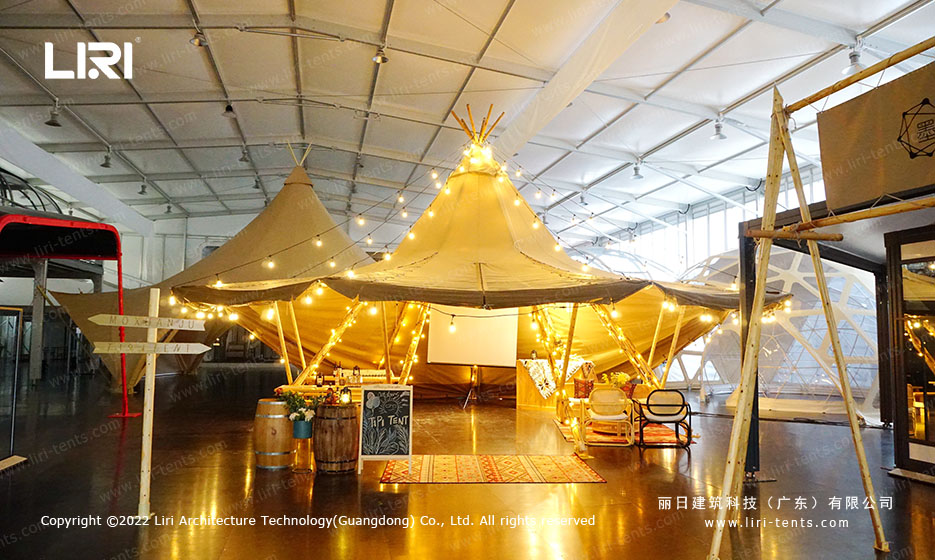
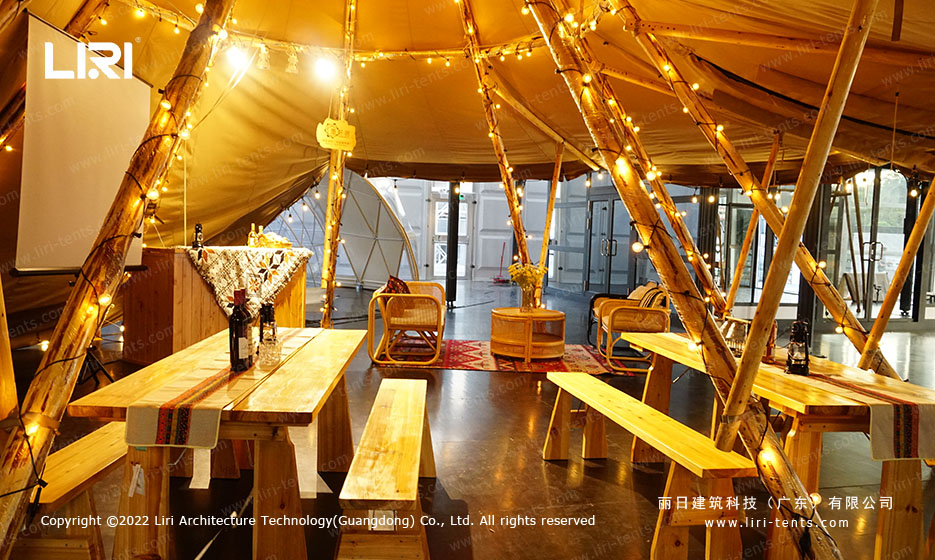
Large tipi tent setup at outdoor dining venue
Tipi Tent Decoration Cases
Certain combinations simply work together: a barbecue and a campfire, a white drape and a flower ball, a bar counter and a dining table, or a chandelier paired with an air bed. Within the same tipi tent, swapping these elements produces completely different atmospheres — from rustic and casual to refined and luxurious. The flexibility of the tipi format means a single tent can serve as a daytime restaurant, an evening party venue, and an overnight glamping accommodation without any structural modification.
Different tipi tent sizes — 6-person mini tents, 10, 20, 40, 72, and 100-person configurations, plus giant hat shapes and connected multi-tipi layouts — serve wildly different scenarios. We showcase three real-world cases below to demonstrate how each configuration shines in its intended use case.
Tipi Tent for Camping
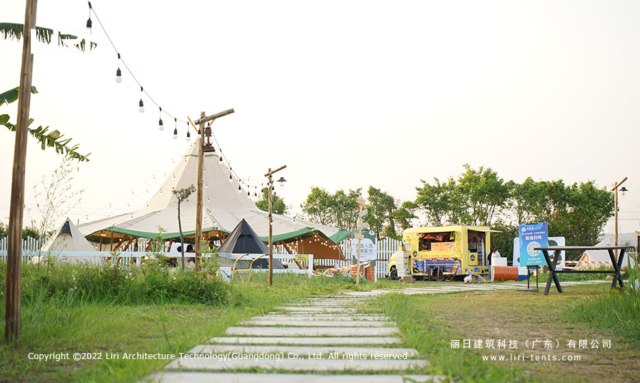
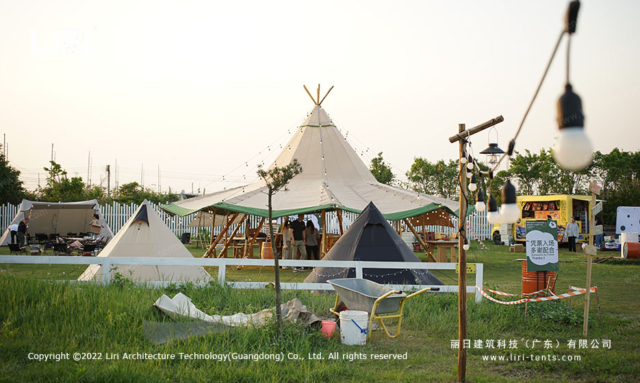
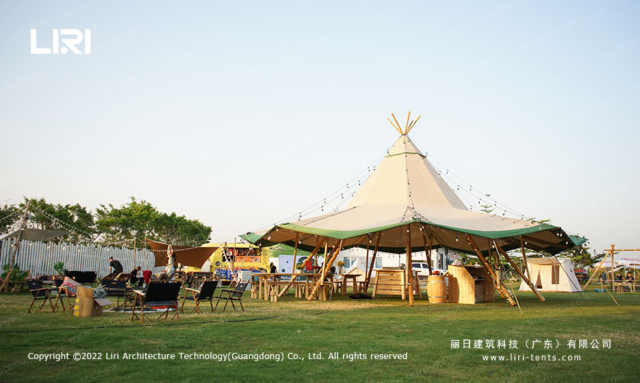
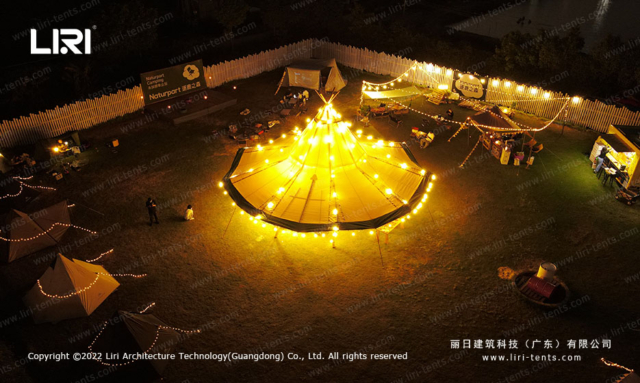
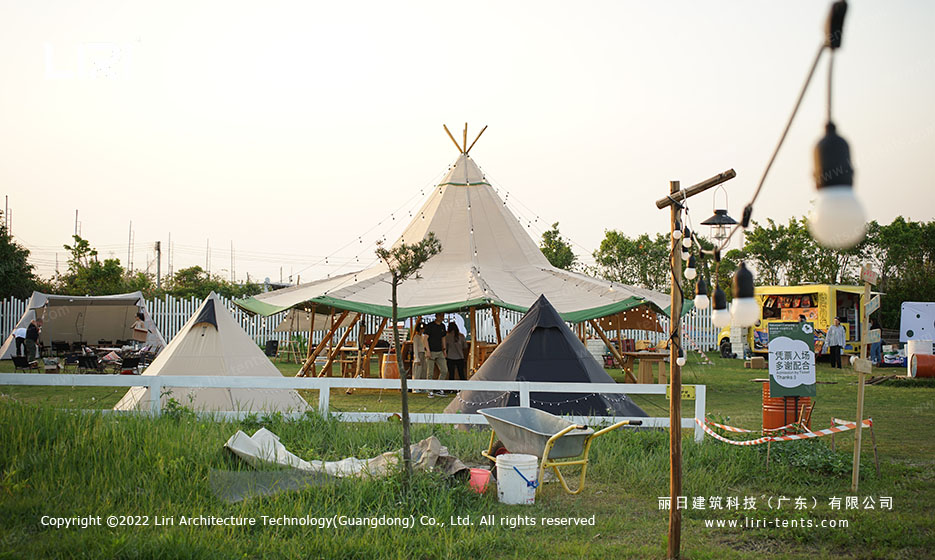
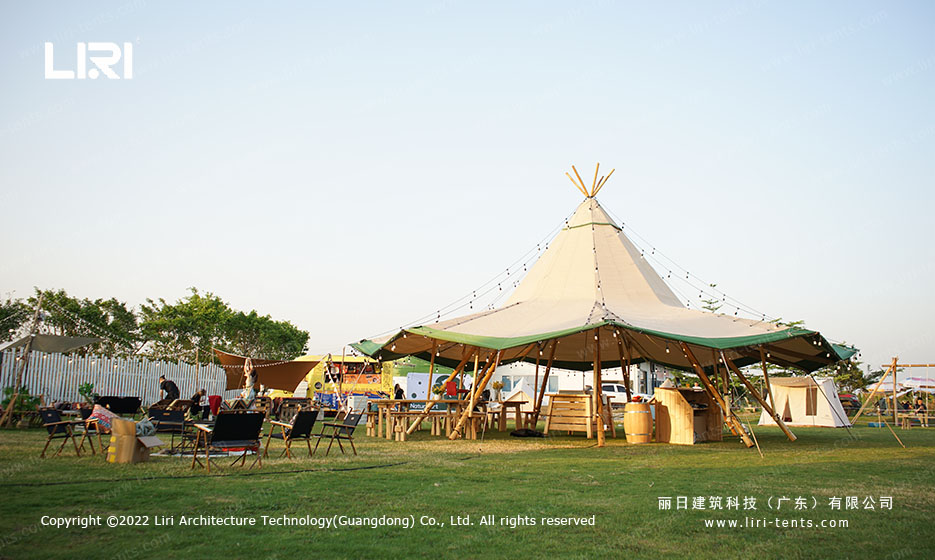
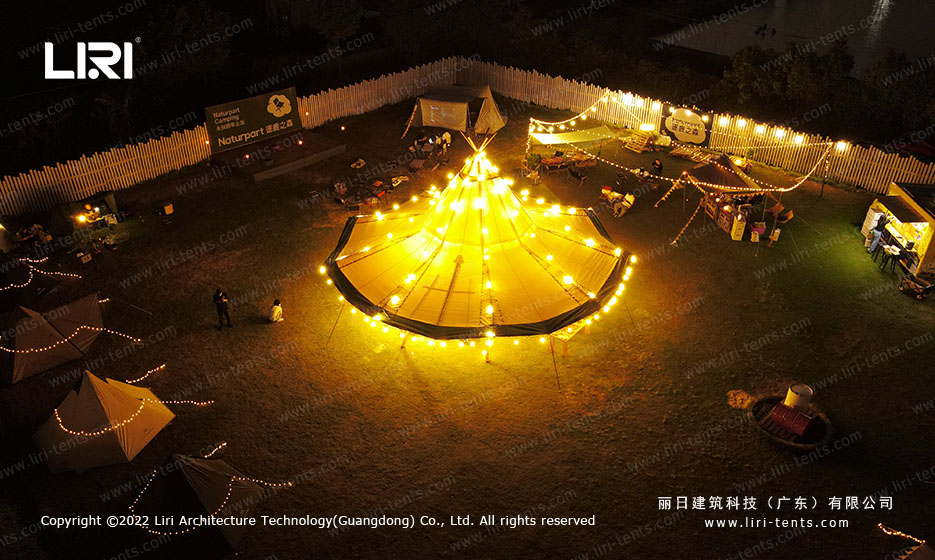
A farm operator near Beijing wanted to host outdoor gatherings on his lawn. The centerpiece: a large tipi tent where guests would gather for barbecues, music, and dancing. After site surveying and scenario planning, we positioned a tipi40 as the central pavilion, with mini tipi tents scattered around as individual camping pods. Each pod received a full set of wooden furniture, ambient lighting, and weather protection.
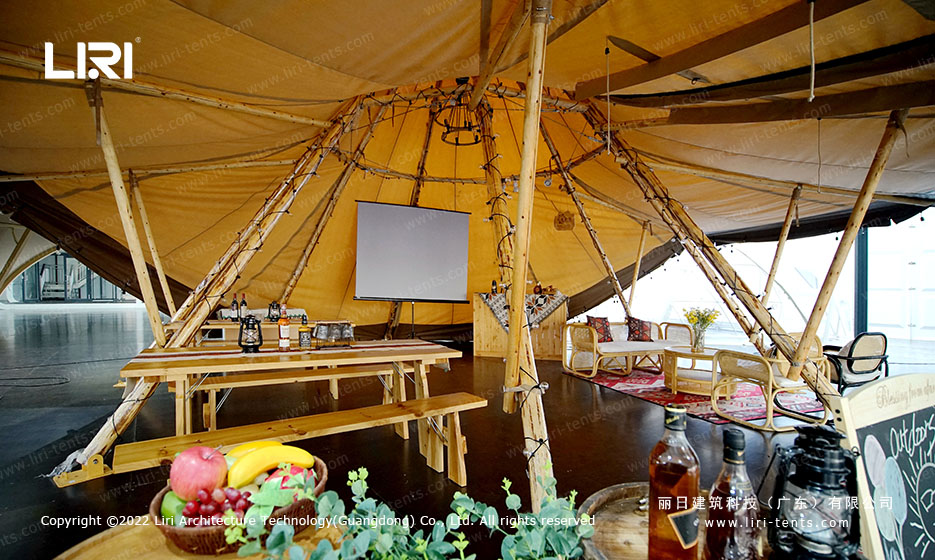
The camping experience centers on simplicity — the cool breeze, the scent of cut grass, the glow of a fireplace, and country music playing softly in the background. The central tipi, hung with string bulbs, wooden barrels, tables, and khaki canvas, became the social hub. Guests spent their evenings drinking and singing around the fire, with no urban distractions. For camp operators, a tipi tent for camping delivers a high return on investment with minimal ongoing maintenance — the PVC canvas requires only an annual inspection and occasional spot cleaning between seasons.
Tipi Tent for Party
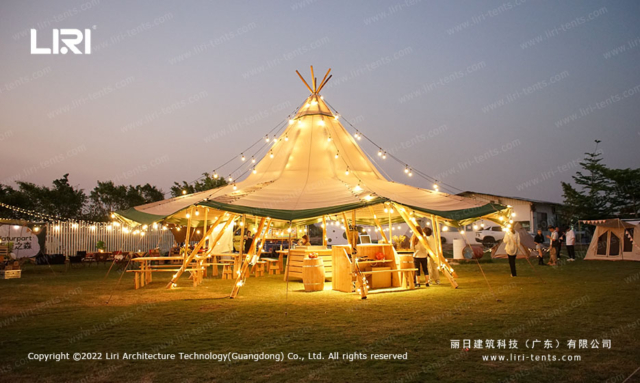
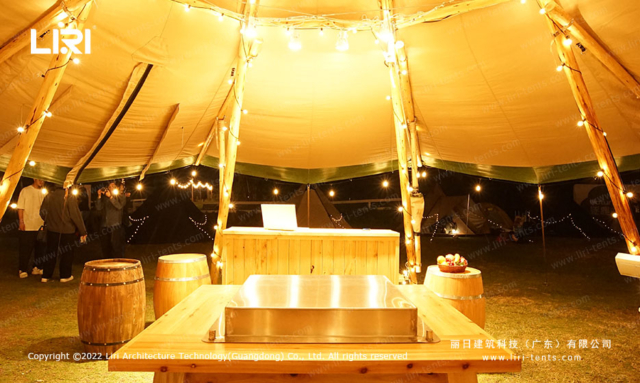
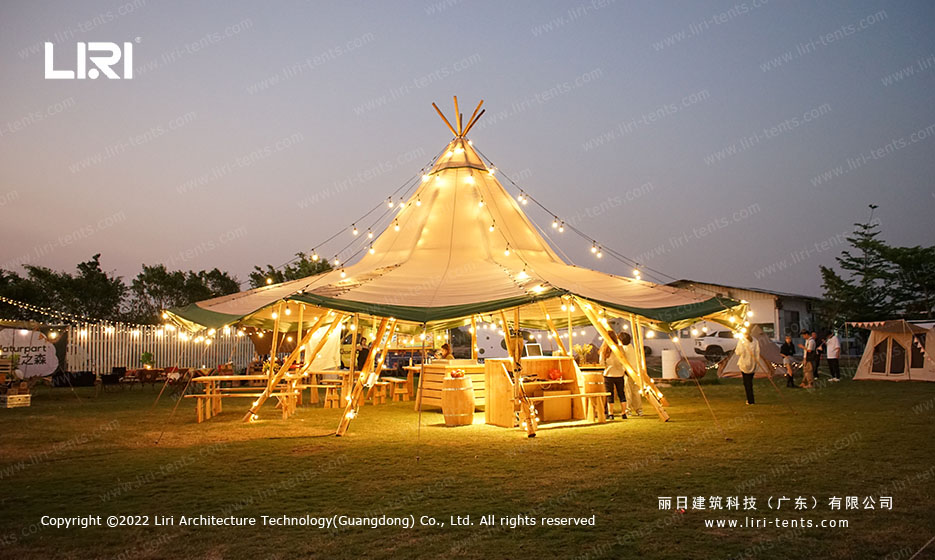
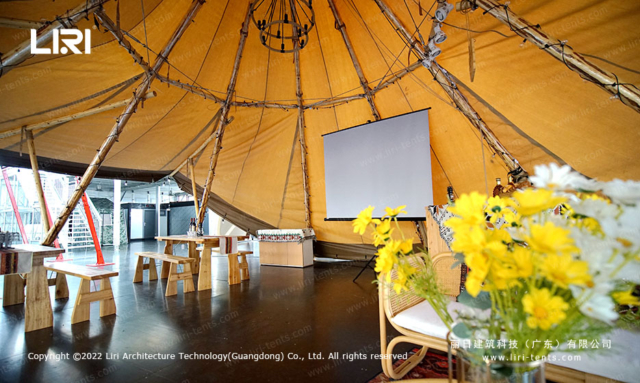
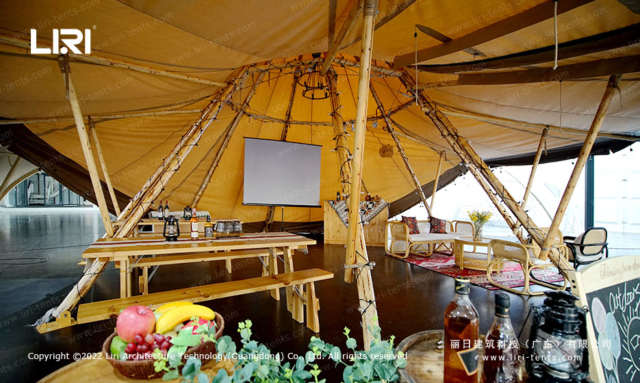
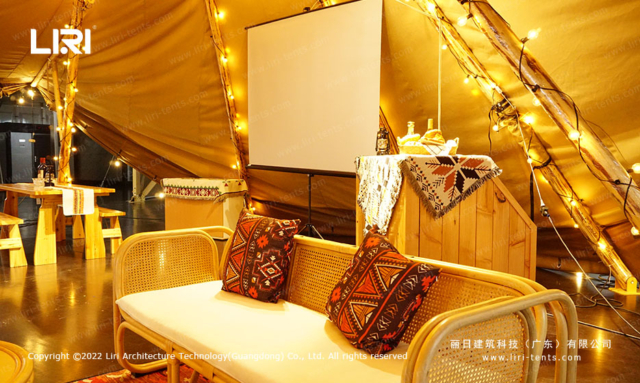
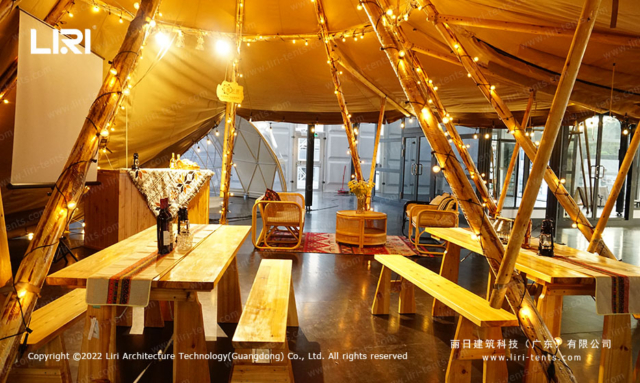
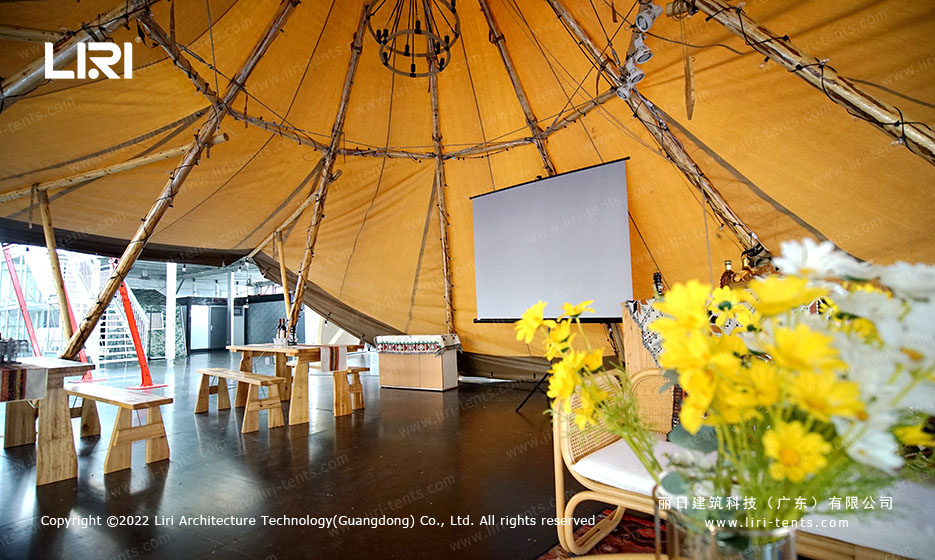
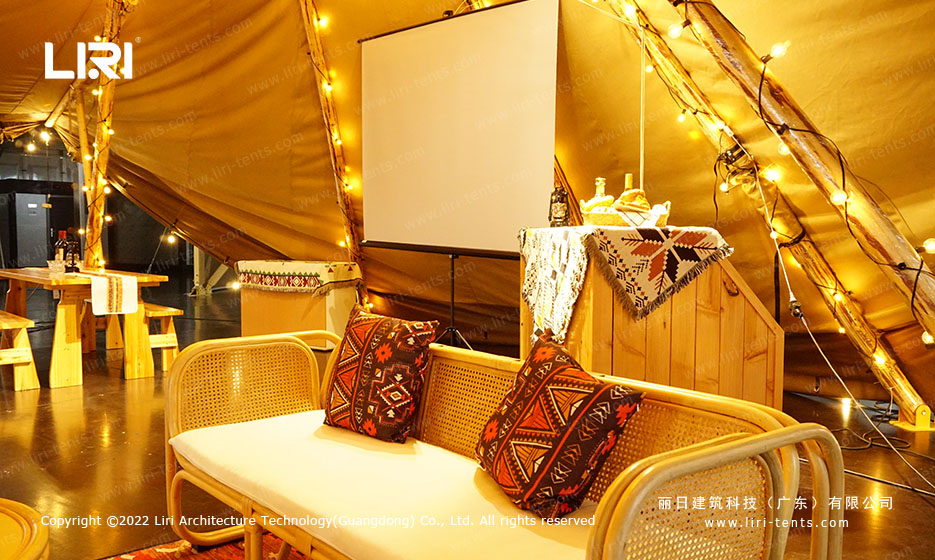
In outdoor hospitality, the tipi party tent functions as a complete entertainment zone. This particular 40-person setup included a full bar, wooden dining sets, audio-visual equipment, and layered lighting. The space hosted outdoor weddings, children’s book club events, family reunions, birthday celebrations, and even movie screening nights — all within the same canvas shell.
Interior flexibility is the key advantage. Tables and chairs shift to the perimeter to open the dance floor. Round tables with birthday cakes anchor the center. Rainbow ribbons hang from wooden poles, and colorful decorations transform the atmosphere instantly. This versatility makes the tipi tent for party use a favorite among event planners and hospitality operators alike. Compared to traditional frame tents, tipi tents require fewer structural components, which simplifies setup while maintaining an impressive visual presence that photographs well from any angle.
Tipi Tent for Outdoor Dining
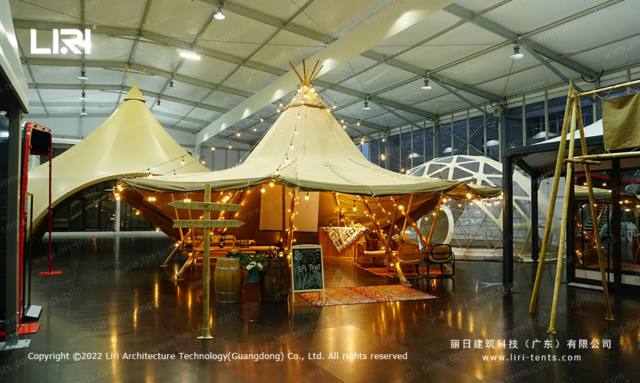
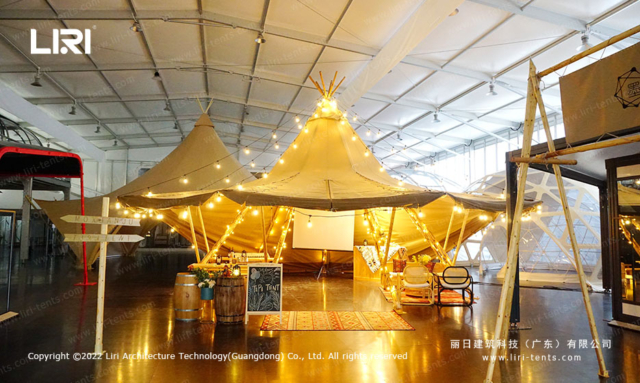
Combination tipi tents represent the most ambitious use of the format. By linking two to five tipi units at their lifted edges, operators create a continuous interior that rivals fixed buildings in usable square footage. This connected layout works well for outdoor restaurants, exhibition halls, and custom event structures. The interconnected floor plan allows for distinct zones — a dining area in one tipi, a bar in another, and a lounge space in a third — while keeping all guests under one unified roof structure.
The trade-off is structural: seams between units can permit water ingress during heavy rain and offer reduced wind resistance compared to a single tipi. However, proper site selection — sheltered locations with good drainage — mitigates these drawbacks effectively. For operators who need space without the cost of permanent construction, a combination tipi restaurant presents a compelling alternative. Solo customized tipis with expanded footprints provide another route to achieving a functional dining space tailored to your property. For smaller venues or pop-up restaurant operations, a 40-person tipi with a side extension offers an excellent balance of capacity and setup simplicity. Adding an outdoor deck or patio area adjacent to the tipi further extends the usable event space without increasing the tent footprint.
Cost and ROI Considerations for Tipi Tent Operators
The initial investment in a commercial-grade tipi tent pays for itself quickly when deployed in hospitality or event rental settings. A 40-person tipi typically costs less than a permanent structure of equivalent capacity while offering the flexibility to relocate or expand as business grows. Event rental operators report that tipi tents command 15 to 25 percent higher rental rates than standard frame tents due to their distinctive visual appeal and photo-friendly interior. Maintenance costs remain low — PVC canvas requires only an annual inspection and occasional spot cleaning to maintain its weatherproof performance.
Choosing the Right Size and Configuration
Selecting the appropriate tipi tent size depends on your primary use case. For private camping, a 6 to 20-person tipi provides ample sleeping and lounging area. Commercial operations — restaurants, bars, glamping resorts — typically start at 40-person tents and scale up to combination units. Consider guest flow patterns, intended furniture layout, and local weather conditions when making your choice. Budget is another factor: a single 40-person tipi costs roughly the same as a small frame tent but delivers a more distinctive aesthetic that commands higher booking rates in the hospitality market. Browsing outdoor party canopy options can help you compare tipi tents with alternative shade structures for your venue. Consulting with an experienced tipi tent manufacturer early in the planning phase helps avoid costly sizing mistakes and ensures the tent is optimized for your specific event type.
3 thoughts on “Tipi Tent Decoration Cases: Camping, Parties, and Outdoor Dining”
The field properties of tipi tents are really hard to change. Most of the cases can only be used outdoors. If you use it in the city, it must be in the wilderness party.
After reading your case, I think the tipi tent is really hopeless. It has always been the king of the outdoors and can only be the king in the outdoors.
I hired a contractor to install a 20 person tipi tent in my backyard and was so happy. It’s a little small in size, but it’s really big enough to be the centerpiece of the party scene and for home camping. The thoughtful thing is that it has many little ideas for mosquito and insect control.

The field properties of tipi tents are really hard to change. Most of the cases can only be used outdoors. If you use it in the city, it must be in the wilderness party.
After reading your case, I think the tipi tent is really hopeless. It has always been the king of the outdoors and can only be the king in the outdoors.
I hired a contractor to install a 20 person tipi tent in my backyard and was so happy.
It’s a little small in size, but it’s really big enough to be the centerpiece of the party scene and for home camping.
The thoughtful thing is that it has many little ideas for mosquito and insect control.