Outdoor events almost always hit the same problem: the weather decides when you can start and when you have to stop. A geodesic dome tent solves that by turning any open plot into a weather-protected venue in a single setup. Unlike rectangular halls, a dome has no internal columns and no dead corners, which makes it a practical pick for weddings, product launches, winter markets, and festival hospitality areas.
The size of a party dome tent is not chosen at random. It depends on two factors: the actual footprint of the construction site and the number of participants expected at the event. A 10m dome suits a reception for roughly 80 to 120 seated guests, while a 20m structure can hold a larger banquet or an expo display zone. The fabric cover can also be printed with custom patterns and brand colors on the surface, so the structure doubles as a marketing surface rather than just a shelter.
Dome Tent Size Guide and Span Options
Before you order, you need to match the diameter to your guest list and floor plan. A 6m to 10m dome works for small gatherings, product demos, and photo studios. A 12m to 16m dome handles medium banquets, stage shows, and exhibition booths, while an 18m to 25m dome is the range most clients pick for large receptions and multi-zone events.
The clear span is the key specification here. Because the frame carries the load along the geodesic grid, there is no center pole blocking tables or sightlines. You get a 360-degree usable floor area, which is why so many planners choose a 10m geodesic dome tent for wedding receptions and corporate dinners. The interior height also stays high near the center, so you can hang lighting rigs, ceiling drapes, or a chandelier without losing headroom for guests.
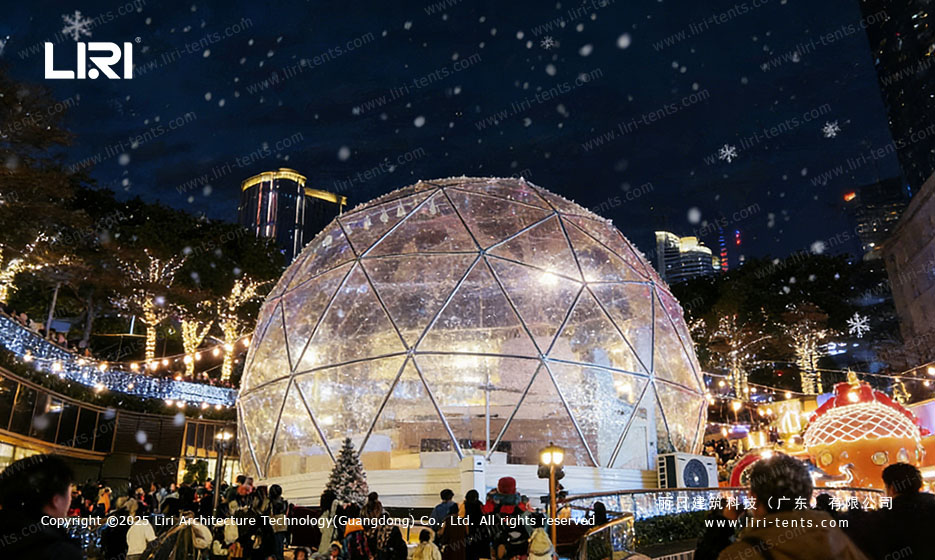
Frame, Fabric, and Ventilation Specifications
The frame of a party dome tent is built from galvanized steel or aluminum alloy profiles connected at nodes, forming the familiar triangle lattice. This geometry distributes wind and snow loads evenly across the whole shell, which is why domes hold up well in exposed sites where a flat roof would flex. Wind resistance depends on the model, but most commercial domes are engineered for wind speeds that cover typical event season conditions.
The cover is a welded PVC membrane, usually 650g to 900g per square meter, with a double-sided coating that blocks UV rays and sheds rain. Ventilation comes from roof vents and optional wall openings, so the inside stays fresh even on hot afternoons. If you are comparing shapes before buying, it is worth reading about how to choose a geodesic dome tent so the span, door positions, and fabric grade match your climate and event type.
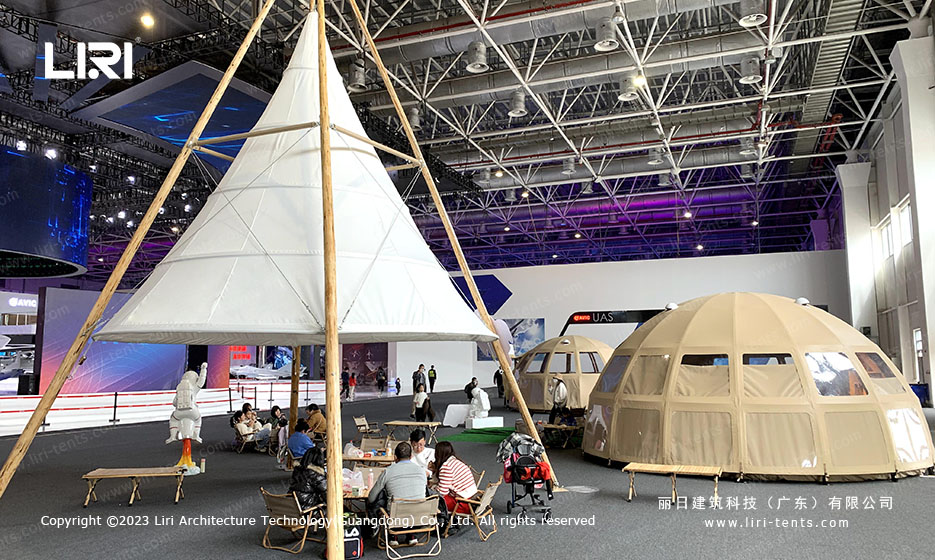
Interior Fit-Out Options for a Dome Venue
Walking into a finished dome, you notice the space feels open rather than confined. The 360-degree structure removes the sense of enclosure you often get inside a rectangular tent, and the ventilation keeps the air moving even with a full guest list. That open feel matters for events where people stay for hours, such as dinners, award ceremonies, and exhibition receptions.
The dome can be fitted with internal support systems depending on the program: ceiling liners, banquet tables and chairs, air conditioning units, flooring, carpet, a stage, lighting, and sound equipment. These additions turn the shell into a finished venue instead of an empty tent. If you want the same open-roof look with more natural light, many planners combine a dome with a transparent geodesic dome tent for daytime events, or add glass wall panels around the base to open up the view while keeping the climate inside.