Organizers sourcing festival concert tent venue structures often end up comparing large party tents for sale because the format combines open floor space with fast deployment. A large party tent is a fabric structure designed for flexibility and affordability, and it handles crowds that outgrow fixed halls. Event planners use these temporary structures at festivals, corporate functions, and community gatherings where the venue needs to appear quickly and disappear cleanly.
The tents are stylish, heavy duty, and durable, and they come in a range of sizes and colors that suit branded events and formal receptions alike. Because the frame is modular, a planner can start with a single bay and extend the run as ticket sales grow, which spreads the capital cost across the whole event series.
Buyers comparing economy party tent option pricing usually find the difference comes down to frame alloy, fabric weight, and included accessories rather than the base tent. A documented specification sheet makes that comparison honest, so serious buyers ask for load ratings and material data before they negotiate.
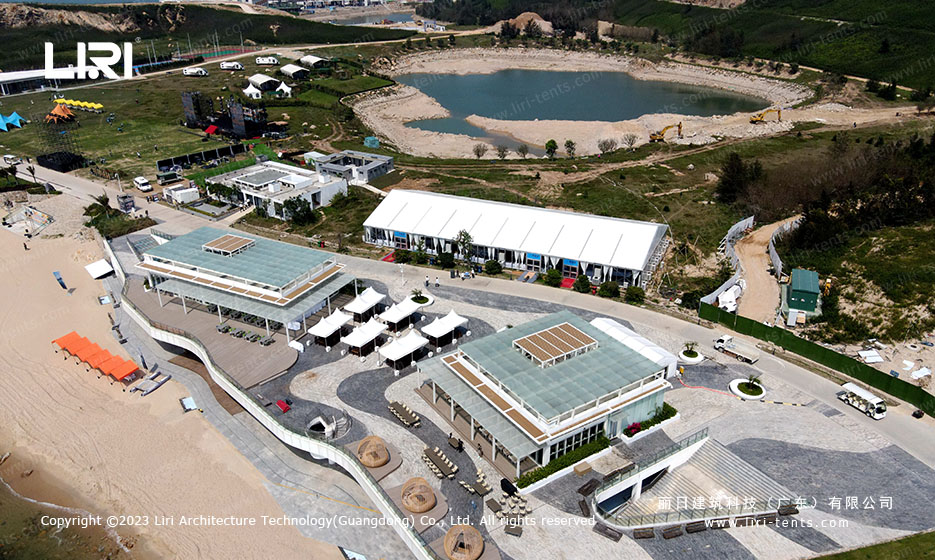
Large Party Tent Dimensions and Load Ratings
Standard large party tents cover spans from 10m upward, with eave height around 8m and ridge height roughly 8.5m to 9m depending on the bay. Bay distance is typically 5m, and the main profile uses a 300x120x5mm 4-channel extruded aluminum frame that keeps the interior column-free. The structures handle temperature ranges from -30 to +70 degrees Celsius, wind loads up to 100 km/h, and snow loads around 75 kg/sqm when properly anchored.
Assembly is straightforward: the frames are easy to erect and dismantle, and the compact pack-down volume keeps transport and storage economical for rental fleets. With no interior poles, the full footprint stays usable, which is the detail that separates a clear span tent system design from a pole-frame canopy where columns eat into the floor plan.
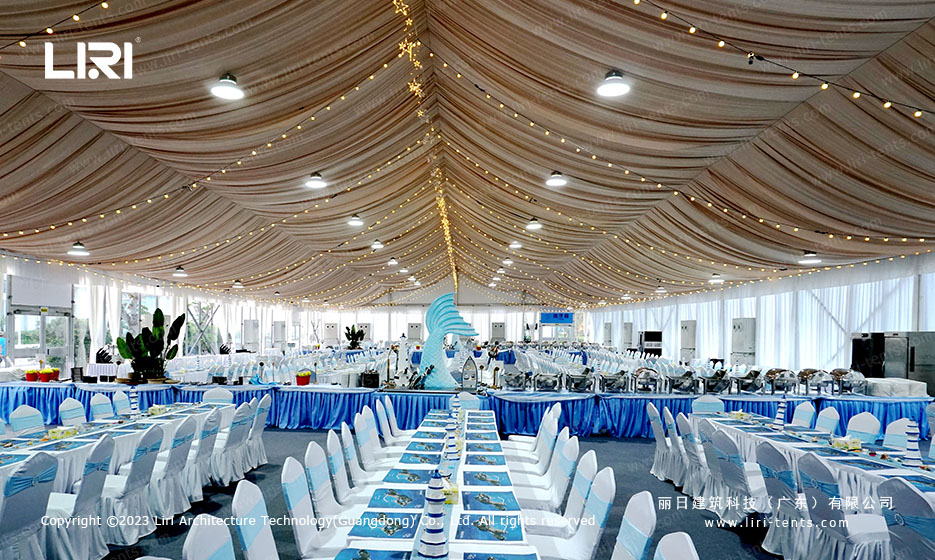
Where Large Party Tents Earn Their Keep
Festival food courts, brand activations, sports hospitality, and banquet services all lean on the same large tent inventory with different dressing. A food court needs open ends and easy access for vendors, a brand activation needs printed walls and rigging points, and a banquet needs climate control and drape. Because the frame accepts all three treatments, one tent fleet serves the entire event calendar.
For organizers managing multiple events in a season, the reusable structure becomes an asset rather than an expense. A large party tent brand promotion setup can double as a VIP lounge, a merchandise zone, or a weather shelter, so the same bay keeps earning across the year. Rental companies particularly value this versatility because it lets them quote competitive packages to different client types from a single inventory.
When the event requires strict structural documentation, the party tent specification sheet gives engineers and venue owners the frame profile, fabric weight, and load data they need to approve the installation. Keeping that document current with the actual tent delivered prevents disputes on site and speeds up permit approvals.