A party tent party turns almost any open space into a sheltered venue where friends and family can gather without depending on the weather. Instead of booking a fixed hall, organizers set up a clear-span structure on grass, concrete, or a backyard and shape the interior to fit the occasion. The approach has grown popular because it keeps costs predictable while giving far more control over layout, decoration, and atmosphere.
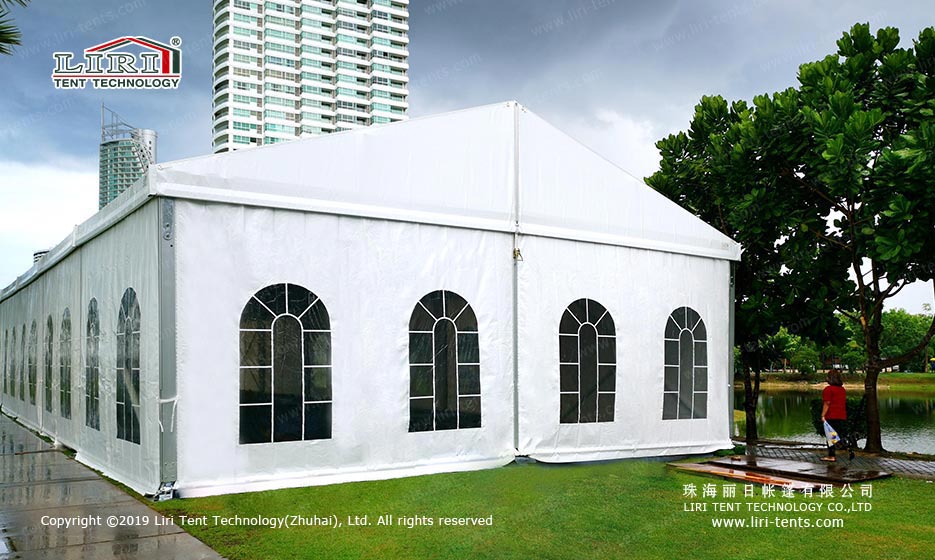
At its core, a tent party is a temporary building that replaces a permanent venue for a few hours or a few days. You decide the footprint, the wall style, the flooring, and the lighting. The format works for backyard parties, brand activations, and family celebrations alike, which is why it has spread from weddings into everyday hosting. A outdoor party tent gives you a dry, defined space that still feels connected to the garden, the lawn, or the waterfront outside.
What Makes a Tent Party Work
The success of a tent party comes down to three practical decisions made before anyone arrives. First, fix the guest count and the activity type, because a sit-down dinner needs more floor area per person than a standing reception. Second, choose ground that can take ballast or stakes; most aluminum-frame tents install on grass, asphalt, or tiled yards without heavy foundations. Third, plan power and climate early, since lighting, sound, and catering all draw load. When these three are settled, the rest of the planning becomes straightforward.
Picking the Right Size
Size drives both comfort and budget, so measure before you commit. A 6x10m structure suits roughly 40 standing guests or 24 at tables, while an 8x12m or 10x20m footprint handles larger crowds with room for a stage and a buffet. If you are unsure, the guide on choosing the right tent size walks through capacity by layout. Oversizing by one bay is cheaper than discovering on the day that chairs will not fit.
Setting Up on Different Ground
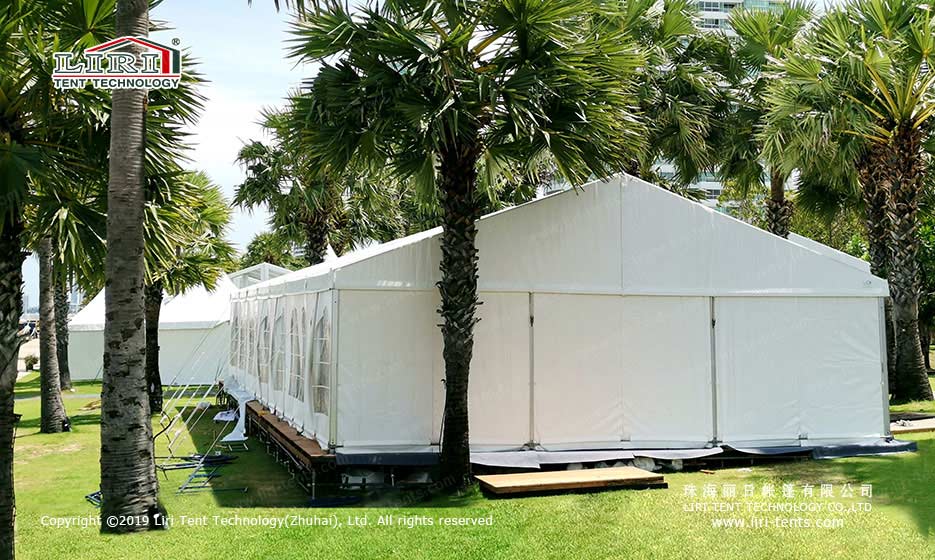
One advantage of a frame tent is that it adapts to the site instead of forcing the site to adapt. On lawn you use ground stakes or water ballast; on hard surfaces you use weighted blocks that leave no marks. Setup from delivery to a standing structure often finishes within a day, which is why many hosts prefer renting a party tent for one-off events rather than owning a structure they will use twice a year. After the party, the frame comes down and the ground returns to normal.
Decoration and Atmosphere
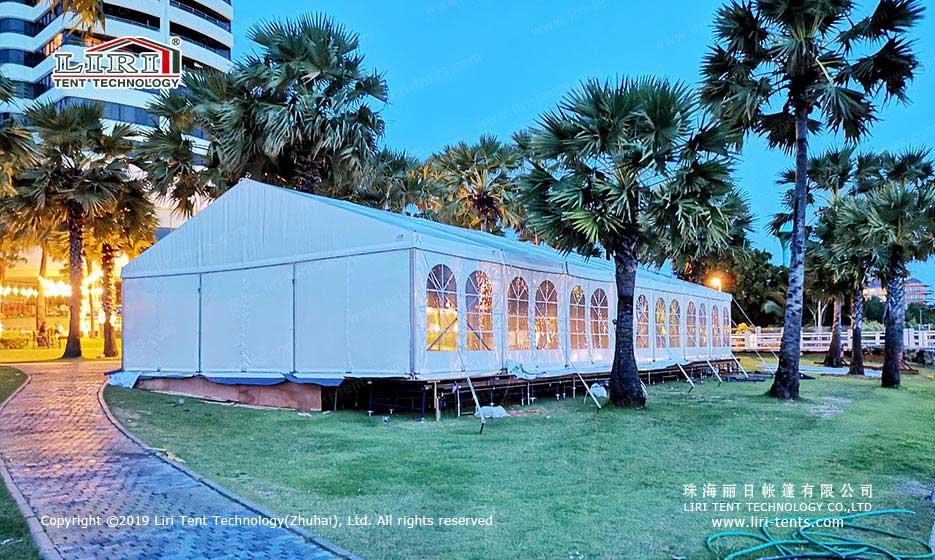
A tent is a blank shell, which is exactly why it is flexible. Lining, curtain drapes, and warm uplighting change the mood from casual to formal in a few hours. The collection of party tent decoration ideas shows how transparent PVC walls, chandeliers, and printed floors turn a simple canopy into a venue guests remember. Because there are no interior poles, every square meter is usable for tables, a dance floor, or a photo corner.
Frequently Asked Questions
What is the difference between a tent party and a venue booking?
A venue booking locks you into a fixed room, a fixed date price, and limited decoration. A tent party brings the structure to your chosen ground, so you control the footprint, the timeline, and the look while usually spending less per guest.
How long does setup and takedown take?
For most private events a crew installs the frame and covers in a single working day, then removes it just as quickly. Larger structures for几百 guests may need two days, but the site is never blocked for long.
Can a tent party handle bad weather?
Yes. PVC roofs shed rain, sidewalls block wind, and optional heating or cooling keeps the interior comfortable. Pair the structure with proper outdoor party tents rated for the season and the event runs regardless of the forecast.