20.5m x 118m Tennis Court Shelter: Clear Span Aluminum Sports Hall
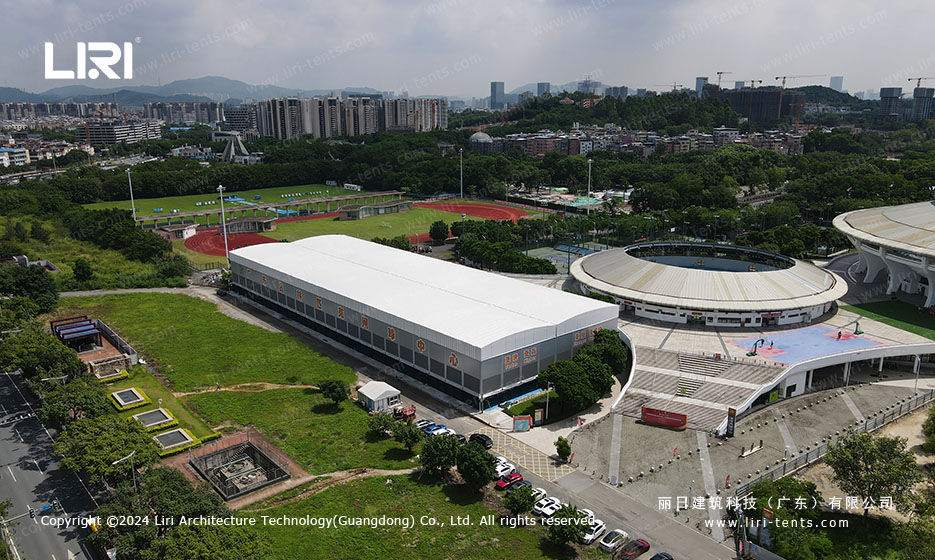
Outdoor tennis courts lose playing time whenever rain, strong sun, or high winds hit the schedule. A municipal training center in South China faced this problem across several courts used for daily coaching, amateur leagues, and tournament warm-ups. The solution was a single covered tennis court hall built in a tight campus setting, giving players a shaded, dry environment without blocking surrounding views. This type of commercial party tent approach works well when owners need fast enclosure without the long construction cycle of a brick-and-steel building.
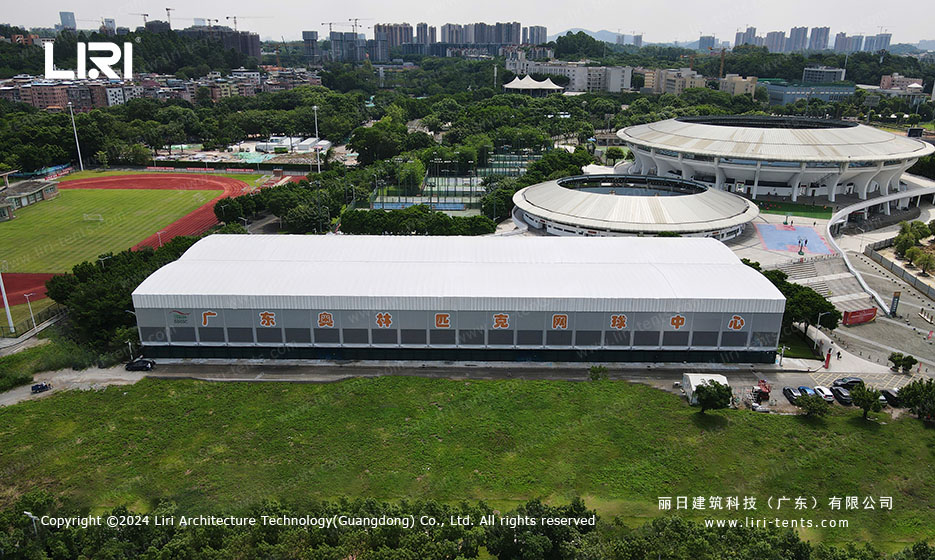
Why a Clear Span Tent Works for a Full-Size Tennis Court
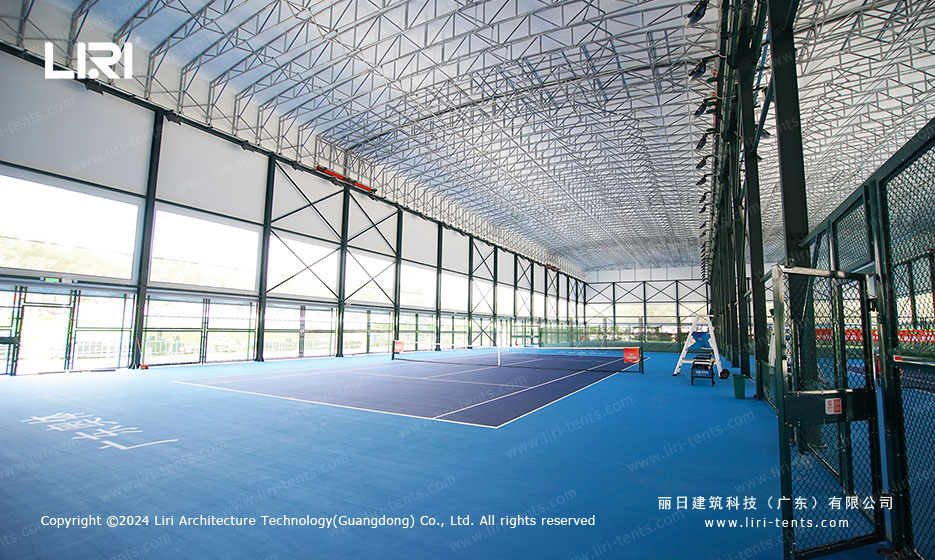
The structure measures 20.5 meters in width and 118 meters in length, covering roughly 1,100 square meters. Inside, multiple standard tennis courts run end to end with clear side margins, net posts, and player seating. Because the frame uses a clear span tent design, there are no interior columns interrupting rallies, line calls, or spectator sightlines.
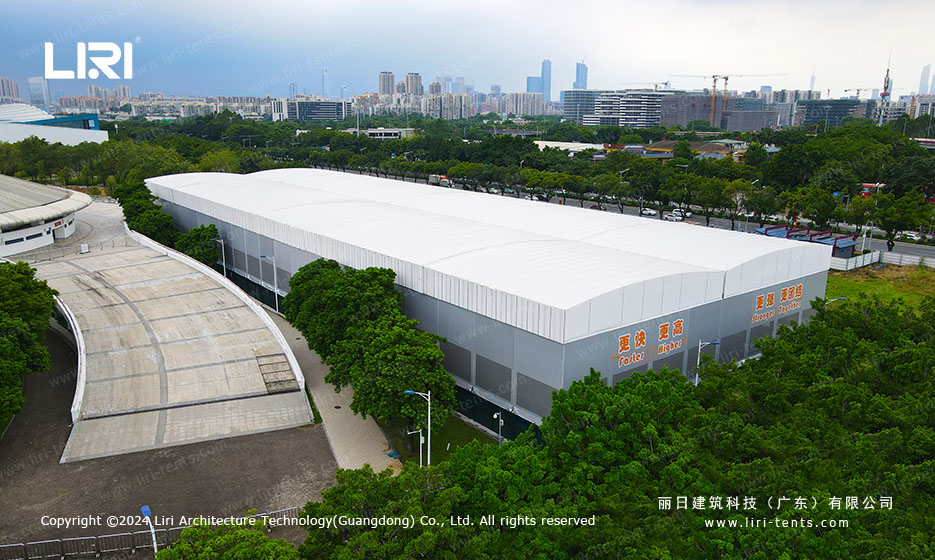
Standard tennis courts need an absolute minimum width of about 11 meters and a length of 24 meters. Adding run-off zones, umpire positions, and bench space pushes the ideal footprint much larger. A 20.5-meter width gives comfortable clearance on both sides, while the 118-meter length allows several courts to sit in one continuous hall. This layout is one reason why the facility chose an engineered aluminum frame tent rather than a smaller modular canopy.
Structural Frame and Weather Protection
An aluminum alloy frame forms the load-bearing skeleton, with bolted truss connections and a curved roof profile. The frame is engineered to handle regional wind loads while staying lightweight enough for fast assembly on a prepared base. This approach is common for commercial party tent and sports event tent projects that must balance clear interior space with long-term durability.
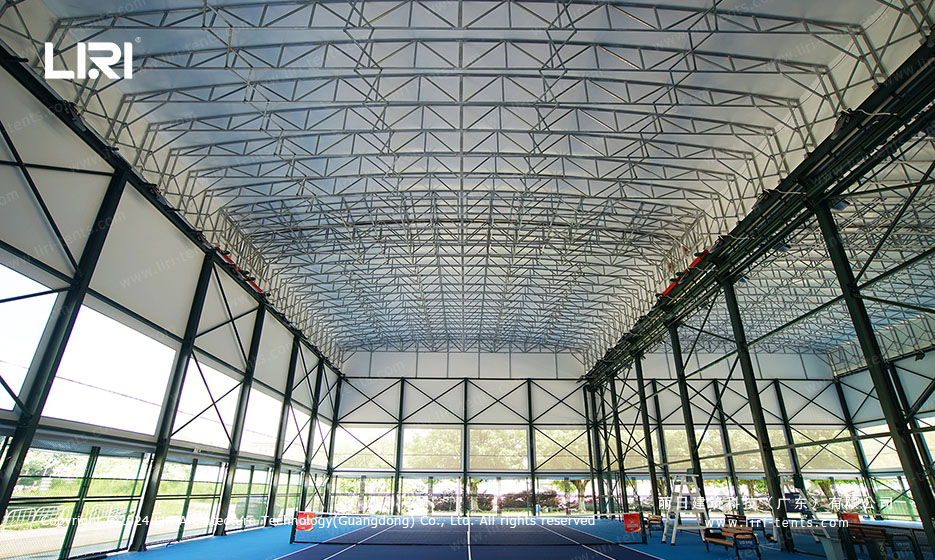
The roof and wall membranes are made from PVC-coated fabric with block-out and waterproofing layers. Around the perimeter, translucent wall sections bring in daylight during morning and afternoon sessions. Ventilation openings are placed high along the roof line, allowing warm air to escape while cooler air moves through the court area. The same sports party tent fabric system is used for basketball, badminton, and multi-court facilities where climate control matters.
Indoor Playing Conditions and Daily Use
Interior lighting rigs and air-circulation units are mounted along the main beams, so they stay clear of ball flight paths. The floor is a standard acrylic tennis surface laid over the existing base, with drainage fall designed to keep moisture from pooling near the court lines. For coaches and athletes, the biggest change is reliability. Training sessions no longer get cancelled at the first sign of rain. Evening matches can run under consistent LED lighting, and the covered hall reduces glare from direct sunlight.
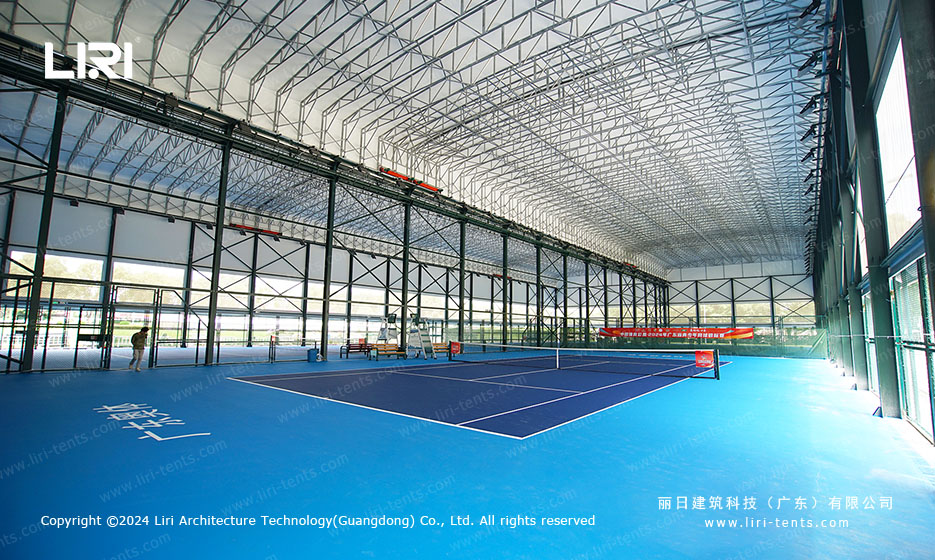
The covered tennis court hall also makes line judging easier because players are not squinting into changing light conditions. Spectators and coaches can sit along the sides without umbrellas or sun shades. The facility now runs clinics, local matches, and open-play sessions in the same sports court tent space, which improves court utilization and revenue.
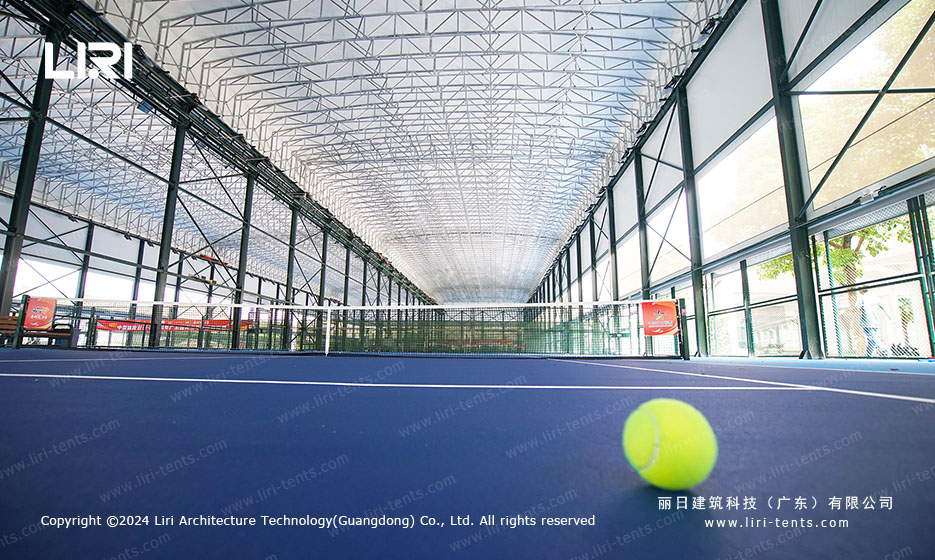
Beyond tennis, the same modular party tent system can host badminton, pickleball, futsal, and temporary event setups. That flexibility matters for an indoor sports facility that needs to generate revenue outside peak tennis hours. Owners can partition the space or leave it open, depending on the schedule.