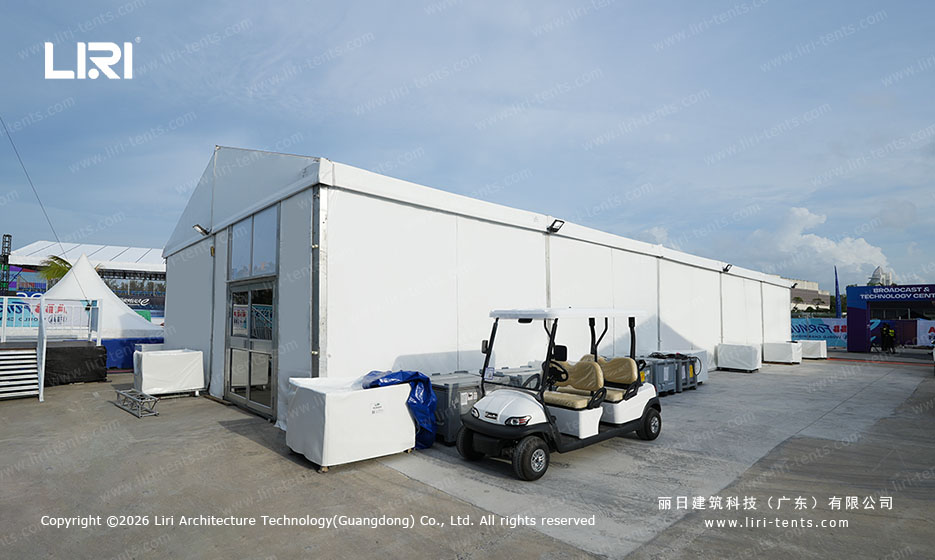
When an international single-seater series arrives in a tropical coastal city, the event organizer rarely has the luxury of an existing permanent venue.
The recent Formula E stop in Sanya proved the point: paddock space, broadcast compounds, hospitality zones, and credentialing points all had to appear within a tight window, stand up to humidity and salt air, and disappear again once the chequered flag fell. The team responsible for the temporary build chose a coordinated clear span aluminium setup across multiple footprints rather than a single oversized hall, sourcing sporting event tents for sale from a single product family.
The challenge and the solution framework
Sanya brings heat, monsoon humidity, and a constant onshore breeze that flips between calm and squally within minutes. A motorsport event multiplies the operational demands: broadcast teams need climate-controlled rooms with overhead cable trays, hospitality guests expect lounge-grade finishes, and credentialing staff must process thousands of people in a covered queue. A standard pole tent or a single marquee cannot stretch across broadcasting, VIP dining, and tire storage at the same time without compromise.
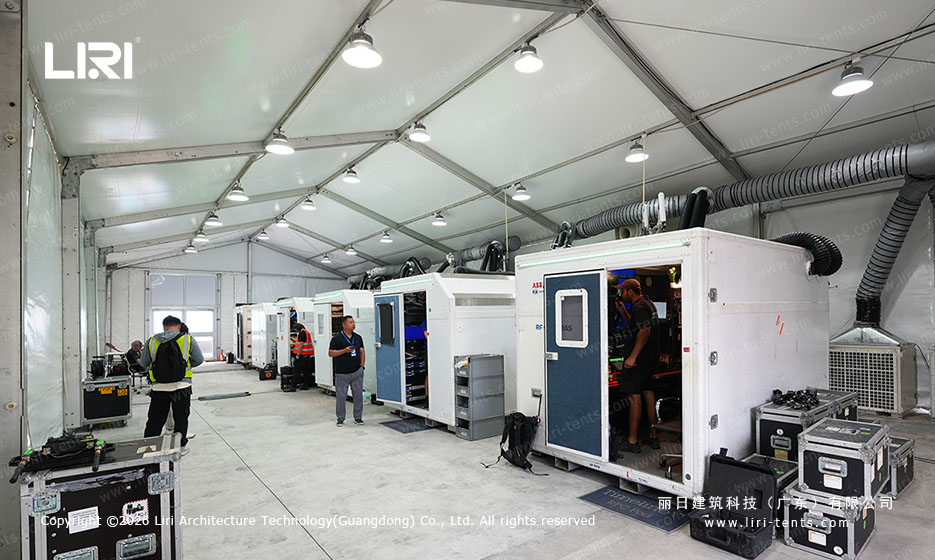
The brief narrowed to a vendor who could pre-fabricate multiple tent types in controlled factory conditions and deploy them on site with predictable labour hours. Three structural families were chosen for the village, each matched to its function.
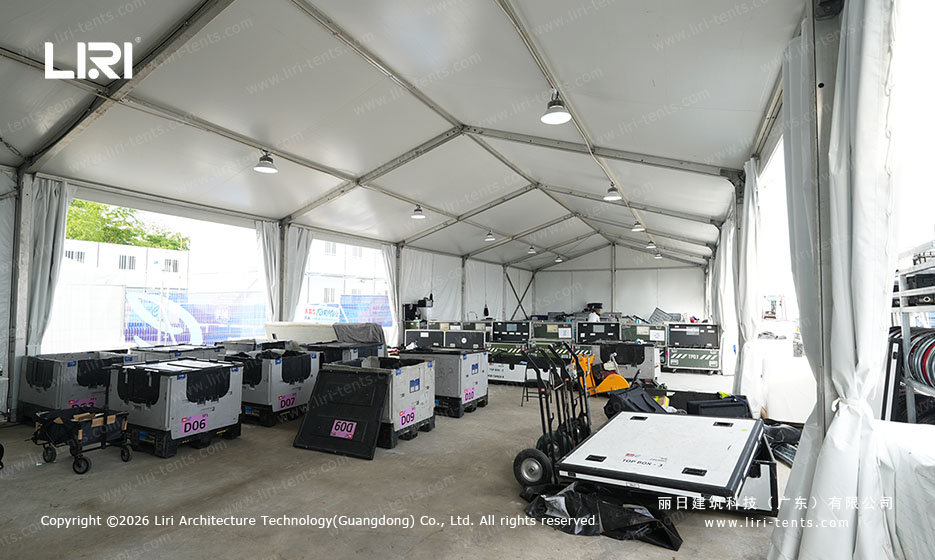
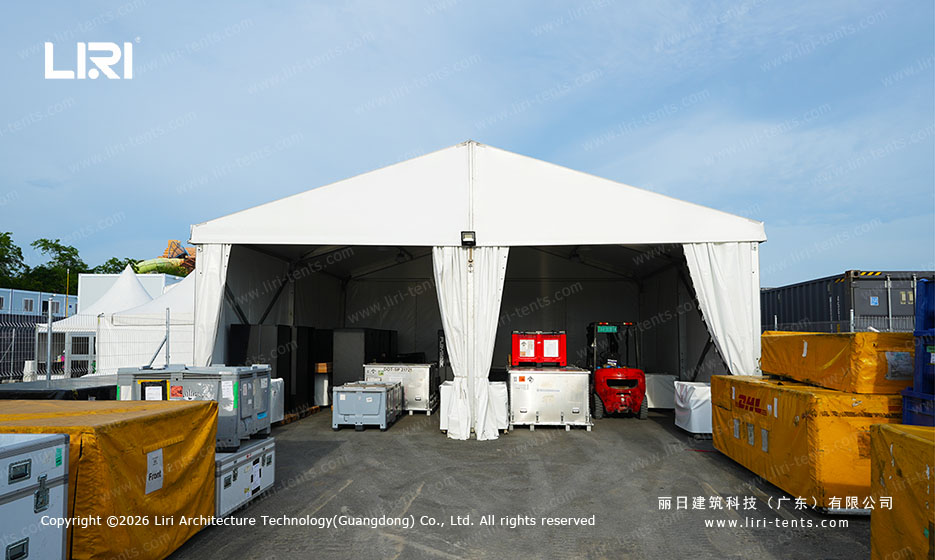
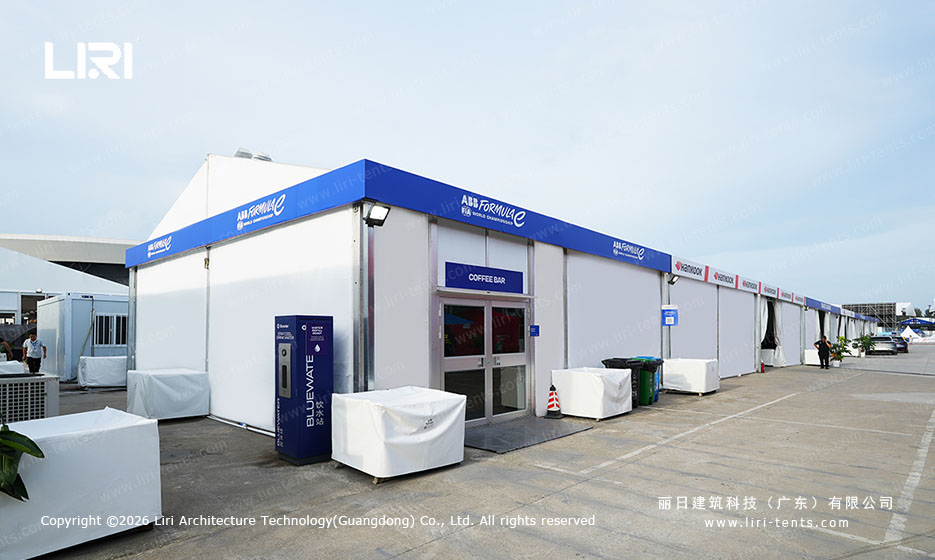
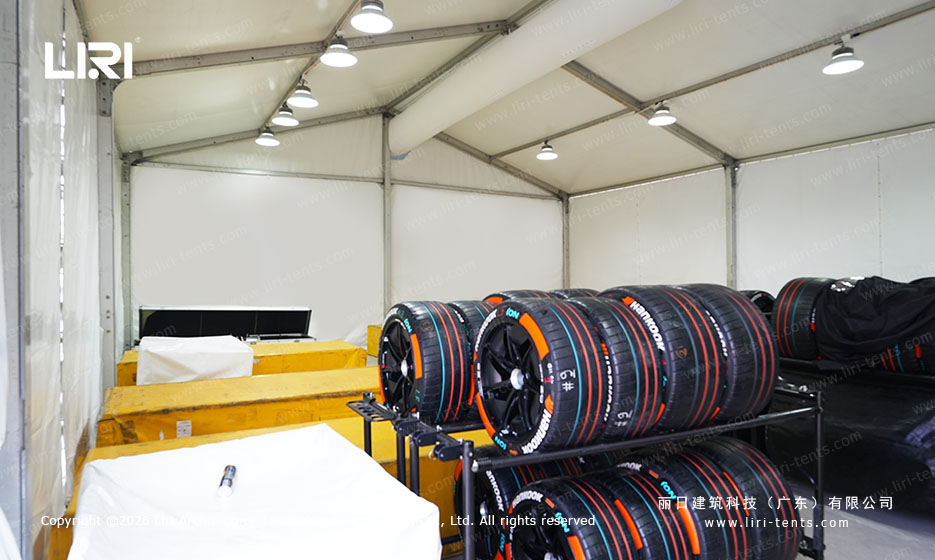
A-frame clear span tents in 10 m to 20 m widths, sharing the same aluminium profile and anchoring kit, became the broadcast and media center, the equipment staging area, and the race-tire store. engineered clear span tent systems gave the broadcast rooms their column-free interior, integrated cable trays overhead, and gable walls that accepted both hard panels and zip doors for fast reconfiguration between sessions.
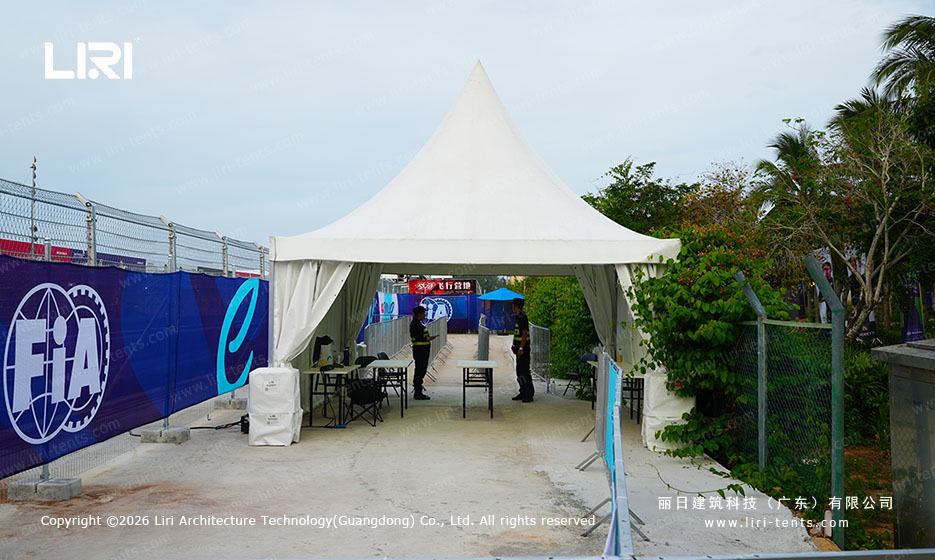
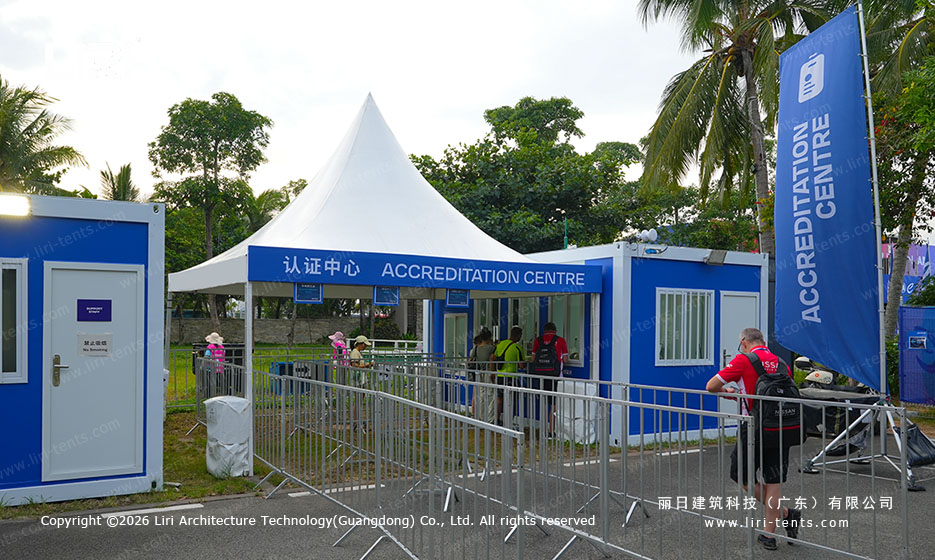
Pagoda tents were dropped at the paddock gate and the public accreditation point, with peaked white roofs that drained tropical downpours efficiently and square footprints that fit neatly into the corner of a security barrier run. Inside each pagoda, a check-in counter, a printer table, and a queue rope layout were pre-arranged before the team flew in, so the structures were operational within hours of arrival.
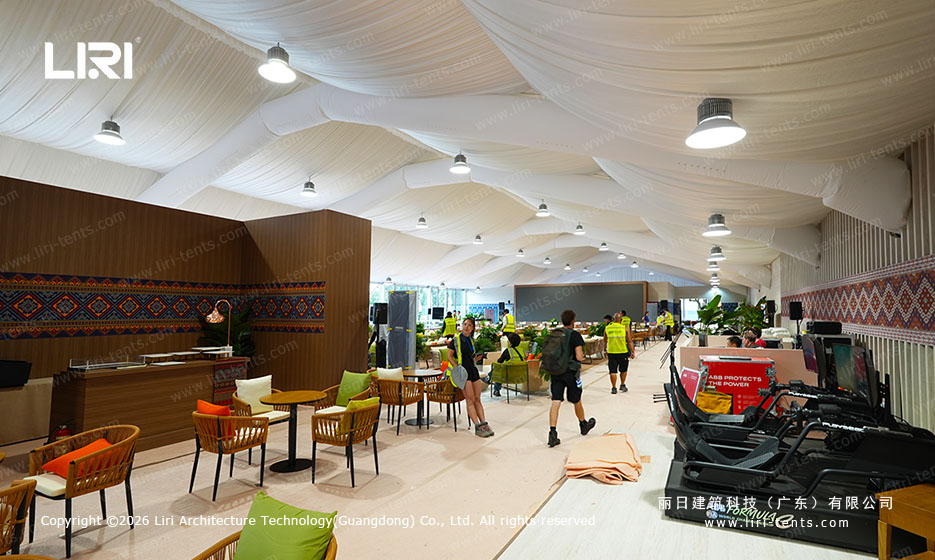
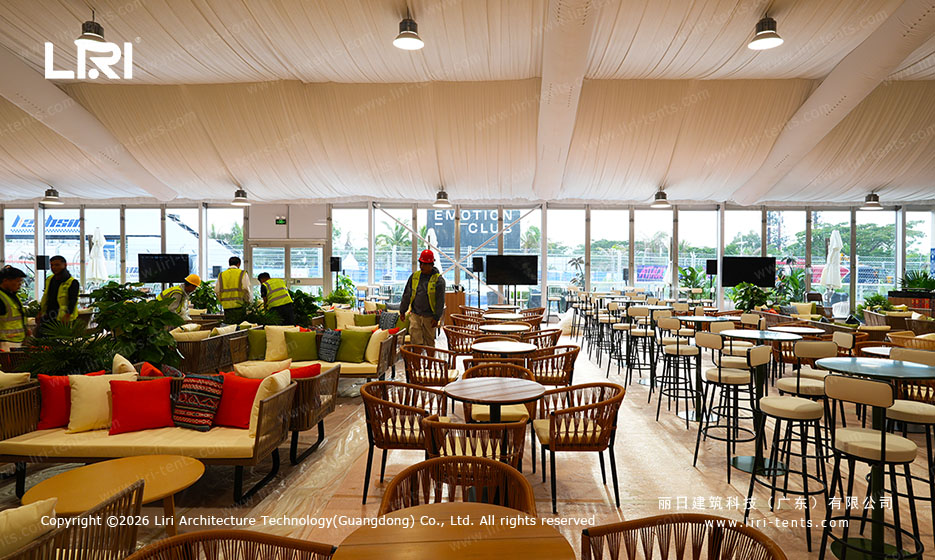
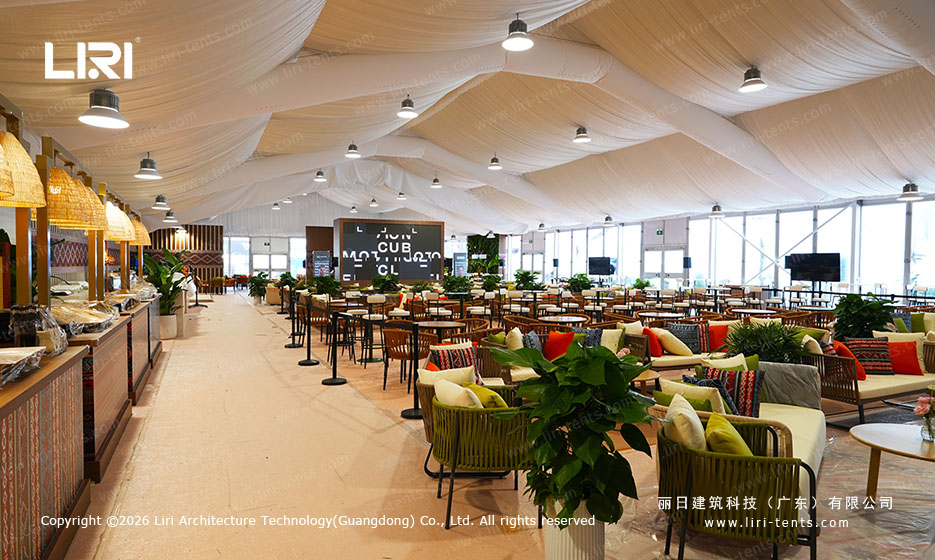
TFS curve tents hosted the paddock club and the emotion club lounges, where the curved roofline hides the structural aluminium and lets a draped fabric ceiling flow uninterrupted from the entrance to the back wall. These structures borrowed the same engineering logic as tfs curve tents for football stadiums, with internal columns kept to the perimeter so the floor plan stayed open for dining layouts and live-screen viewing. The two large lounges connected through a fabric-clad corridor and shared a back-of-house catering tent.
What the multi-zone village delivered on site
Across the three-day event window, the village hosted more than a dozen distinct functions: broadcast compound, media center, tire store, equipment prep, coffee bar, two VIP lounges, the paddock club, an emotion club, the accreditation centre, FIA security, an NX8 car display pavilion, and a sponsor activation hall. Every zone drew from the same aluminium profile family, which meant the operations team carried one spare parts kit, one tool set, and one rigging plan instead of three.
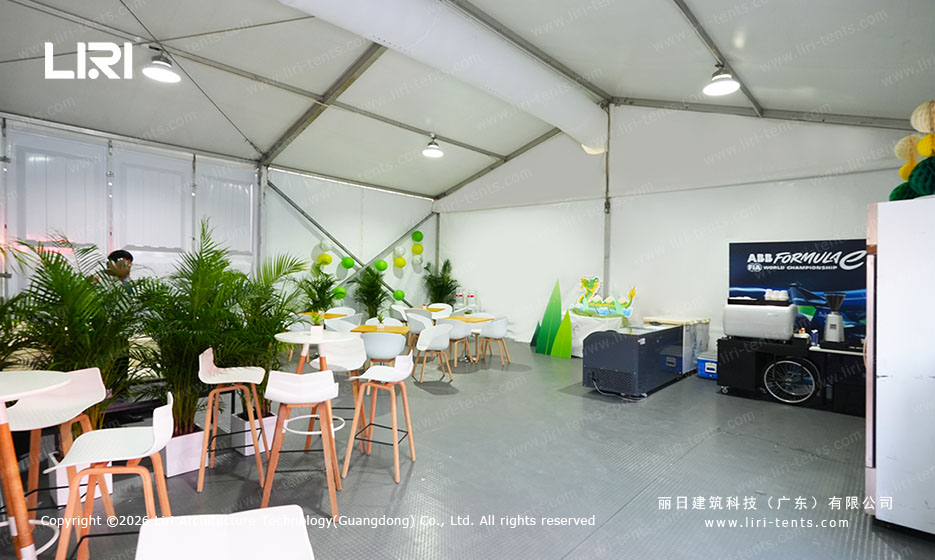
On the climate side, the white PVC roofs reduced internal temperatures by several degrees compared to the open paddock, and the cross-ventilation between gable openings kept the broadcast rooms quiet enough for live commentary.
On the logistics side, the entire footprint came down in a matter of days after the race, leaving the venue ready for the next use with no ground anchors or buried fixings left behind. The vip hospitality tents for motorsport events approach used here scaled naturally into a layout that the same setup could absorb at any tropical round on the calendar.
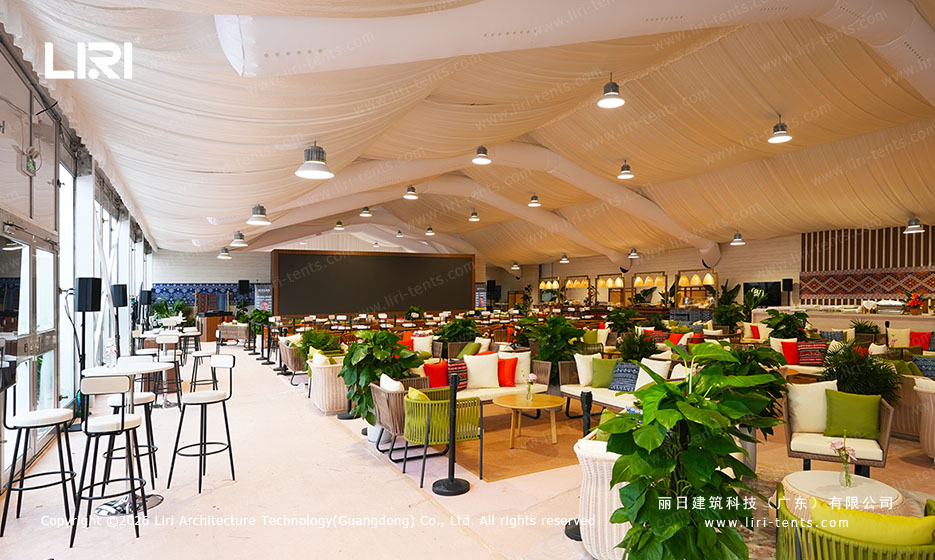
Why a coordinated party tent family works for tropical motorsport
The lesson from Sanya is structural rather than decorative. A village built from one product family behaves like a single building: a single wind-load calculation, a single anchoring logic, a single spare parts inventory.
For events that move city to city on a fixed calendar, this consistency matters more than any single design flourish, and the same logic extends to outdoor festival tent concert venue setups where large crowds, branding, and a tight build window apply comparable pressure. Vendors sourcing multi-zone temporary structures for recurring motorsport calendars increasingly ask for this kind of family compatibility, because it cuts the planning time on each new round and keeps the on-site crew size predictable.
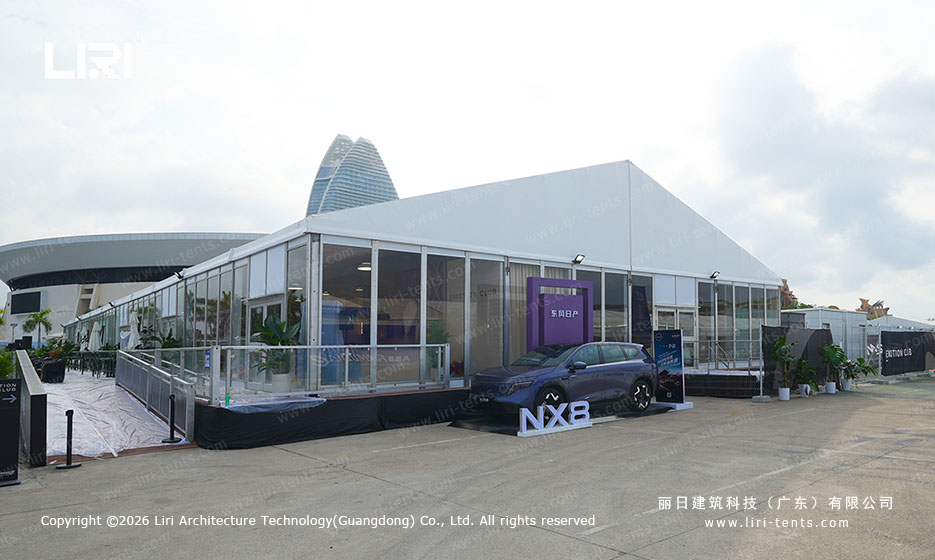
For event planners reviewing the Sanya Formula E project alongside their own brief, the village is a useful reference for what a single-vendor, multi-zone temporary build can absorb in a tropical climate, on a tight schedule, and across a wide functional spread. The same approach scales to music festivals, golf tournaments, and large corporate launches where the same constraints appear under different branding.