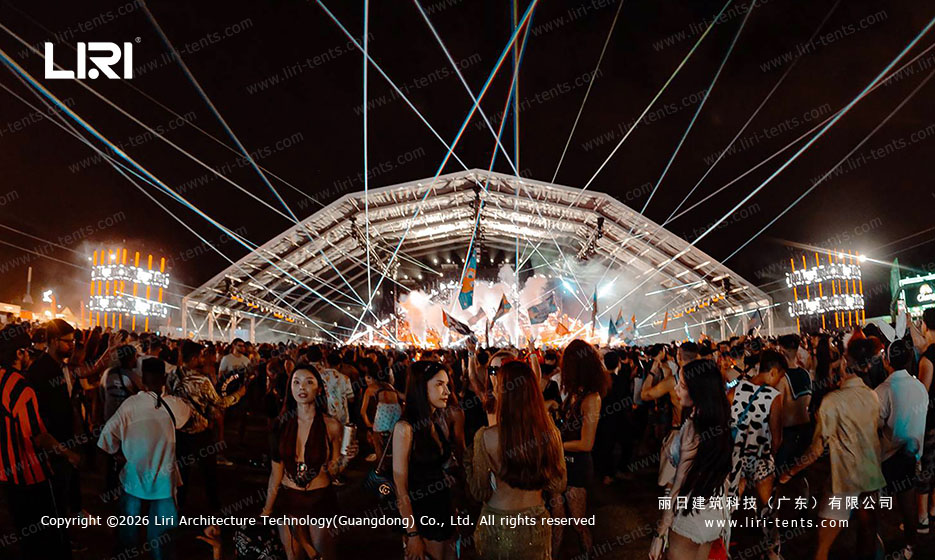
A field with palm trees. A crew of eight. Five days to put up 50 meters of tent. By nightfall on the first event day, three thousand people stood under one curved white roof, watching a live band on a full production stage.
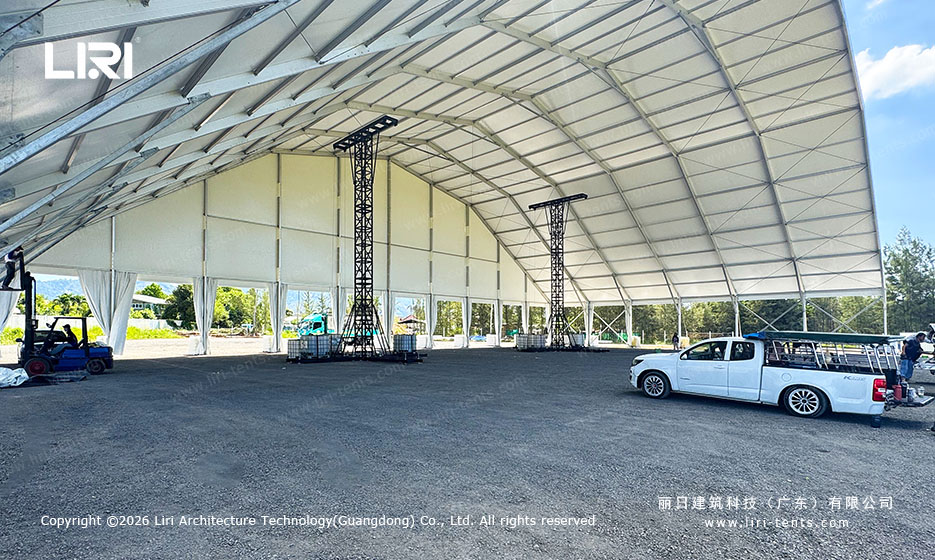
No interior poles. Just 1,500 square meters of open ground — stage at one end, standing crowd everywhere else, side curtains tied back to let the tropical air through.
What Holds It Up
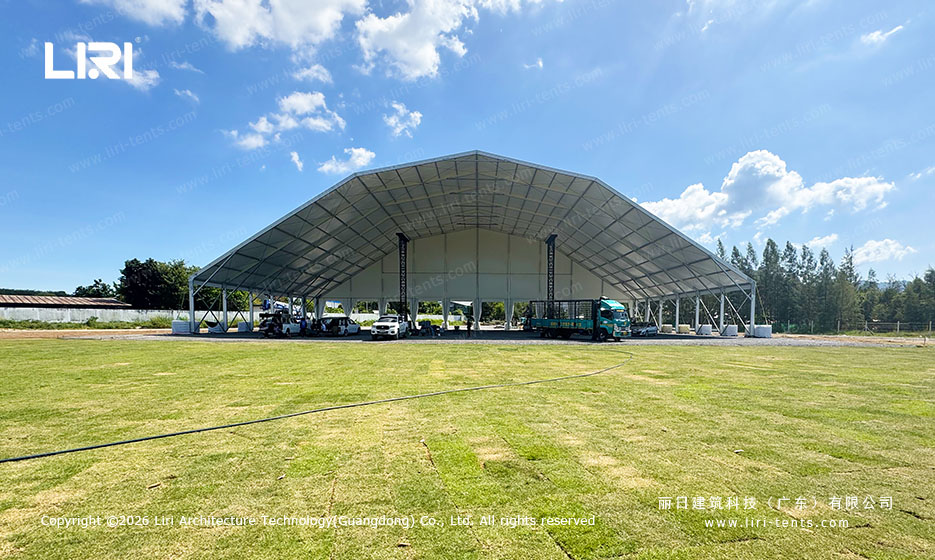
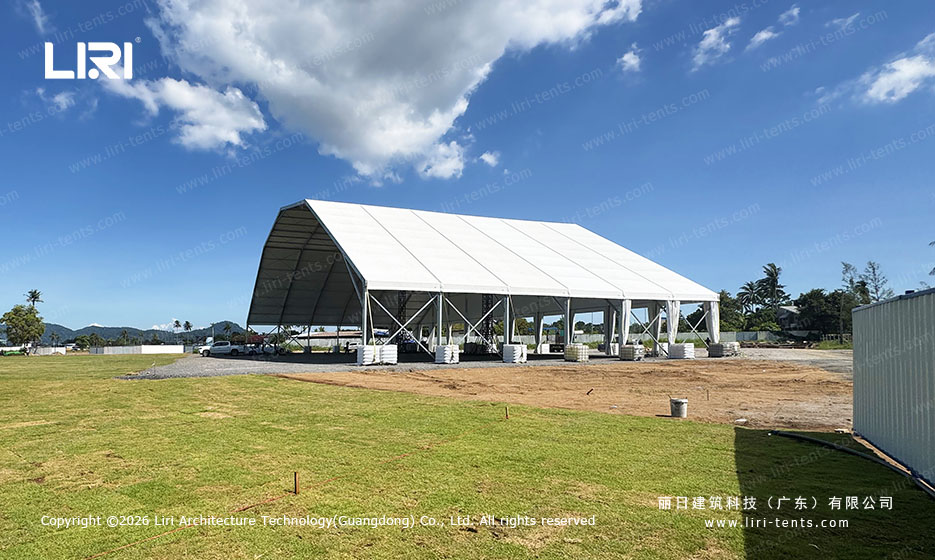
The frame is 6061-T6 aluminum — extruded portal arches, 5-meter bay spacing, bolted connections. No welding anywhere. The crew numbered six to eight people and finished the full build in under a week. Takedown ran two to three days.
Each arch connects to the next with cross-bracing. The footprint sits on ground anchors or weight plates. No concrete. No permanent foundation. This matters for two reasons: permits move faster, and the site returns to its original condition after the event.
The roof fabric is 850g/m² PVC-coated polyester, tensioned tight across the arches. Three numbers to know:
- B1 fire rating. With thousands of people under one roof, the local fire authority will not sign off without certified flame-retardant material. This is not optional.
- 99%+ UV block. Multi-day festival gear — amps, consoles, LED walls — sits under the tent for 72 hours straight. Sun damage to a $20,000 mixing desk because the roof let UV through is a cost no one budgets for.
- Full waterproofing. Tropical downpours drop 50mm of rain in 20 minutes. The peaked roof shape sheds water instantly. No pooling, no leaks, no scrambling with tarps.
This same 6061-T6 alloy and bay-assembly approach powers our commercial parking tent range. Same engineering, different application.
Two Modes: Night Show, Daytime Setup
The photos fall into a natural split. Night images show the tent running at full capacity. Daytime images show the bones of how it works.
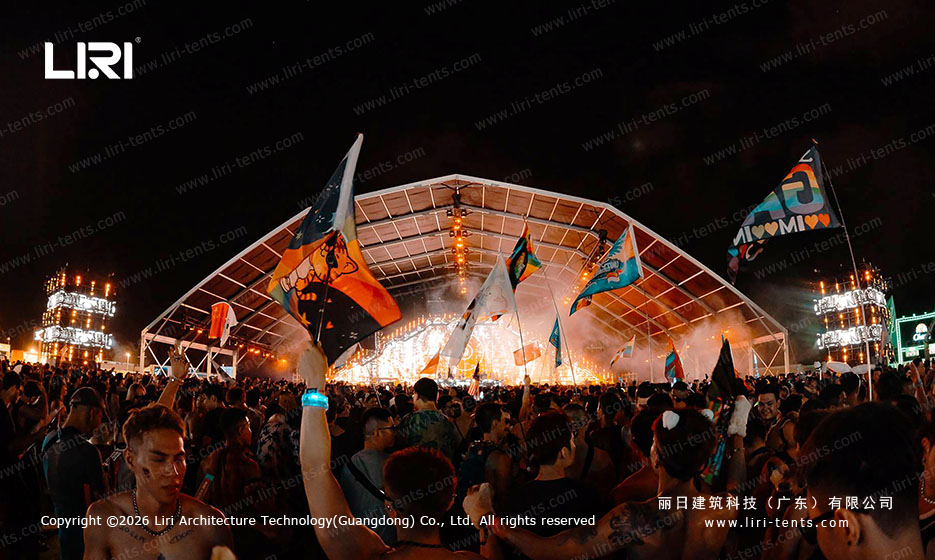
At night. Stage lights wash the interior in color. The roof curve catches and reflects the glow. It feels like a permanent concert hall — not a pop-up canopy. For promoters trying to sell tickets to a “premium venue experience” that happens to be in a field, this matters. The atmosphere inside a clear-span tent at showtime is indistinguishable from a hard-walled venue, and that is the point. A modular tent system built to this spec closes the gap between temporary and permanent.
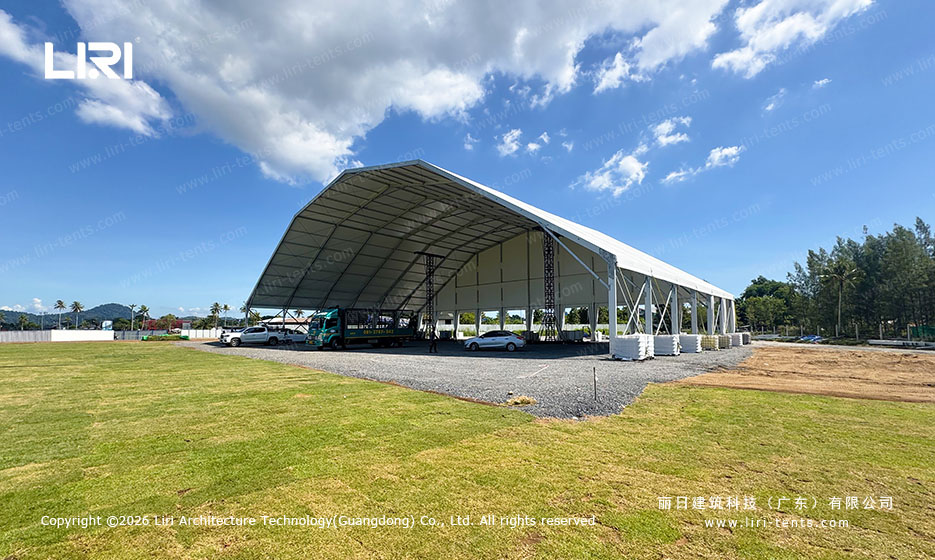
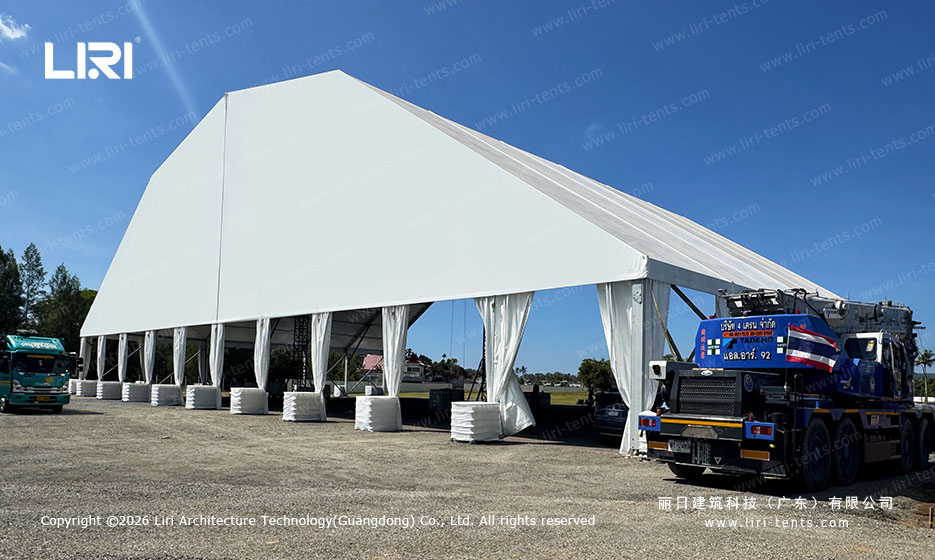
During the day. The tent becomes a working compound. Trucks and vans park inside the shell, using the covered space for equipment staging. A mobile crane sits alongside the tent in one exterior shot — its boom barely reaches the roofline. In the interior shots, forklifts move freely under rigging towers with room above their masts. The headroom is real.
These are not styled marketing images. They document a working event site with gear and vehicles moving in and out. For a buyer evaluating a temporary concert stage cover, seeing forklifts operate inside a tent says more than any spec sheet.
Scale and Layout
The 50-meter width is fixed by the portal arch span. It stays. The 30-meter depth is adjustable — each bay adds or removes 5 meters. Need 40? Drop two bays. Need 60? Add six.
Capacity breaks down like this:
- Standing concert: 3,000 to 5,000 people. The lower end accounts for a large stage footprint and generous exit aisles. The upper end assumes a compact stage and standing-room density.
- Seated event: roughly 1,800. That is with aisles and spacing between rows.
- Mixed use: Stage at one end, crowd in the middle, bar and merch at the other — the clear-span floor lets you draw the zones however you want. No columns blocking the floor plan.
Smaller tents chain together via covered walkways using the same frame connection points. A typical compound: 50×30 main stage → 10×15 artist green rooms → 15×20 VIP hospitality → catering tent. All weatherproofed. Same system we describe in our commercial party tent guide — just scaled to festival dimensions.
The Case for Renting or Owning This Format
A 50x30m large event tent is a capital asset that travels. Unbolt, pack, ship, rebuild at the next venue. One unit can run four to five events per year across different locations, different seasons, different clients.
Run the numbers over a 15-year service life:
- 60-plus deployments. The per-event equipment cost drops with each use.
- Zero frame maintenance. Anodized 6061-T6 does not rust. No repainting. No corrosion treatment. For operators working coastal or tropical sites, this eliminates an entire budget line.
- Permitting in weeks, not months. Temporary structure classification means local authorities process applications in a fraction of the time permanent construction requires.
- Portable equity. Unlike a built venue anchored to one piece of land, the tent is an asset you can sell, relocate, or expand. It is not real estate — it is equipment.
For a closer look at the frame engineering and wind-load numbers, our aluminum tent structures page covers the details.