Walk into this clear span tent and the first thing you notice is natural daylight flooding through a translucent roof — the kind of lighting that makes every retail display and garden exhibit look right, no harsh artificial shadows. Unlike rigid convention centers, a well-designed party tent structure of this scale gives event organizers the freedom to shape the floor plan exactly around the event concept, not the other way around.
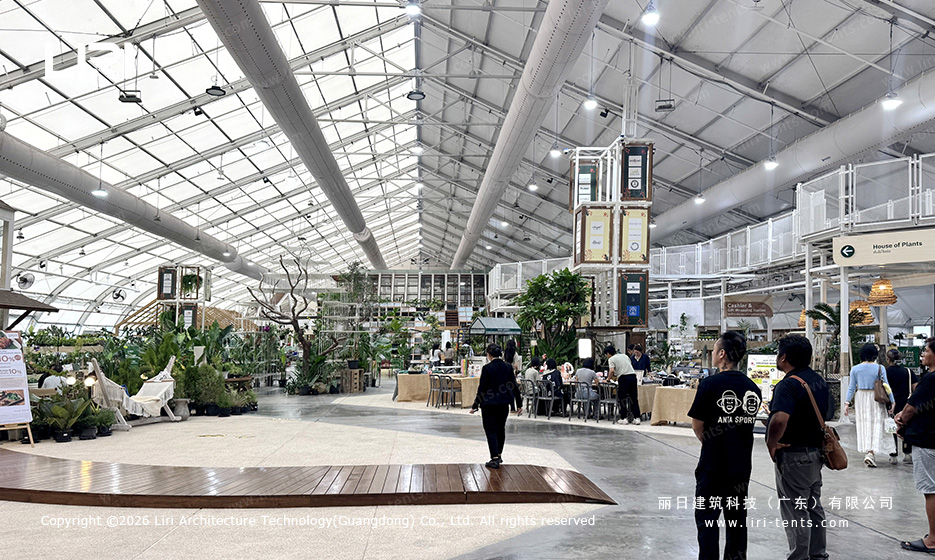
This was not a conventional expo hall. It was a custom exhibition tent structure deployed as a fully functional indoor marketplace. At 40 meters wide by 90 meters long, the space accommodated everything from vendor stalls to landscaped gardens — all under one roof, with no internal columns blocking layout flexibility. When comparing options for a large-scale event, many organizers start by contacting exhibition tent manufacturers to understand what modular structures can actually deliver.
Retail Booths That Feel Like Permanent Storefronts
The inside of this large exhibition marquee for trade shows looked less like a temporary setup and more like a curated shopping street. Wood-framed retail booths lined the aisles, each one lit by the ambient glow filtering through the fabric ceiling.
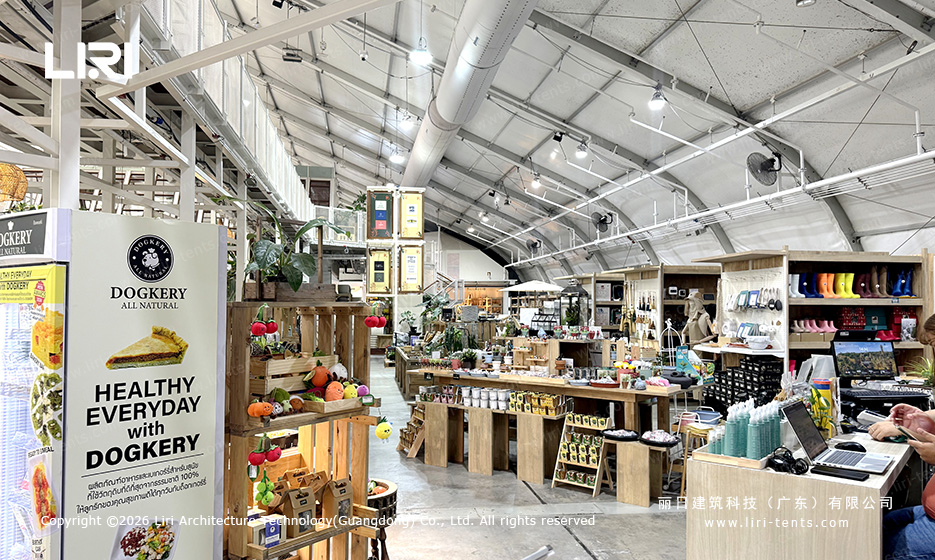
No cramped pop-up tables here. Vendors ran full-branded storefronts with custom shelving, branded signage, and dedicated checkout counters. The aisle width between booths felt generous — visitors could browse comfortably without bumping into each other or the displays. This is the kind of commercial flexibility that makes a party tent for trade shows so different from fixed-venue exhibition halls.
Key design choices visible on the floor:
– Wide central aisles for smooth crowd flow – Natural light from the fabric roof reducing the need for overhead fixtures – Modular booth layouts that could scale up or down per vendor
For event organizers considering a temporary exhibition hall structure, this kind of setup solves a recurring headache: finding a venue that is large enough, available on the right dates, and flexible enough for mixed-use programming. Seeing event tent case studies from past installations helps clarify what is actually achievable with a structure of this scale.
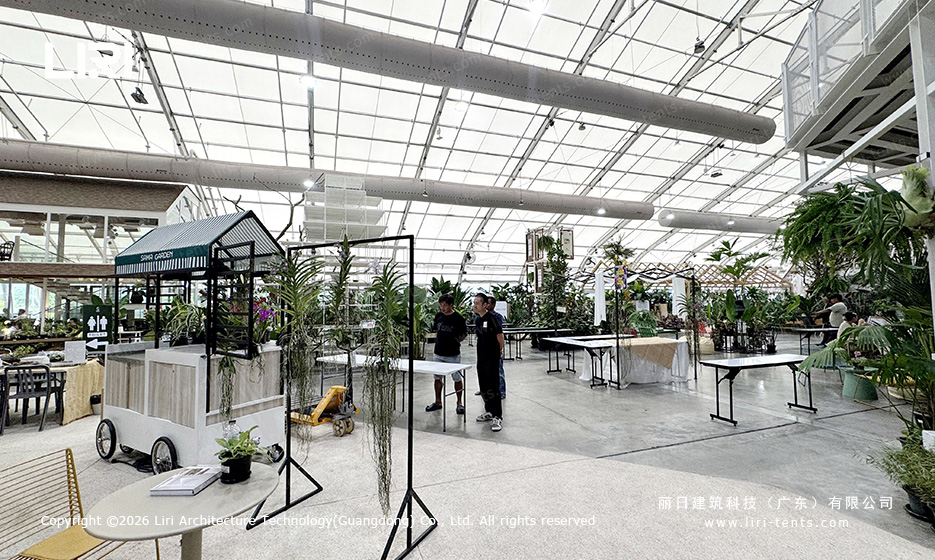
Climate Control at Scale: A Garden Under a Tent
One section of the hall was devoted entirely to indoor gardening. Not a token row of potted plants — this was a landscaped zone with full-sized trees, shrubs, and arranged greenery covering hundreds of square meters.
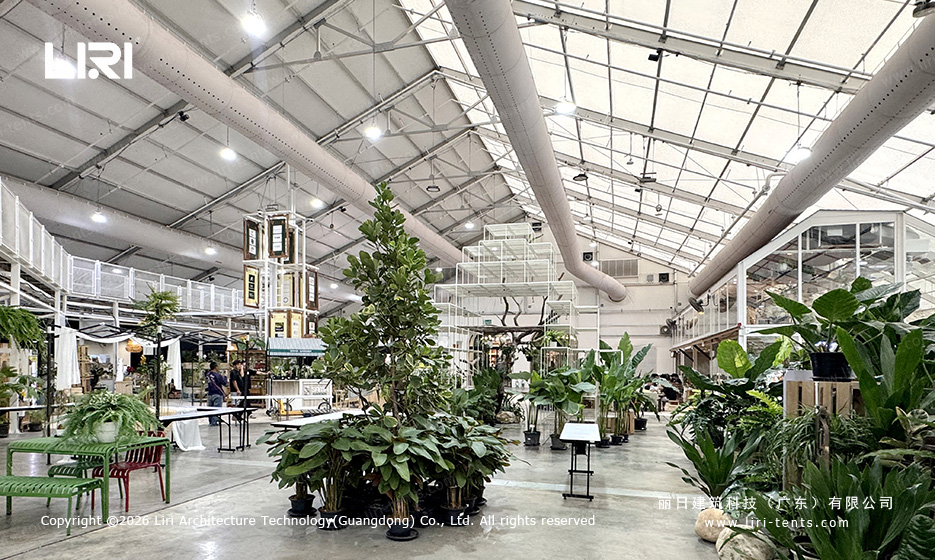
The presence of exposed HVAC ducts along the ceiling is worth noting. Keeping thousands of live plants healthy for a multi-day event inside a sealed tent requires precise temperature and humidity management. The modular event tent with HVAC integration handled this without issue — plants stayed vibrant through the entire exhibition run.
For trade shows mixing retail, hospitality, and living displays, that climate control capability is not optional. It is the difference between a space that works and one that slowly cooks everything inside it. A properly engineered party tent with HVAC integration can maintain stable conditions even when outdoor temperatures swing dramatically — something traditional pole tents cannot match. This kind of setup fits squarely in the category of a commercial party tent rather than a casual canopy.
A Kids’ Zone Inside the Marquee
The children’s play area was a deliberate inclusion — and a practical one. Parents shopping at the marketplace needed somewhere their kids could stay engaged without leaving the tent.
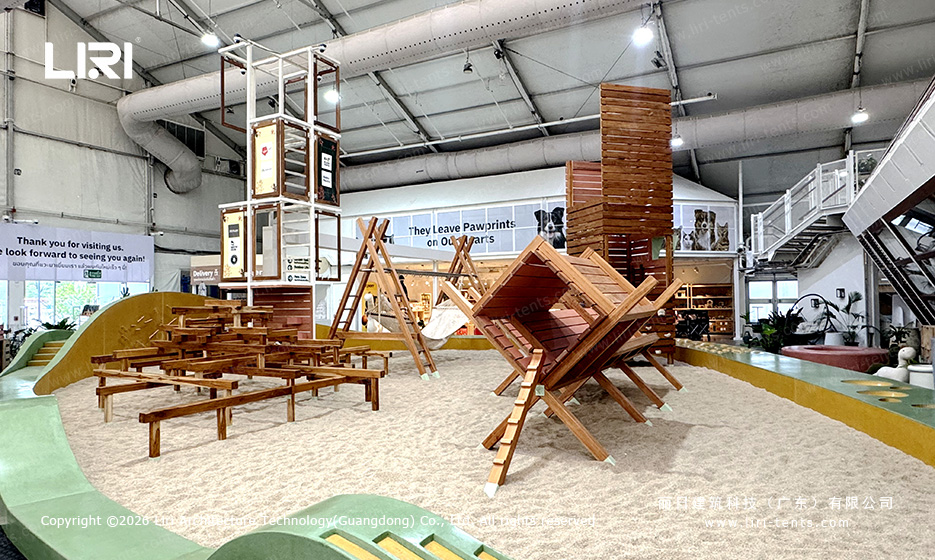
The setup included wooden climbing frames, a sand-play area, and shaded sections all contained within the tent footprint. The sand floor created a soft landing surface while keeping the play zone visually distinct from the marketplace aisles.
For family-oriented trade shows and retail fairs, an on-site kids’ corner does double duty: it increases dwell time per visitor and reduces the number of people who leave early because their children get restless. This is one of those design decisions that turns a good party tent layout into a great one — anticipating the full visitor experience rather than just maximizing booth space.
Entrance Flow and Foot Traffic Management
The main entrance set the tone immediately. A branded archway, clearly marked entry corridor, and a checkout/delivery pickup zone right at the front gate — visitors knew where to enter, where to pay, and where to collect large purchases.
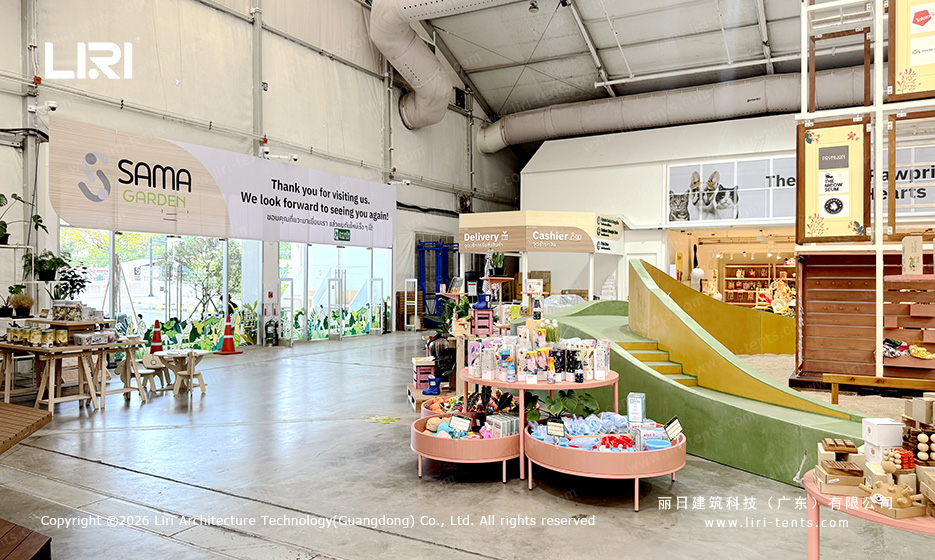
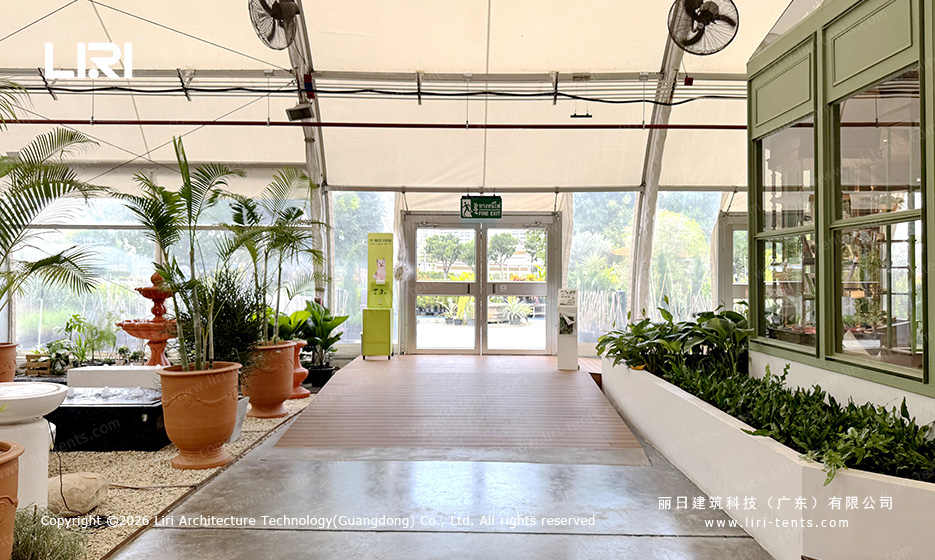
The connecting corridors with transparent side panels let visitors see outdoor green spaces while walking between zones. This created a sense of openness and prevented the “warehouse effect” that large enclosed tents sometimes suffer from. Combined with the translucent roof, the structure stayed bright, airy, and visually connected to its surroundings throughout. For anyone planning a multi-zone event, getting the trade show tent layout right from the start separates a smooth visitor flow from a bottlenecked mess.