A 4x6m festival store tent is often the first step for organizers who need shade and branding without a large budget. Economy party tent solutions focus on fast deployment, modular sizing, and a clean aluminum frame that carries graphics well. These structures serve brand promotion, community festivals, and pop-up retail with the same skeleton used on larger clearspan builds.
The appeal is straightforward: a small crew can raise a single bay in under an hour, then clip in sidewalls or a printed valance as the program grows. Because the frame is lightweight yet rigid, transport and storage stay manageable between events. That balance is why many planners start with an economy unit and scale up only when foot traffic demands it.
Budget control is the other draw for first-time organizers who are still shaping a format. A single economy bay costs a fraction of a custom build, so a planner can test a layout before committing to a larger structure. When the program proves itself, that same bay becomes the seed of a bigger linked run rather than a one-off expense.
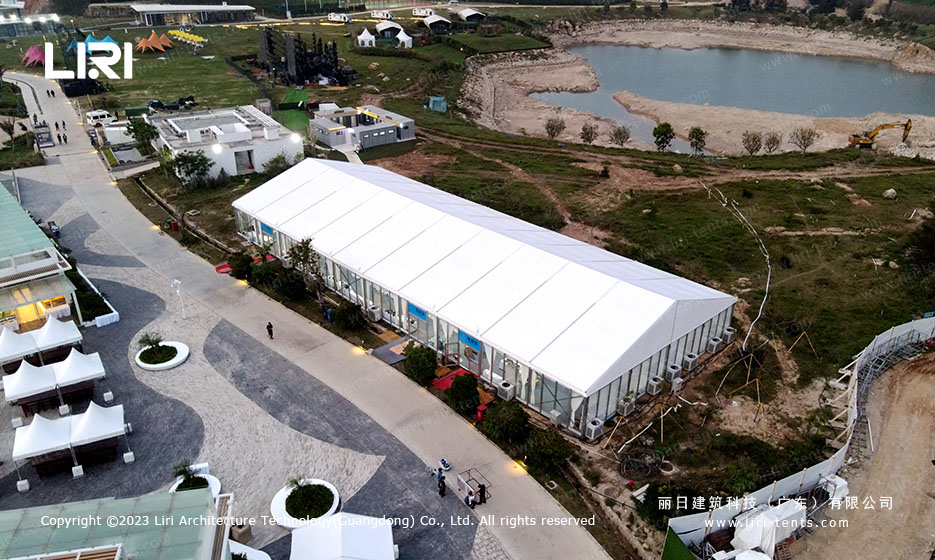
Where Economy Party Tents Deliver the Most Value
Brand activation teams rely on compact tents because they turn any plaza into a branded footprint. A white canopy conference tent gives speakers and product demos a defined stage without renting a hall. The same bay works as a registration desk in the morning and a lounge by evening, which stretches the rental value across the day.
Festival organizers use rows of economy bays to build food alleys, merch lanes, and first-aid points. An outdoor festival concert tent scales from a single stall to a linked street of structures sharing one gutter line. Consistent eaves keep the run looking intentional even when vendors change from week to week.
Sponsors also like the predictable footprint, because a fixed bay size makes it simple to brief exhibitors on stall dimensions in advance. That consistency cuts setup-day confusion and keeps the site looking orderly from open to close. Crews can pre-plan power and signage against a known grid instead of guessing for each vendor on the day.
Specifications and Frame Options to Compare
Most economy frames use a 120 x 68 x 3 mm or 166 x 88 x 3 mm aluminum profile, with galvanized steel connectors at the joints. Bay spacing of 3 m or 5 m sets the clear interior width, while eave height around 2.5 m to 3 m clears standard tables and backdrop stands. A PVC canopy near 650 g per square metre gives waterproof cover without a heavy lift for the crew.
When comparing a flexible outdoor festival tent against a fixed marquee, weigh reusability across the whole season. A demountable bay costs less per event after the third setup, and spare parts are common across sizes. The festival party tents range lets you mix 3 m and 5 m bays under one roofline for a neat run.
Storage is the quiet winner for repeat hosts who rotate venues every week. The frame packs onto one trolley and the canopy rolls into a carry bag, so a single van handles a whole season of bookings. That compactness matters as much as the on-site look when the team lives on the road between markets and fairs.
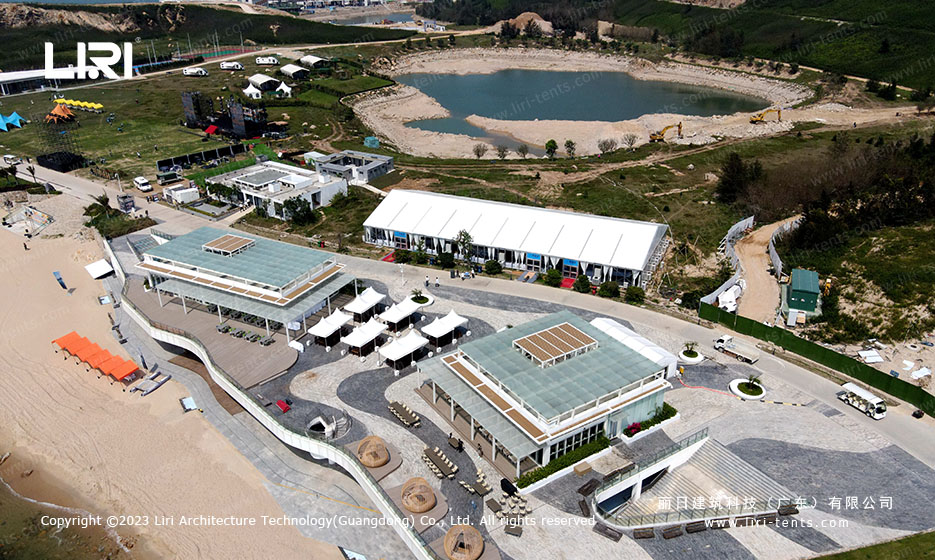
Setup, Anchoring, and Day-to-Day Care
Ground type decides the anchor set: grass takes staggered stakes, hardstand takes water ballast or drilled plates, and a festival tent ideas gallery shows how teams weigh bays for wind. Always tension the canopy before locking the eave brackets so water sheds instead of pooling in the centre after a downpour.
After the event, dry the fabric, fold along the original creases, and store the frame on a pallet off the damp floor. A quick wipe of the connectors prevents grit from scoring the anodized surface over time. Teams that follow this routine keep an economy bay serviceable for several seasons of weekend use.
Spare parts are another practical point that keeps running costs low as the bay ages. Common profiles and connectors mean a broken bracket is a same-week fix rather than a custom order from the factory. Keeping a small spares box on the van avoids cancelling a weekend over one missing pin or a worn cleat.