A 20×20 heavy duty tent is the workhorse size for backyard parties, vendor booths, and small commercial setups that need to run more than once. The “heavy duty” label is not just marketing; it points to a reinforced frame, thicker fabric, and hardware built for repeated assembly.
What a 20×20 heavy duty tent is built from
The frame is where the “heavy duty” claim lives. A proper strong aluminum tent frames uses larger extruded profiles and welded joints instead of thin push-button connectors, so the structure stays rigid when sidewalls catch the wind.
Fabric matters as much as the frame. Heavy duty covers use a heavier PVC or polyester weave that resists tearing and UV fade, and the zippers, straps, and footplates are rated for field use rather than a single afternoon. Packed frame weight hints at real field durability.
How much space a 20×20 heavy duty tent covers
A 20×20 footprint gives you about 400 sq ft of clear floor. That seats roughly 32 guests at round banquet tables, or around 50 standing for a casual backyard gathering. With no center pole, every inch stays usable.
If you are still deciding between sizes, sizing a party tent properly before you buy saves you from a cover that is either cramped or oversized. A 20×20 sits in the sweet spot for most family events and small market stalls.
Frame and fabric that earn the heavy duty name
Look for reinforced party tent frames with bolted eave connections and beefier leg spacing. These details stop the roof from sagging under rain load and keep the walls square after many teardown cycles.
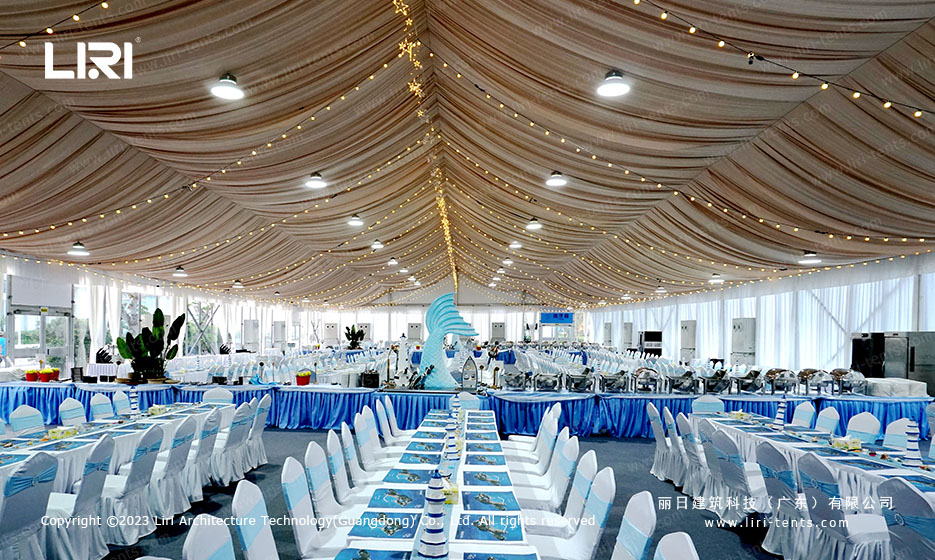
Sidewalls are part of the structure, not an add-on. A heavy duty 20×20 is designed to carry full wall sets, including clear or solid panels, without the legs bowing, so one frame serves both calm and windy days.
Setting up and anchoring a heavy duty 20×20
Start with level, clear ground and lay out the footplates before raising any leg. Grass takes stakes; driveways and patios need weighted ballast, and the anchor plan should match the surface you have. Fitting sidewall kits for party tents only after the base is staked is the right order, because walls add load as well as wind resistance.
For durable outdoor party tents that stay outside for several days, check the stakes and tension the straps each morning. Wind behavior depends on frame grade and anchoring, so follow the unit’s setup guide instead of guessing.
Frequently Asked Questions
How much does a 20×20 heavy duty tent cost?
Ownership cost tracks frame grade and fabric weight more than size. A reinforced aluminum 20×20 runs higher than a light pop-up but lasts far longer, and you skip the repeat-hire cost if you host several times a year.
Do I need a permit for a 20×20 heavy duty tent?
It depends on local code. Many areas trigger a permit once a structure reaches a certain footprint or gets walled in, and a fire-safety review often applies for events with power or cooking. Check with your city before the date.
How much wind can a 20×20 heavy duty tent handle?
Wind tolerance comes from the frame, the anchoring, and how the walls are fitted, not from a single number. A correctly staked heavy duty unit handles far more than a consumer canopy, but you should still lower sidewalls and secure loose items as gusts rise.