Benefits of a Wedding Tent for an Unforgettable Wedding Party
Planning an outdoor wedding means balancing a beautiful setting with practical protection for your guests. A wedding tent gives you a defined, elegant space that shields diners from sudden rain, harsh sun, or wind while keeping the open-air feeling couples love. Clear-span aluminum frames now span from 5m up to more than 40m in width, so the same structure can host an intimate 50-person dinner or a grand 500-seat reception. Explore our premium wedding tent collection to see how different widths change the guest experience.
Why Couples Choose a Wedding Tent Over a Fixed Venue
A permanent banquet hall locks you into one layout, one color scheme, and one fixed view. A wedding tent flips that script because the structure is temporary and fully configurable on almost any flat ground, from a garden lawn to a coastal cliff edge. You decide where the dance floor sits, how the dining rows flow, and where the ceremony arch stands. This flexibility is why many planners now treat a tent as the canvas rather than the constraint.
Weather control is the second big reason. Guests remember a comfortable celebration far longer than a pretty but shivering one, and a tent with sidewalls and a lining turns an uncertain forecast into a non-issue. Add a clear roof section and you keep the sky in view while staying dry, which photographs beautifully at golden hour. The 25m clear arcum wedding tent is a popular choice when couples want that curved, light-filled silhouette without sacrificing coverage.
Structural Options and How to Size Them
Most wedding tents use a clear-span aluminum frame, which means there are no internal poles to work around and every square meter is usable. Width drives capacity: a 10m structure suits around 80 seated guests, while a 20m-plus span handles several hundred with space left for a stage and buffet. Bay length is modular, so you extend the tent in 5m steps until the floor plan feels right rather than compromising the seating chart.
Sidewall and roof choices matter as much as the frame. Solid white PVC walls give privacy and a clean backdrop, transparent walls open the view, and a glass wall section creates a high-end greenhouse feel for evening receptions. The pastoral glass marquee structure shows how a fully glazed envelope turns a simple field into a destination venue. For a sharper, design-led look, the industrial chic wedding event tents pair black frames with white linings for a modern contrast.
Decorating and Finishing Touches
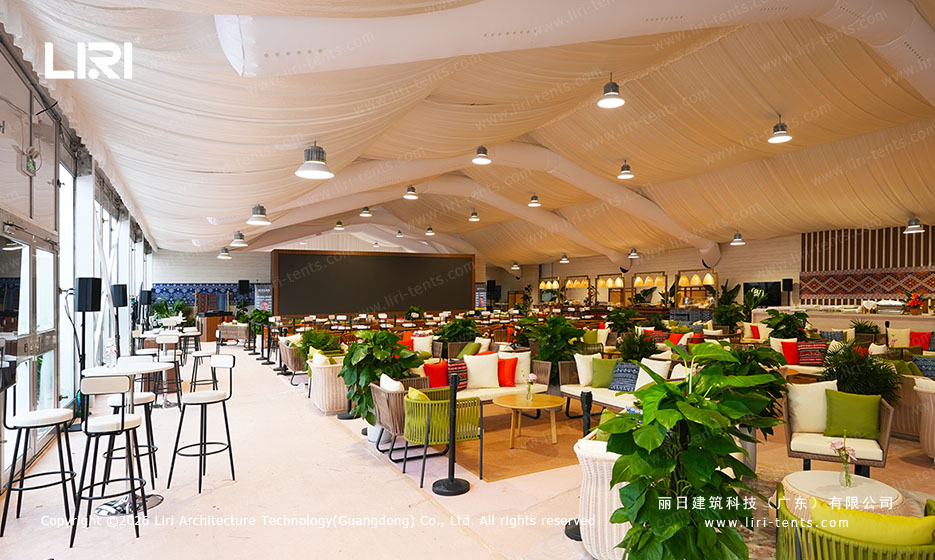
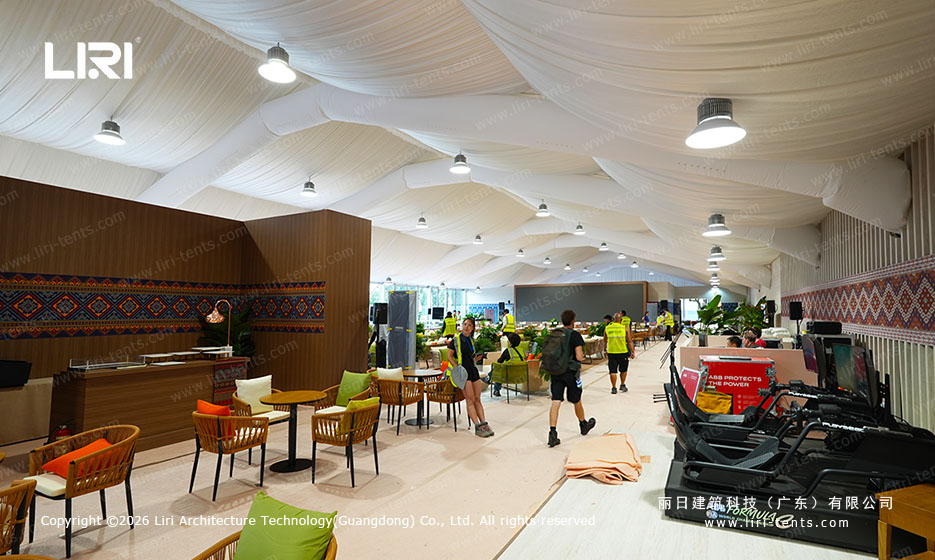
Once the frame is up, the interior is yours to dress. Draped linings soften the aluminum, suspended florals fill the roofline, and a warm up-light wash makes PVC glow instead of looking like a marquee. Flooring is worth the budget: a cassette floor with carpet keeps heels stable and removes any hint of mud. These small finishes are what move a tent from functional shelter to a space guests describe as unforgettable.
Lighting and climate are the quiet heroes of a good night. String lights and pin spots create intimacy, while a pair of silent HVAC units keeps summer evenings cool and spring nights warm. If you would rather not own the structure, the affordable wedding tent rental plans let you access the same clear-span quality for a single weekend without the storage commitment.
Frequently Asked Questions
What size wedding tent do I need for 100 guests?
A seated banquet with a dance floor and buffet typically needs about 1.2 to 1.5 square meters per guest, so 100 guests land around a 12m by 15m clear-span structure. If you add a stage or a separate lounge zone, step up one bay in length. Always plan for the furniture footprint, not just the chairs, because round tables and aisles eat more floor than people expect.
Can a wedding tent be installed on grass without concrete?
Yes. Clear-span frames are usually ballasted with weighted blocks or secured with ground stakes driven through the lawn, so no concrete foundation is required for most soft-ground sites. The stakes are pulled after the event and the turf recovers within a couple of weeks. For hard surfaces like paving, adjustable weights replace stakes entirely.
How do I keep a wedding tent warm in cool weather?
Indirect fired heaters or silent HVAC units push warm air through the space while sidewalls and a roof lining trap it efficiently. Layering a lined roof and adding floor insulation reduces drafts at guest level. A simple rule is one heating unit per 50 seated guests, then adjust after a site check on the expected evening temperature.
What sidewall options work well for a wedding tent?
Transparent walls suit scenic venues where you want the view, while solid white walls give a private, formal backdrop for dinner. A mixed layout, clear at the back and solid on the service side, is the most common compromise. Glass wall sections are the premium pick when the budget allows a fully enclosed, light-filled room.