An all-season party tent is a climate-controlled commercial structure designed for year-round deployment, whatever the outdoor conditions. Unlike standard party tents that become unusable in temperature extremes, all-season tents combine a 6061-T6 aluminum alloy frame with airtight PVC enclosures and HVAC integration points to keep the interior comfortable from summer heat waves to winter freezes. That capability directly removes the seasonal downtime that costs tent rental operators three to five months of revenue each year in northern climates.
The engineering follows a simple rule: the tent has to behave like a temporary building, not a canopy. That means corrosion-resistant framing that survives months of humidity, fabric enclosures that seal against drafts, and duct ports that let heating and cooling equipment connect without cutting the envelope. Renters and owners who plan for these three features get a structure that books work in every month of the year.
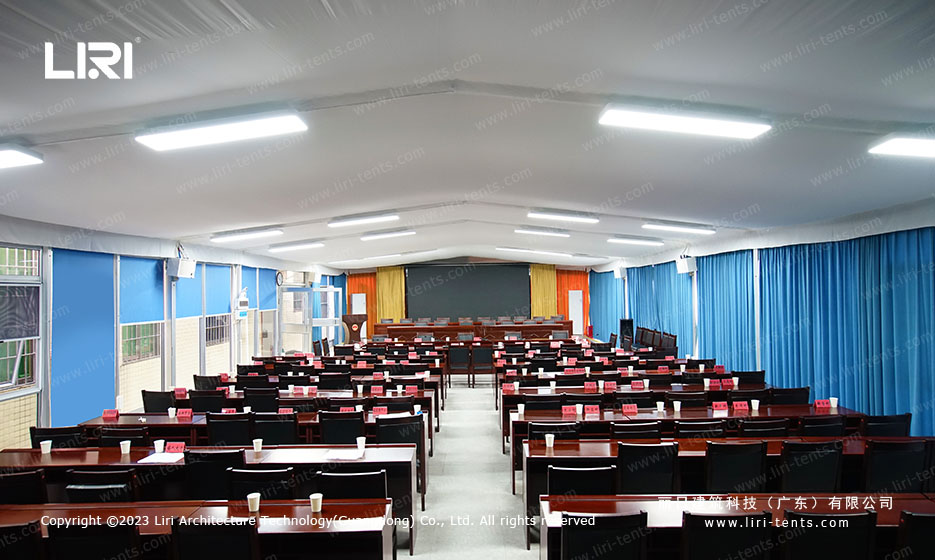
What Makes a Tent Usable in Every Season
Three engineering features separate true all-season tents from three-season ones. First, the 6061-T6 aluminum frame resists corrosion across humidity ranges from 10% to 100% RH, preventing the pitting and joint seizure that affects lesser alloys in wet winter conditions. Second, airtight PVC fabric enclosures with RF-welded seams and rubber-sealed panel joints hold a 0.5 ACH air-change rating when fully enclosed — equivalent to a well-insulated temporary building. Third, integrated HVAC duct ports rated for 5-15kW units allow climate control without modifying the fabric envelope.
Without all three features, a tent is a three-season product regardless of marketing claims. The practical test is simple: close the tent fully on a windy day and feel for drafts at the panel joints, then check whether the manufacturer publishes an airtightness rating. Operators who run cold-weather party tent options through the off-season report that sealing quality matters more than fabric thickness for comfort.
Heating, Cooling, and Climate Control
All-season tents support three HVAC configurations. Portable air conditioning units in the 3.5-7kW range connect through the dedicated duct ports and hold a 22-24 degree Celsius interior in 35-degree outdoor conditions for spaces up to 100m2. Diesel or electric forced-air heaters in the 10-30kW range raise a 12x6m tent from freezing to 20 degrees within about 30 minutes. For permanent installations, mini-split heat pumps rated at 5-12kW deliver both heating and cooling with better energy efficiency.
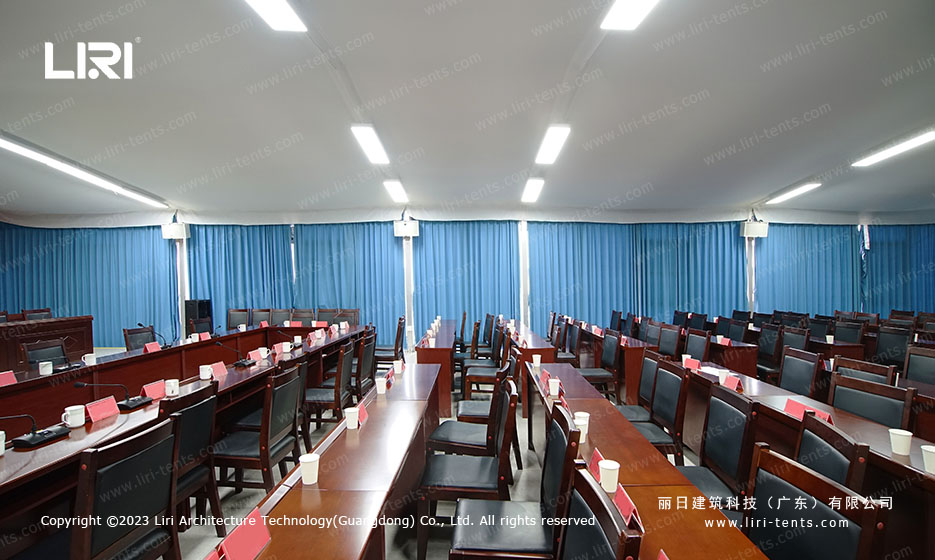
All connections use zippered fabric collars that seal around the ductwork, so the enclosure stays airtight while the equipment runs. party tent heating solutions are sized by interior volume rather than floor area, and the supplier’s HVAC compatibility documentation should list the supported unit capacities for each tent model. Getting this wrong — undersized heaters, unsealed duct ports, or units that exceed the rated power — turns a comfortable winter venue into a cold one.
Specifications and Configuration
All-season tents follow a standard structural envelope across the span range. A 10m-wide unit stands at 3.88m eave height with a 5.53m ridge; at 25m span the same 3.88m eave rises to a 7.88m ridge, with bay spacing held at 5m throughout. The main profile is a 204x110x4mm extruded aluminum channel on every size in the range, which keeps the wind and snow rating consistent regardless of footprint. Full party tent specification tables are published per model and should be matched to local code requirements before permitting.
Rental operators commonly cross-sell the small party tent rentals for intimate winter gatherings and the all-season line for larger contracts. The all-season package extends to configuration options that matter for rental operators. Wall linings improve insulation and acoustics, glass walls and curtain systems upgrade the look for premium events, and the plain white PVC surface accepts printed branding or even spray-painted decoration for themed parties. Because the frame, fabric, and HVAC ports are identical across the model line, a fleet can standardize on one spare-parts kit and one crew training program.
Maintenance follows a seasonal rhythm that keeps the tent bookable year-round. Inspect the frame joints and zipper tracks before each deployment, wash the fabric with mild detergent and water to remove grime that accelerates wear, and store the tent dry with the roof loosely folded to avoid crease cracks. Operators who log these checks report fewer mid-event failures and a longer fabric life, which matters when the tent is earning revenue in every month of the year.