For school environments, “good enough” is a liability. A sports day tent must survive a full day of student traffic, sudden wind gusts, and repeated setup cycles, while leaving the playing field undamaged. This project used 6061-T6 hard-pressed extruded aluminum for the framework, a material choice that gives small party tents the same structural discipline as permanent buildings.
Unlike steel-framed pop-up gazebos found in retail, these structures are engineered for architectural stability. The A-frame units assemble from labeled components, so a four-person crew can deploy a complete rest tunnel, first-aid station, and finish-line pavilion in a single morning. Schools that need a repeatable layout for annual athletics meets often standardize on modular pagoda tent systems because the 3m and 5m bay modules scale to any student headcount.
Frames, Fabric, and Wind Ratings
Three engineering details define the performance envelope of these shelters:
- Wind Load Capacity: Although they are classed as small party tents, the units are rated to withstand wind speeds up to 80 km/h with the weight plate system in place, which covers the exposure of most campus fields.
- Fabric Engineering: The cover uses 850g/m² double-sided PVC-coated polyester. It is not just waterproof; it is UV-opaque, reducing the temperature under the canopy by 5-8°C compared with direct sunlight, a critical factor for student heatstroke prevention during summer meets.
- Modular Scalability: The A-frame structures are based on a 3m or 5m bay system, so the rest tunnel can be extended to any length required by the event, and the roof pitch sheds rain quickly between heats.
Every shelter in the lineup ships with a documentation pack that includes wind-load calculations, anchor layouts, and a step-by-step erection manual. Facilities managers appreciate this detail because it lets the school’s own maintenance team handle storage and re-installation between events, cutting dependence on outside contractors. The same documentation is used to support municipal permits where the event is open to the public.
The factory-built assemblies combine 6061-T6 aluminum frames with industrial-grade PVC covers, delivering wind-rated structures that deploy in hours without heavy equipment. Every order includes engineering documentation and anchor specifications calibrated to the site, so the school’s facilities team knows exactly what to expect before the trucks arrive.
Non-Destructive Installation and Anchoring Options
The most significant challenge for campus events is the no-drill rule. Sports courts, running tracks, and maintained turf cannot accept permanent holes, so the base of each upright support sits inside a white weight-loading cover instead of being bolted down. The comparison below shows why this strategy works:
| Feature | Chemical/Steel Anchoring | Weight Plate System (Used Here) |
| Surface Impact | Permanent holes in concrete or track. | Zero surface penetration. |
| Speed | Slow, requires drilling and patching. | Fast, manual or forklift placement. |
| Stability | Highest, ideal for permanent structures. | High, calculated from tent surface area. |
| Aesthetics | Visible bolts. | Clean, hidden by PVC weight bags. |
For this primary school, high-density sandbags and concrete blocks were wrapped in white PVC covers that match the tent line. The setup keeps the structure stationary during sudden gusts, yet leaves the blue sports court in pristine condition once the event concludes. A quality durable pagoda tent follows the same anchoring principle, which makes it easy to move between venues on a rental circuit.
Layout Strategy and Practical Trade-Offs
A long, narrow A-frame row creates a natural perimeter around the sports field, keeping students organized in zones without blocking the view of the track for parents and officials. Within that layout, three decisions made the event run smoothly:
- Crowd Flow: The rest tunnel lines the field edge, while entry points are placed at each end so students move in one direction only.
- The Pagoda Advantage: The 3x3m and 5x5m pagoda units serve as finish-line command centers and first-aid stations. Their high-peak design makes them easily identifiable markers in a crowded field, and a sports court tent of the same family can be reused for winter basketball training.
- Rapid Strike-Down: A crew of four dismantles each pagoda unit in under 20 minutes, so the school returns to its normal curriculum schedule without a week-long construction hangover.
Every engineering choice has a compromise. The flexibility to snake tents around basketball hoops and light poles is gained at the cost of more upright legs: unlike a 20m clear-span hall with an unobstructed interior, modular small tents place support legs every 3 to 5 meters. For a school sports day that is actually a benefit, because the interior needs to be segmented by class or house rather than left open. The leg frequency becomes a tool for spatial organization instead of an obstacle.
Because the entire system is modular, schools can phase their purchase across budget years: start with the A-frame rest tunnel, then add pagoda units, then a larger clear-span hall when funding allows. Each module integrates with the next, so the investment never becomes obsolete and the campus gains a permanent event infrastructure that improves year over year.
READ MORE
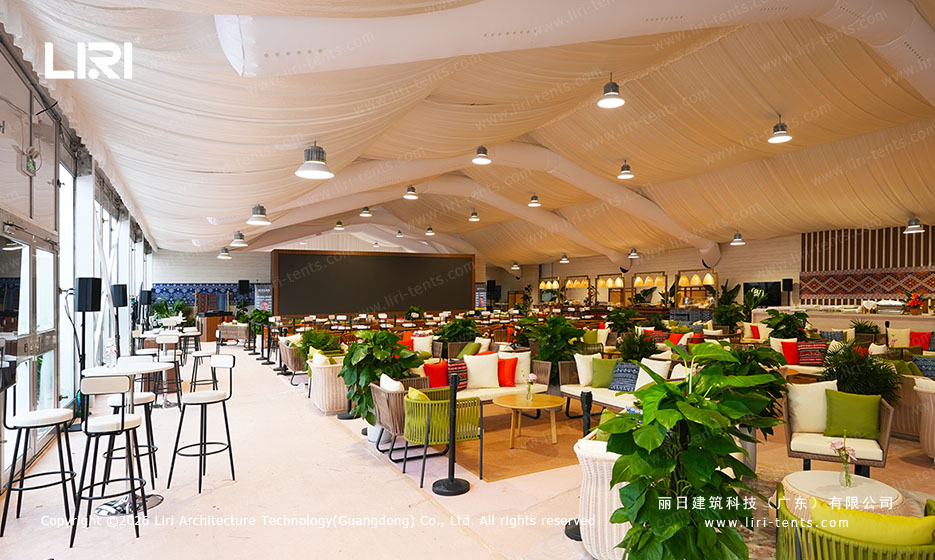
Large Tent for 500 People: Size, Layout, and Site Plan
Home » Cases » Rapid-Install Modular Tents for Primary School AthleticsA large tent for 500 people sounds simple until you add chairs, a stage, buffet lines, and the walkways people need between them. The honest answer is that 500 seated guests with service space take roughly 5,000 to 7,500 sq ft of clear floor, and […]
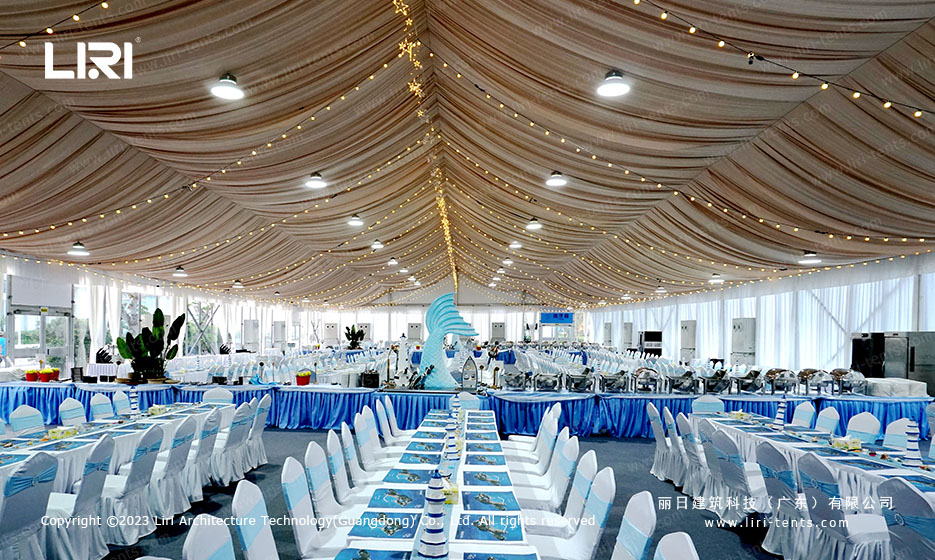
100 Person Tent for Sale: Size, Frame, and Buying Guide
Home » Cases » Rapid-Install Modular Tents for Primary School AthleticsA 100 person tent for sale is the practical answer when a backyard party, family reunion, or community event outgrows the living room. Most buyers ask the same thing first: what size covers 100 seated guests without feeling cramped, and what should they check before […]
Party Tent for 200 People Capacity | Size and Floor Plan
Home » Cases » Rapid-Install Modular Tents for Primary School AthleticsA 200-person guest list needs real planning. A party tent for 200 people capacity must cover seated dining, a dance floor, and buffet lines.